Built-Up Roofing for Commercial Buildings in Davie, FL
Review a built-up roof assembly
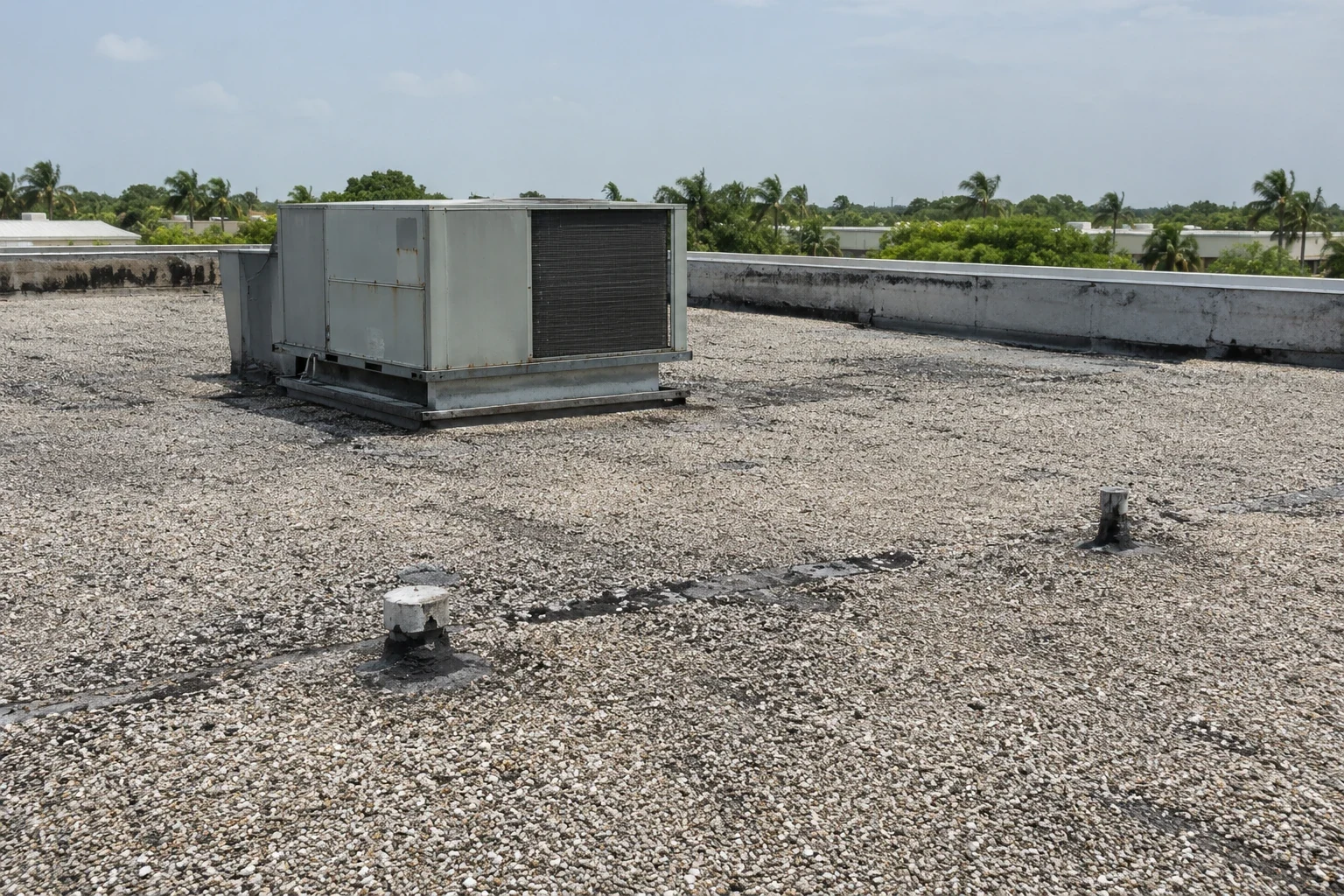
After a humid Davie night, moisture can remain on a built-up roof when the morning inspection window begins. We first check the surface, drains, flashings, and reported leak zone, then set a safe route across the roof. Before opening a multi-ply assembly, the property manager receives the test location and stop point. South Florida's wet season brings repeated showers from mid-May to mid-October, so temporary closure is part of the work plan.
Fort Lauderdale's annual rainfall normal is 60.95 inches, making drainage and moisture checks central to a Davie built-up roof inspection. We record visible surfacing, seams, flashing, and any area that needs direct confirmation.
Each layer tells part of the story
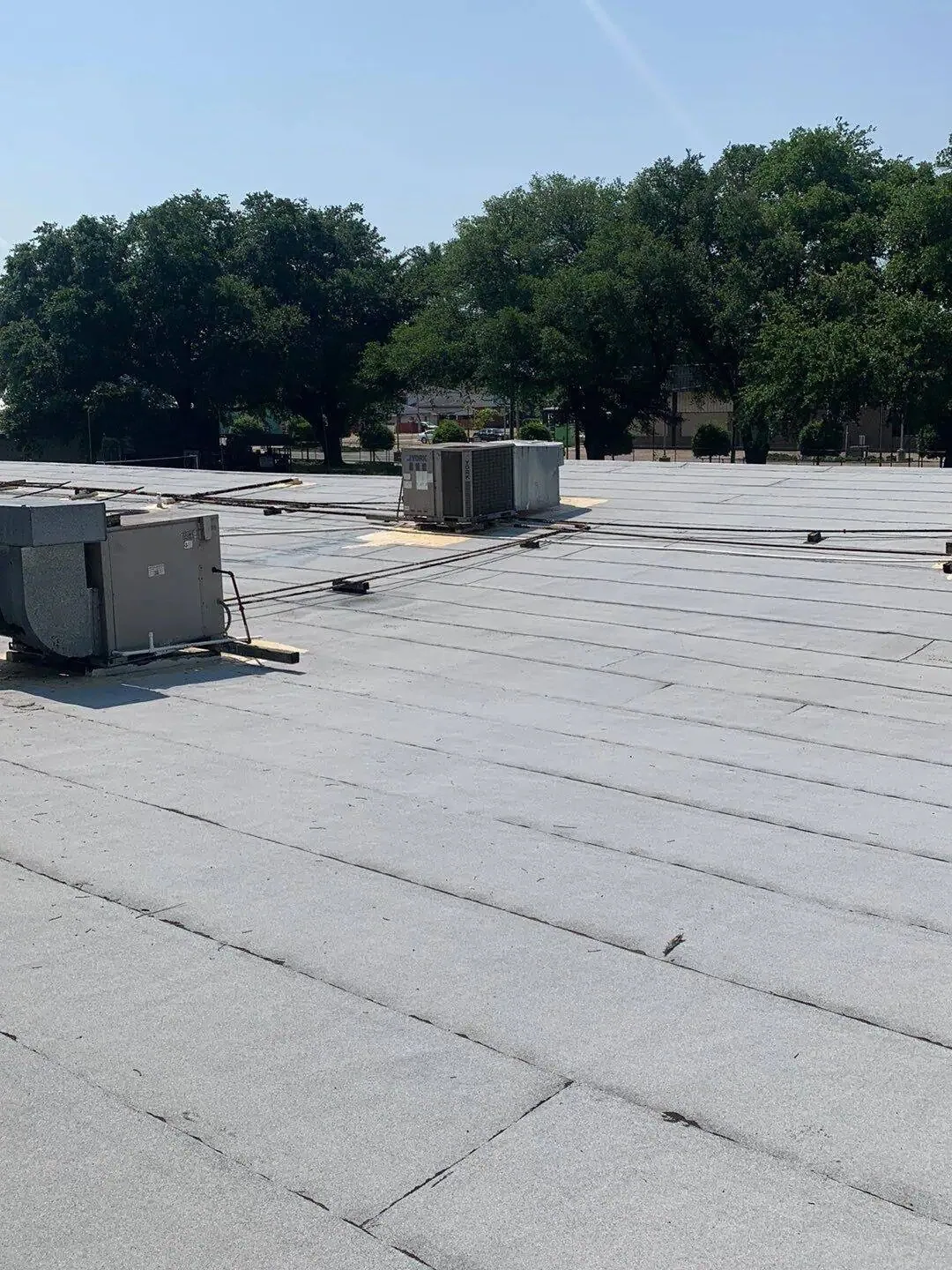
Built-up roofing combines reinforcing plies with bituminous materials and a surface treatment or cap layer. The actual sequence can vary by installation and later repairs. We review available records and visible edges to understand what is present before selecting a repair material. At a blister, split, or exposed ply, the important question is whether the defect is isolated or continues into the assembly.
Aggregate can hide portions of the membrane and make a surface-only review incomplete. We check the affected area and nearby transitions, then identify where aggregate must be moved or a limited opening approved. If the owner authorizes a test cut, the scope defines how the assembly will be closed and how concealed moisture will be handled. A visual review cannot confirm every layer beneath the surface.
Automotive uses sit alongside workplaces, commercial services, technology firms, and campuses in Davie's SR 7 planning area. Built-up roof inspection on an active property begins by setting a safe path around equipment and occupied zones. We confirm the roof route and tenant requirements with the property manager. The SR 7 / US 441 area gives local travel context, while the building's own records establish its roof history.
Surfacing affects repair access
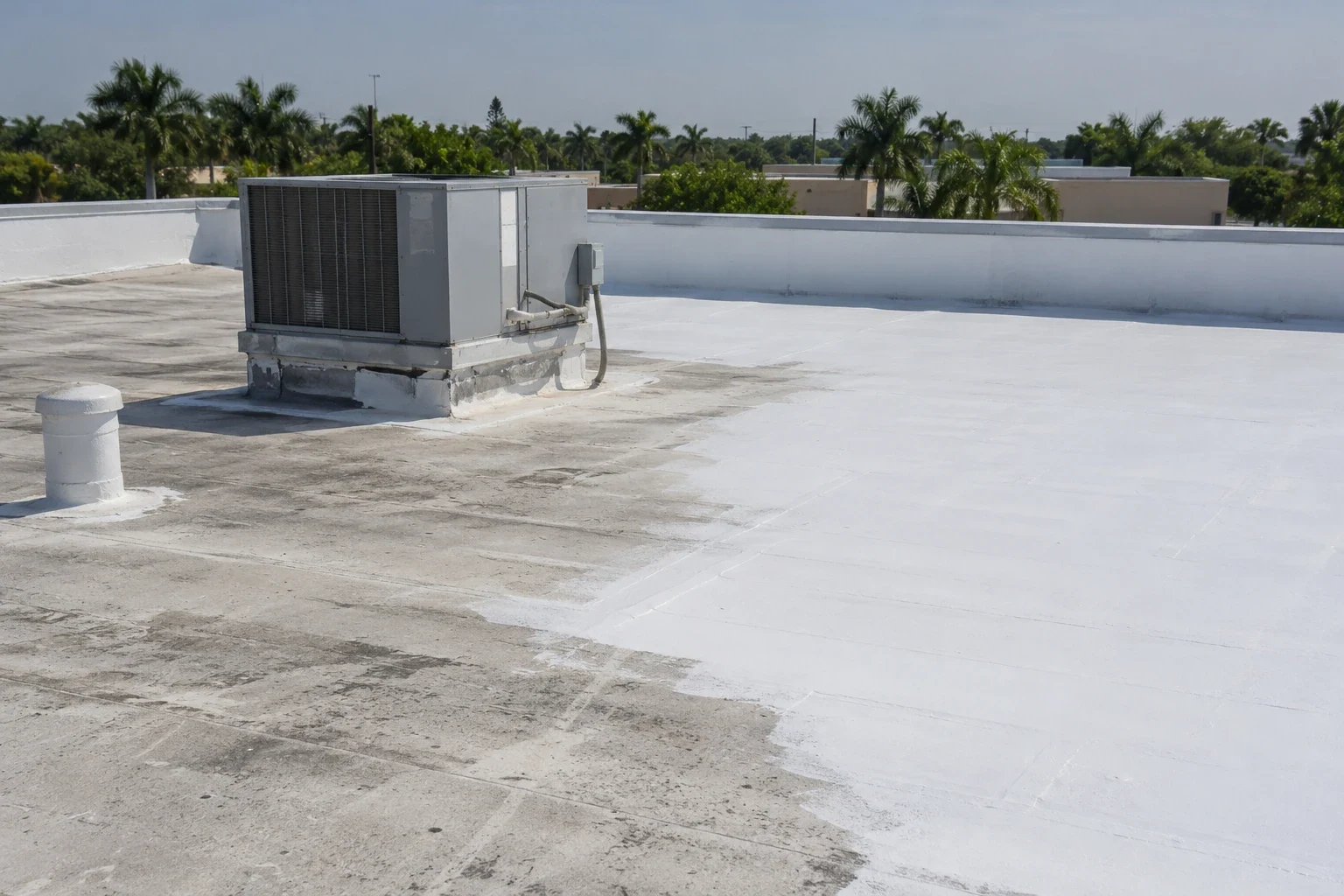
Gravel, mineral surfacing, or a cap sheet changes how a repair reaches the underlying plies. We identify the existing surface and whether it is loose, displaced, weathered, or overlaid by a later coating. A repair detail must expose and prepare material that can accept the new work. Adding a patch over unstable surfacing may shift the failure point instead of restoring the water line.
At parapets and equipment curbs, built-up layers turn vertically and connect to metal or other roof components. Corners, cant strips, terminations, and drain bowls need a deliberate tie-in. We inspect the transition and note whether the surface prevents a full close view. If a penetration is involved, the flashing repair service can address that detail after the assembly is identified.
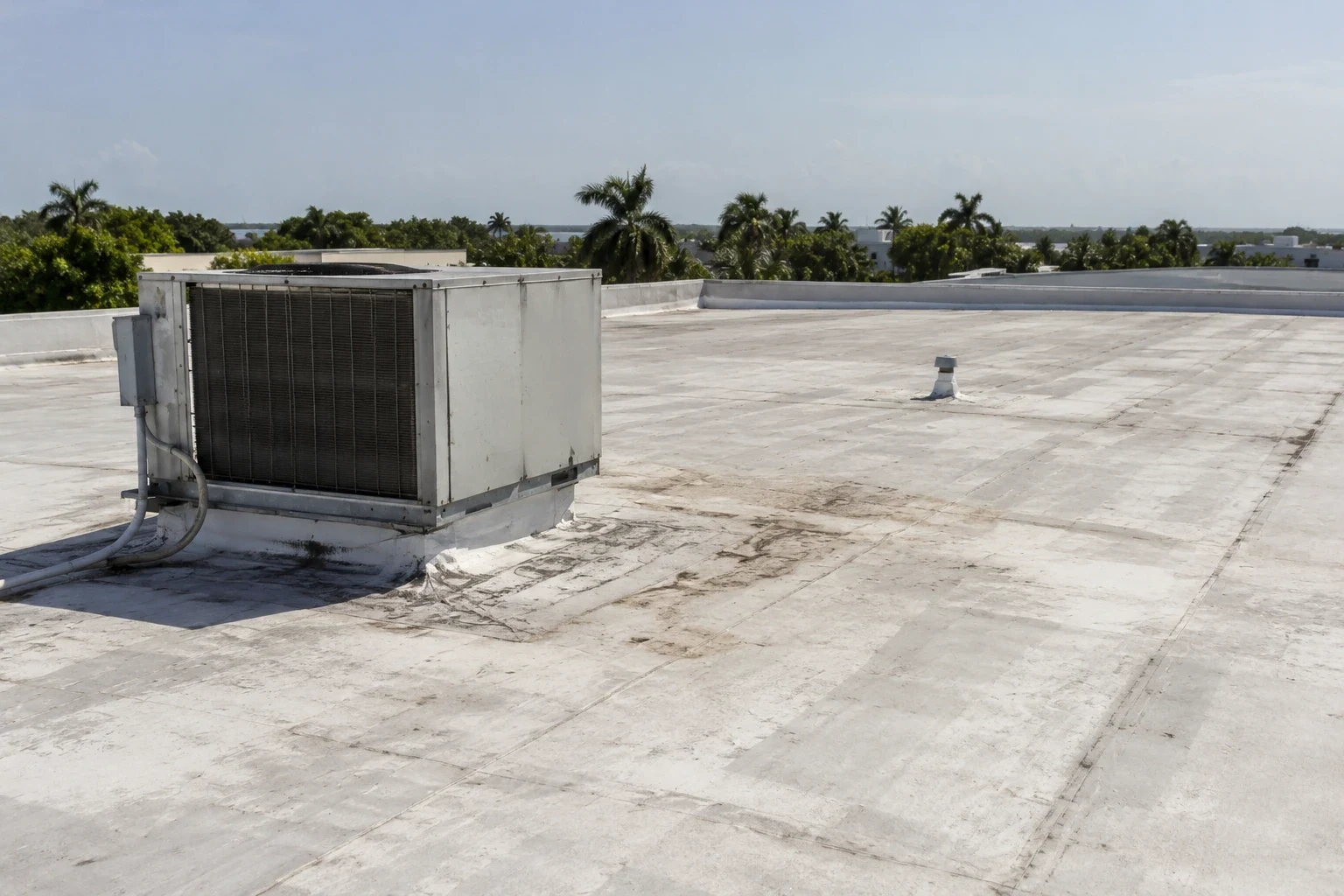
Davie's wet season and frequent thunderstorms make standing water worth tracking. The drain and scupper review checks outlet details, and a ponding-water assessment documents recurring low spots. Both observations can help determine whether a built-up repair can proceed without a separate drainage correction.
A repair needs a sound tie-in
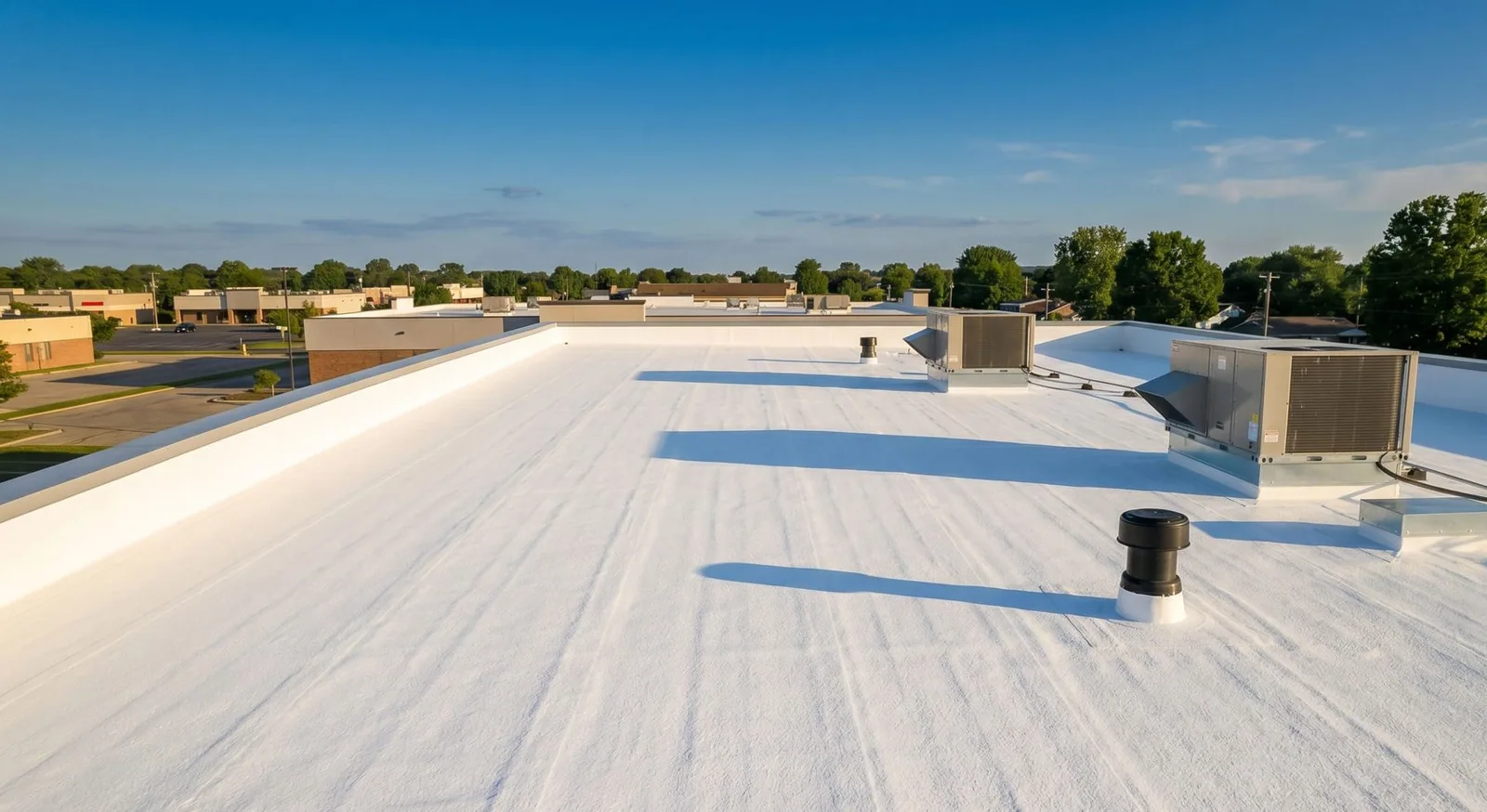
A local built-up repair may require removal of loose surfacing, preparation of the plies, compatible bitumen and reinforcement, and restoration of the finish. The method depends on the existing assembly and approved project detail. We identify the edges of removal and the point where the crew will stop if concealed material is wet or deteriorated. The manager approves any increase in scope before the opening expands.
Heat-applied materials need appropriate fire precautions, access control, and weather conditions. Other repair methods may be available depending on the system. We coordinate the actual application method, hot-work controls where required, and the work zone with the facility. If work is near an occupied entrance or sensitive equipment, protection and tenant communication are included before materials are staged.
When failure appears across several roof zones, a patch-by-patch approach may not address the owner's concern. A replacement assessment can review layers, insulation, deck, drainage, and perimeter details together. A recover may be considered only if the existing assembly and project requirements allow another roof layer. For comparison, modified bitumen uses reinforced sheets, while spray foam creates a different field surface and flashing approach.
Water paths remain visible
A built-up roof can hold water because of outlet blockage, surface deformation, slope, or another assembly condition. We map the low areas and inspect accessible drains, scuppers, and overflow routes before deciding whether the membrane is damaged. Water presence is recorded with the date and conditions observed, not converted into an assumed design problem.
Davie receives frequent rain during the long wet season. The inspection checks whether outlets can be reached and whether debris or a loose connection is visible. A maintenance program can record recurring debris and surface changes between repairs. If moisture may be trapped under the assembly, an infrared survey can help identify areas for selective confirmation, with its limits clearly stated.
Griffin Road runs east-west as a six-lane link between SR 7, airport-area routes, and destinations beyond the Turnpike to the west. For a building near the Griffin Road corridor, work staging may depend on receiving hours or gate procedures. We verify delivery and roof access with the facility contact instead of assuming that a nearby route offers a clear staging area.
The forecast sets the stop point
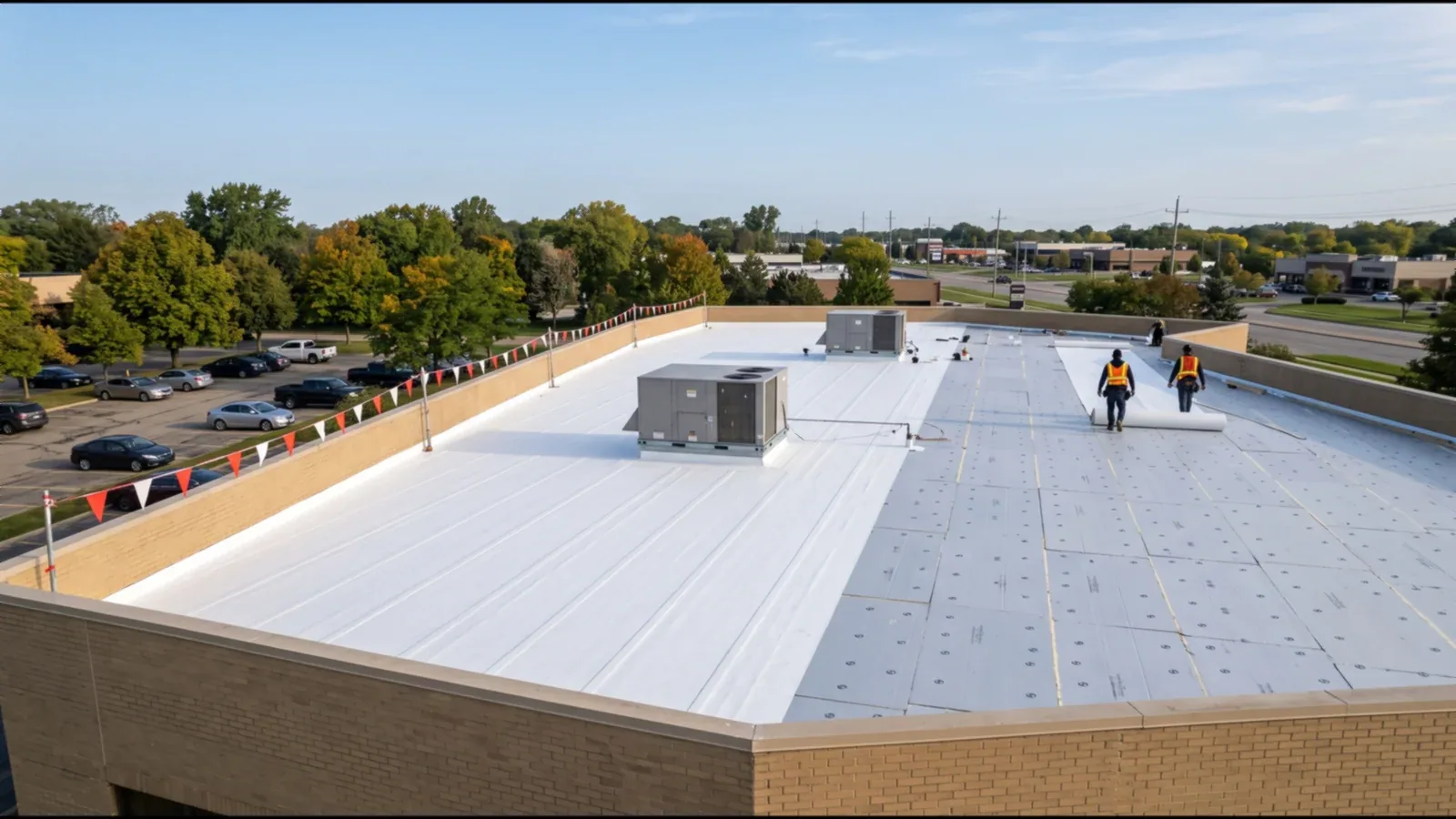
Built-up repair materials need suitable surface conditions and time to set or cool as required by the method. Davie's humid wet season can interrupt work after preparation or removal begins. We plan the opening by roof zone, define a dry-in line, and stage protection before starting. If rain approaches, the crew stops at the approved boundary and reports which layers were completed.
South Florida's main severe-weather period falls from mid-May into early July and includes damaging thunderstorm winds, hail, flooding, and tornado threats. For built-up roofs, inspection should focus on the actual surfacing, edge securement, and water entry after an event. Those hazards can affect scheduling, but do not prove that a particular roof suffered damage. After a reported event, a storm review records the visible condition and distinguishes it from existing wear.
Davie Road is the central route in the downtown planning area and a commercial and mixed-use corridor. Near the Davie Road corridor, the site may need to keep entrances and loading paths open. We coordinate the working footprint and tenant notice with the property manager.
The report closes the open questions
The property team receives roof-zone photos, observed layer and surfacing conditions, repaired details, materials used, and access or weather limits. The closeout identifies any test opening and what it revealed. If a suspected issue remains unconfirmed, the record states what access or test could resolve it and who must approve that step.
The statewide effective date for Florida's eighth-edition Building Code was December 31, 2023. Applicable requirements depend on the building and project scope. Where code or design review is needed, we identify that coordination and keep it distinct from the roof observations. The closeout reports the actual work completed without claiming an approval that belongs to another party.
Before the crew leaves, the manager reviews the repair boundary, temporary protection, and remaining work. The record may support routine monitoring, a larger replacement decision, or another inspection after rain. It keeps the built-up assembly's history connected to what was actually seen and repaired.
Related Roofing Work
- SR 7 / US 441 Corridor
- Commercial Skylight and Penetration Flashing
- Commercial Roof Drains and Scuppers
- Ponding Water Roof Repair
- Commercial Roof Replacement
- Preventive Commercial Roof Maintenance
- Infrared Roof Moisture Survey
- Modified Bitumen Roofing
Browse every page in Roof Systems, or request a roof assessment and we will walk the roof with you. Call 555-555-5555.
Questions Owners Ask
How do you inspect a built-up roof with aggregate surfacing?
We review the surface, drains, flashings, and reported area, then identify where aggregate must be moved for a closer look. Any test opening needs approval and a defined restoration detail.
Does a blister mean the built-up roof is leaking?
A blister is a condition to inspect, not automatic proof of active water entry. We check its surface, nearby plies and transitions, and any interior report before defining a repair.
Can you use a torch on an occupied commercial building?
The selected repair method must fit the roof assembly and site controls. Any heat-based work requires appropriate fire precautions and approval. We coordinate the work zone, access, and hot-work process before mobilizing.
When should a built-up roof be replaced instead of patched?
Repeated failures across multiple zones, wet layers, or deteriorated substrate may support a broader evaluation. We document those observations and explain what evidence supports a replacement review.
What does the built-up roof closeout record?
It identifies roof zones, surfacing and layers observed, repairs, materials, photos, test openings, weather holds, and any condition needing another approval.
Share the leak history, roof records, access needs, occupancy schedule, and available work window. We will inspect the surfacing and layers and set an approved repair boundary.