Manufacturing Plant Roofing in Davie, FL
Plan the plant roof work window
Davie’s humid heat and afternoon storms narrow the time available for roof work above an operating plant. We begin with the reported condition, the roof assembly, and the process limits below it. Before material is lifted, we map the work zone, check drains and penetrations, and agree on a dry-in line. The facility contact gets a stop point tied to the weather and the production schedule, so an open section does not outlast its safe window.
Davie’s SR 7 corridor includes industrial and workplace activity, automobile-related businesses, commercial service, and technology firms. Industrial and workplace operations make equipment clearance and controlled access practical scheduling questions; we confirm the actual process limits with the facility contact. The long-term annual rainfall average in Fort Lauderdale is 60.95 inches. We use that regional context to plan drainage checks, then base the recommendation on the roof in front of us.
Production limits shape roof access
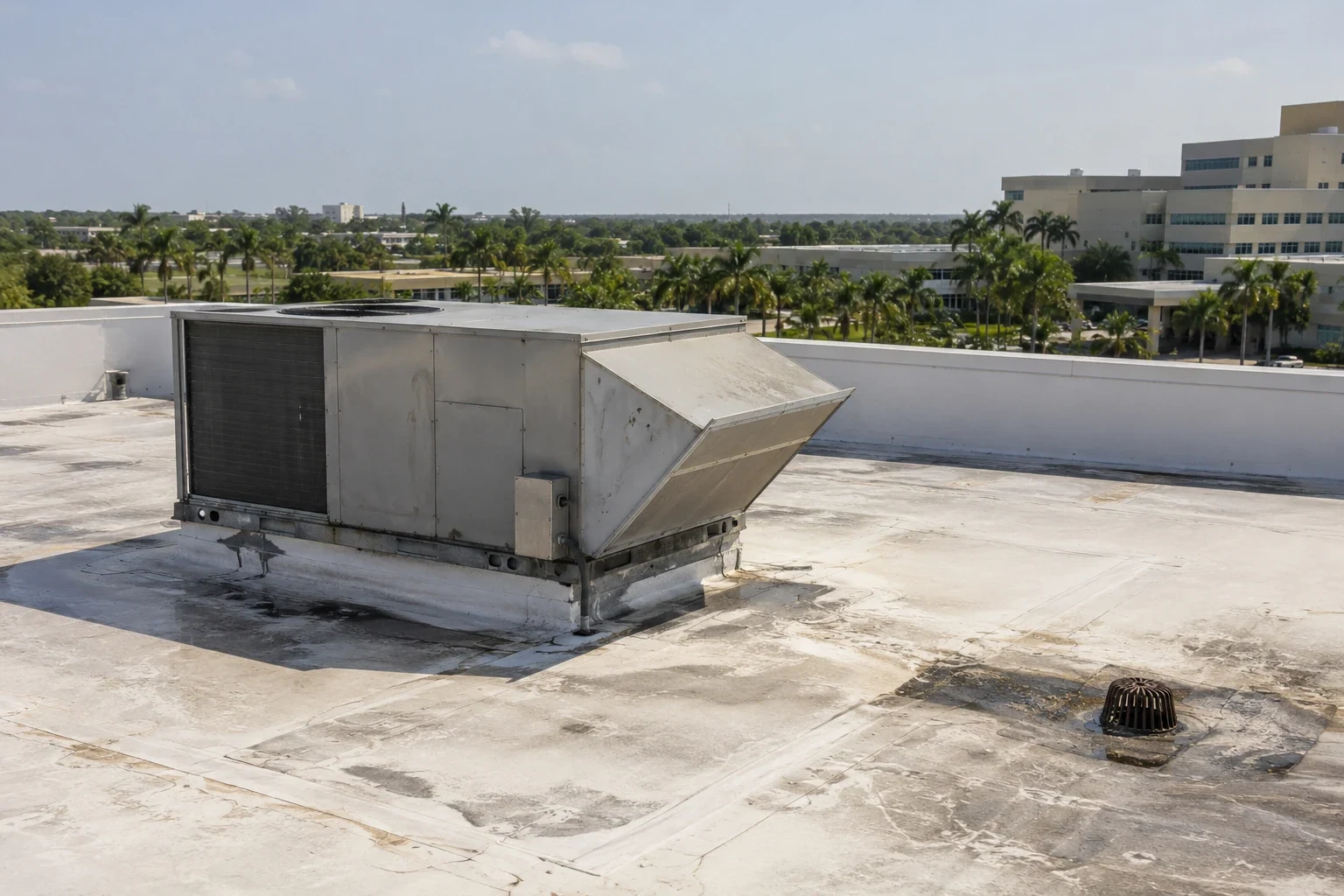
A plant may need exhaust systems, intake paths, loading doors, and process equipment to remain available while roofing work proceeds. We identify which systems cannot be interrupted, where a lift can travel, and which roof zones can be reached without crossing restricted areas. If a temporary shutdown is required, the request names the equipment, duration, and decision owner. No crew should infer that a system can be isolated simply because it appears accessible from the roof.
Davie Road and Griffin Road are commercial corridors, while Griffin connects SR 7 east toward the airport area. The corridors help with arrival planning; the facility’s own access rules govern the work. We coordinate the roof route, material staging, and tenant notice with the manager before confirming the date. When a plant remains active, occupied-building reroofing can phase a larger scope around production windows and protected work zones.
Different roof sections need separate records
Manufacturing facilities can have additions, equipment platforms, and repairs from different project periods. One roof zone may drain differently from the next, even when the surface looks alike from grade. We record membrane type, seams, perimeter conditions, penetrations, drains, and visible patch history by location. A recurring leak near a process line is compared with its roof path, not assigned to the nearest obvious penetration without inspection.
Where the roof is single-ply, we evaluate membrane compatibility and seam condition before specifying a repair. A PVC roofing system has different detail requirements from a coated assembly or metal roof. We note transitions and equipment curbs, then define a limited test area if concealed conditions remain uncertain. A roof map should show what was observed, what could not be reached, and which plant contact approved the next step.
Water findings guide the work scope
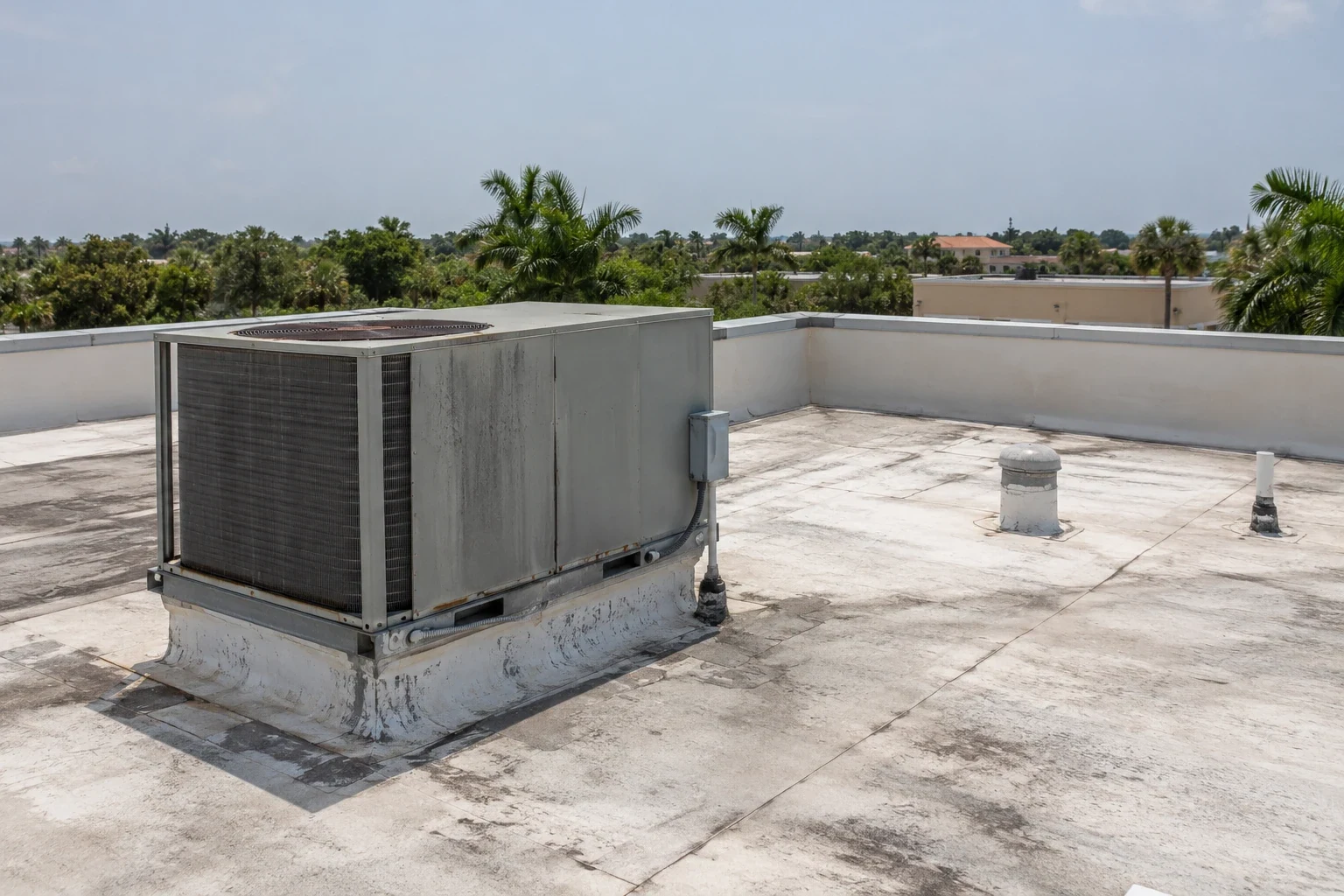
Davie’s wet season usually spans mid-May through mid-October, and South Florida receives frequent showers and thunderstorms. On an active plant, a small opening can become a larger coordination problem when rain crosses an insulation layer or reaches production space. We check drain strainers, scuppers, seams, penetrations, and low points, then relate them to interior evidence. If the problem is at the outlet, a drain repair may be enough; if water has moved through the assembly, the affected limit needs confirmation.
Moisture below the membrane can change whether a repair, recover, or replacement is appropriate. We may use infrared screening to mark areas for verification, then explain what a test opening would establish and how it will be closed. That distinction matters because a surface patch cannot correct wet insulation that remains below it. The scope separates immediate water control from follow-up investigation and capital work, with the production impact attached to each decision.
The dry-in point is set before opening
Summer heat raises the heat index, and brief rain cells can interrupt lifting, seam welding, or coating work. Tropical systems may bring sustained wind and rain. We check conditions for the workday, select the roof zone that can be finished, and keep the exposed footprint within the crew’s ability to protect. If weather approaches, the stop point is the agreed dry-in line, not a judgment made after an opening has spread.
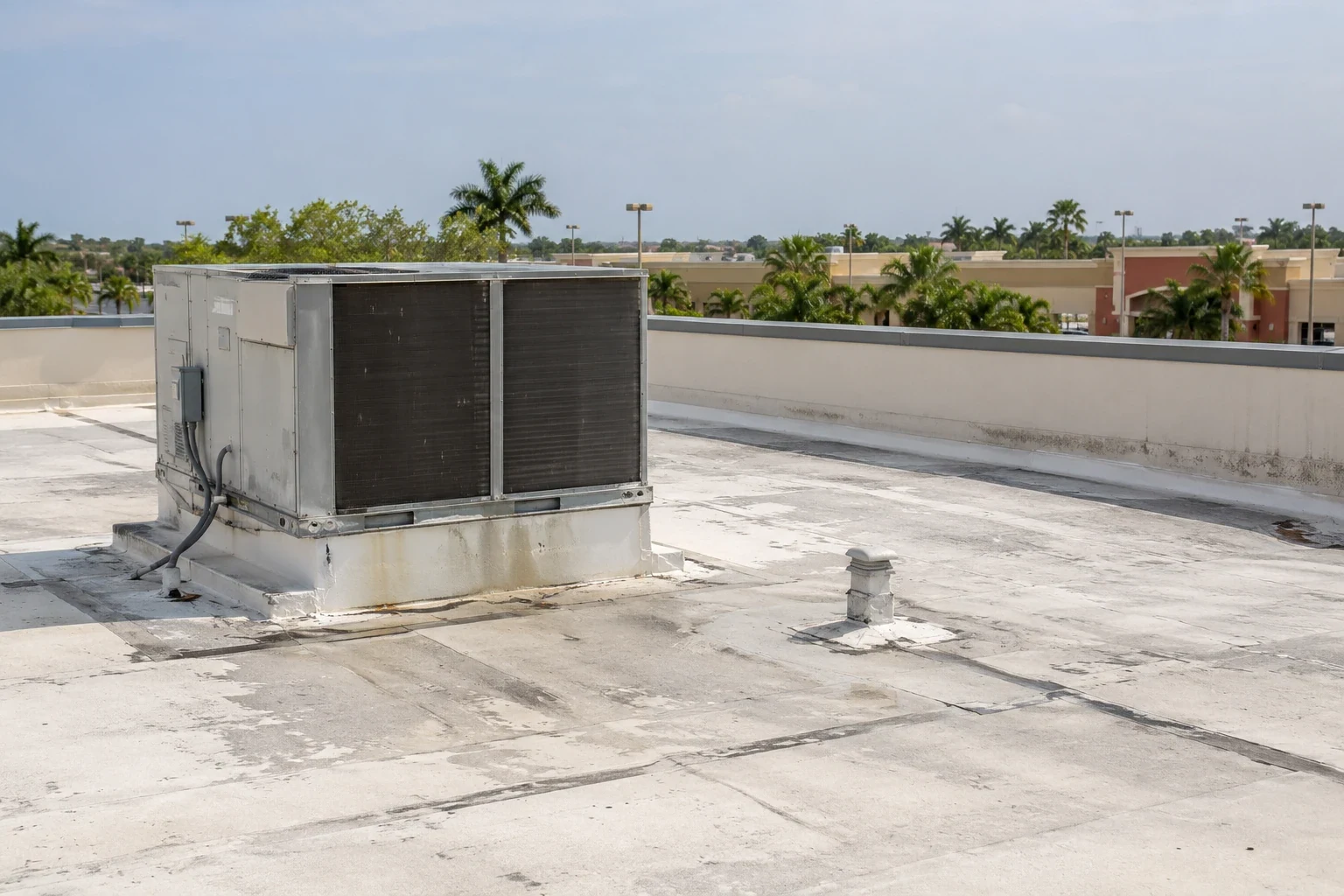
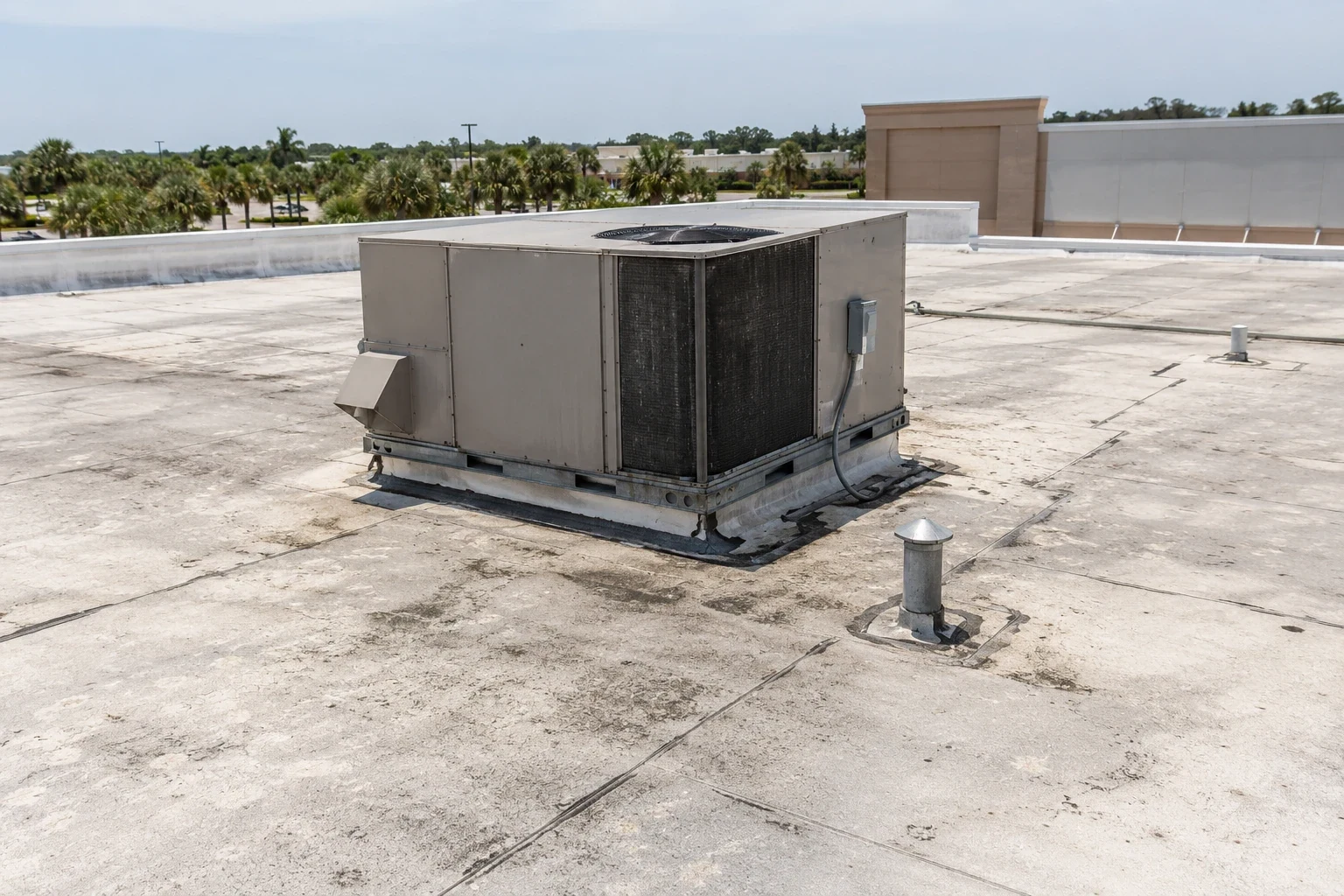
For a plant, the closure plan also protects rooftop intakes, exhausts, and nearby equipment from debris or water entry. We confirm cover materials and restart steps with the facility contact before work begins. For urgent plant conditions, response is available nights, weekends, and holidays. Safe access and current weather still control what can be completed immediately. A commercial roof repair scope records temporary protection separately from permanent correction.
Repair and capital work stay distinct
A manufacturing roof decision should link each recommendation to a condition, location, and consequence. We compare the roof’s attachment, moisture, drainage, edge details, and repair history. A localized failure with sound surrounding material may support repair. Repeated failures or moisture across several zones may call for broader work. Coating can restore some surfaces only when adhesion, drainage, and substrate condition support it; it cannot cure a structural or concealed moisture issue.
Plantation Technology Park includes office, technology, and diversified businesses, while Coral Springs includes manufacturing and industrial properties in its commercial mix. Production timing and equipment clearance set the visit sequence at each plant. We describe removal limits, shutdown needs, temporary dry-in, and verification points before proposing commercial roof replacement. A warehouse or distribution center may share access concerns, but the production process sets this facility’s sequence.
The closeout names every open decision
After inspection or repair, the facility manager should have a zone-by-zone record of work completed, areas not accessed, and any temporary closure that remains. We tie photographs to a roof sketch and state whether equipment limits, weather, or a shutdown window changed the planned scope. If another department must approve a restart or isolation, that handoff stays visible so the next crew does not assume the system is ready.
For planned follow-up, roof condition reporting can put observed issues, testing needs, and capital priorities into one record. A Davie SR 7 corridor visit still follows the access rules of the specific facility. The manager receives the next action, a realistic work window, and the approval that remains before the roof zone is reopened or additional material is removed.
Related Roofing Work
- Occupied Commercial Building Reroofing
- PVC Commercial Roofing
- Commercial Roof Drains and Scuppers
- Commercial Roof Repair
- Commercial Roof Replacement
- Commercial Warehouse Roofing
- Distribution Center Roofing
- Commercial Roof Condition Reports
Browse every page in Property Types We Roof, or request a roof assessment and we will walk the roof with you. Call 555-555-5555.
Questions Owners Ask
Can the roof crew work while production continues?
Often, if access routes and process restrictions can be separated. We coordinate equipment limits, roof zones, and shift timing with the facility contact. Any required shutdown or interruption is identified before scheduling. Weather or a condition found during inspection can change the daily boundary, so the stop point is agreed in advance.
How do you protect rooftop air intakes during repair?
We identify intake and exhaust locations during access planning and confirm which systems must remain active. The scope states how debris, temporary covers, and material movement will be managed near them. The facility contact confirms which equipment may be shut down or covered before roof work begins.
When does a plant roof need more than a patch?
A broader scope may be warranted when repeat failures, wet insulation, damaged edges, or widespread seam problems extend beyond one repair area. We inspect representative zones and document what supports the recommendation. If hidden conditions remain, a test opening can answer a specific question before removal limits are approved.
What does a roof inspection record include?
It identifies the assembly observed, roof zones reached, drains and details checked, visible damage, and any areas blocked by equipment or access rules. Photos are tied to the roof plan. The record separates completed corrections from temporary protection and lists the next test or approval needed.
What happens when rain interrupts an open repair?
Work stops at the agreed boundary, and the crew closes the exposed section to its dry-in line. The manager receives the secured area, any remaining limitation, and the next workable window. A weather interruption is recorded so the next visit can resume from a known condition.
Share the roof concern, access rules, equipment limits, production schedule, and available work window. We will set the inspection zone, dry-in point, and approvals for your Davie facility.