Commercial Roofing for Logistics and 3PL Operators in Davie, FL
Fit the roof plan to dispatch
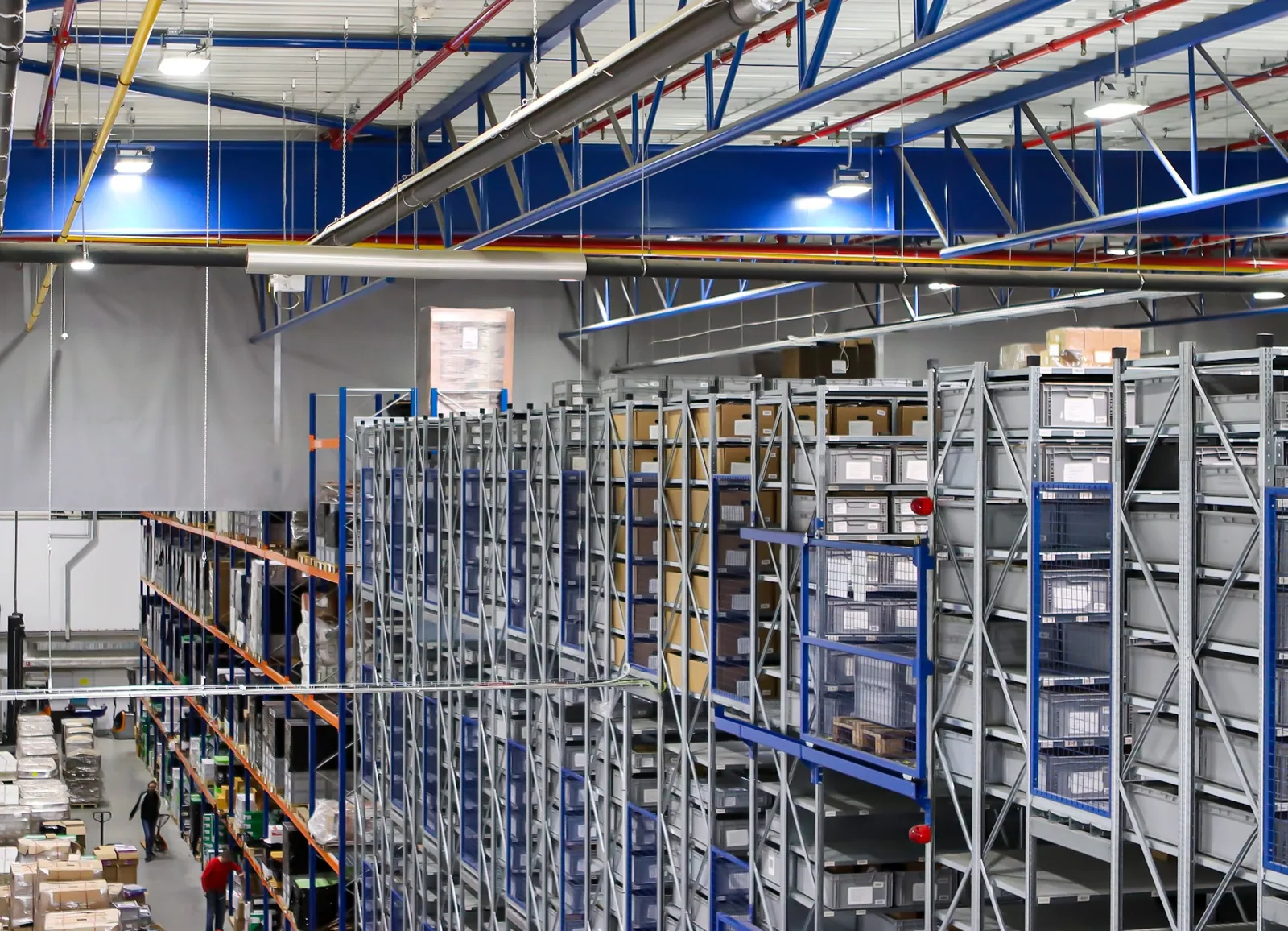
A wet patch above a conveyor can put a sorting line on hold before anyone sees water at the dock. We start with the affected bay and facility contact, then map the roof section, traffic route, and closure point before work begins. The operating team gets the time and area that could be restricted. The roof plan keeps truck movement visible while an exposed section is protected.
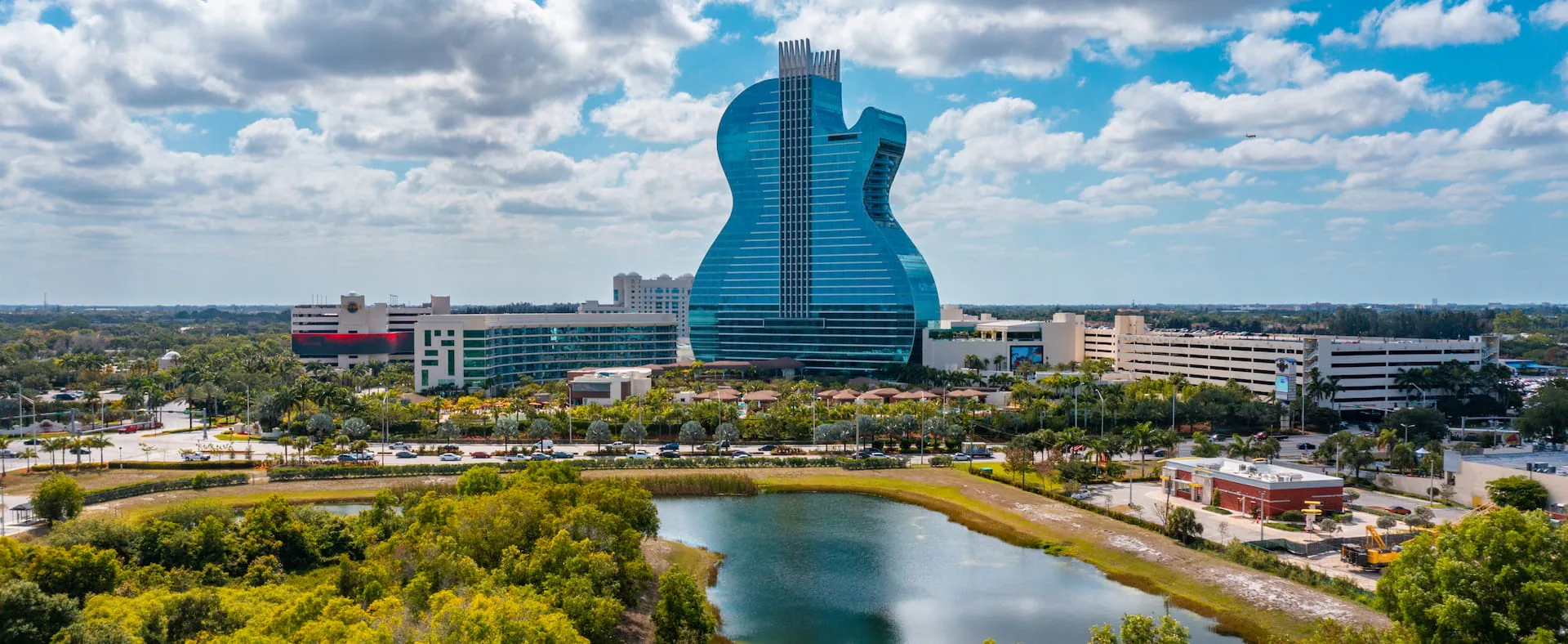
Davie's SR 7 study area includes industrial, workplace, commercial-service, and auto-related uses. Griffin Road links the Davie SR 7 area with the airport area, while regional plans identify access to Port Everglades as an economic advantage. For a 3PL operator, those are useful dispatch references; the facility's dock map, gate rules, and yard controls determine the roofing visit.
Dock timing sets the access window
The facility contact identifies peak receiving periods, trailer queues, yard rules, and emergency lanes. We confirm whether a lift or material delivery will cross a truck path and where staging can occur without narrowing a turning area. If a dock door must pause during work below a roof section, that restriction is stated before scheduling. A roof visit does not take control of the yard or dispatch plan.
Griffin Road links SR 7 with the airport area, while SR 7 and the Turnpike provide wider regional access. These routes help estimate mobilization, but the gate, yard, and dock contact govern site entry. A distribution center roof plan often has similar loading constraints, though the exact operating pattern differs at every property. We map the work boundary to the facility's actual lanes and identify who can approve a change.
The drip and dock may not align
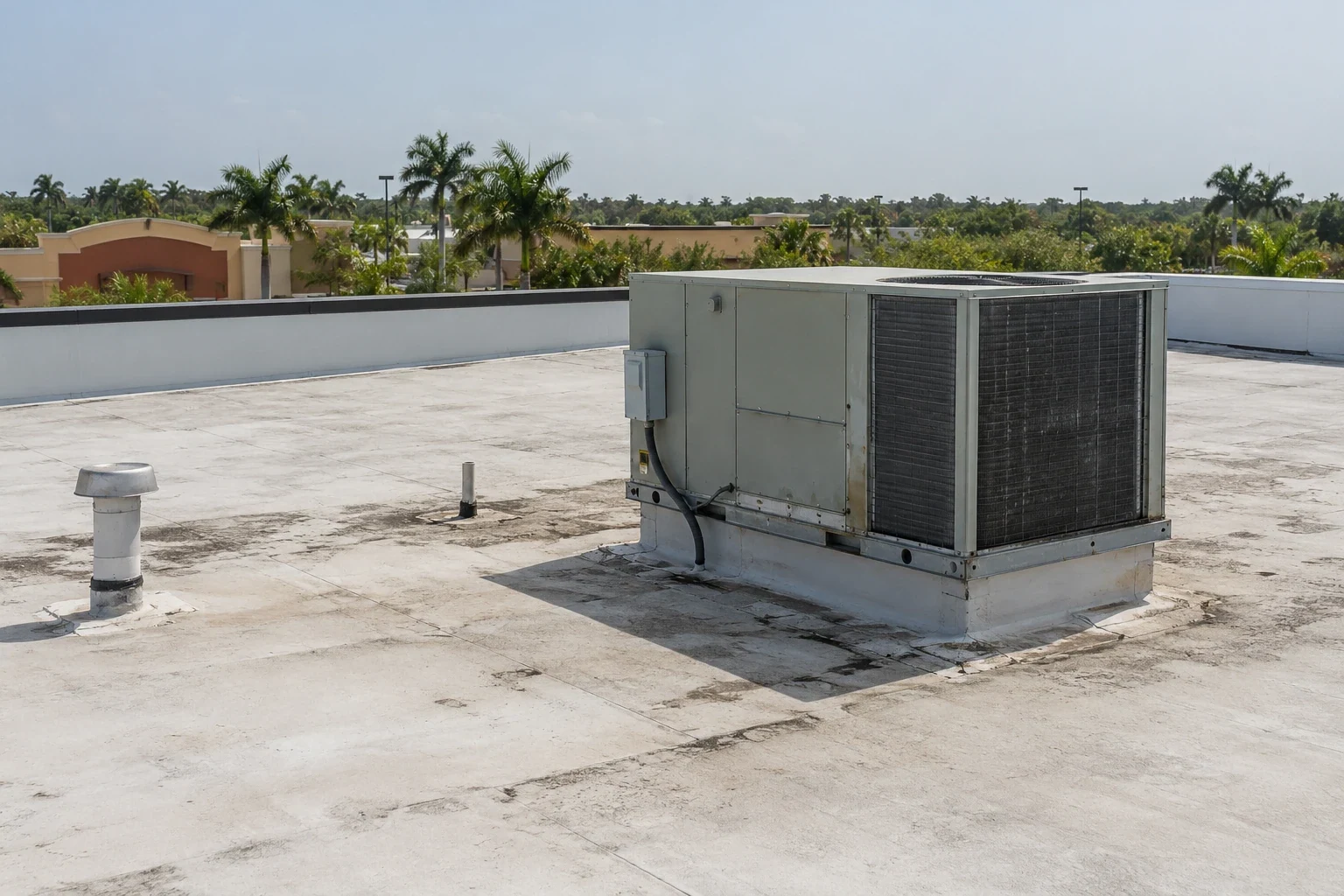
Water can travel through roof insulation or along a deck before appearing at a conveyor, pallet position, or dock office. We compare the report with seams, rooftop penetrations, drains, curbs, and earlier repairs. If the leak path is hidden, the inspection identifies a test opening or moisture survey and the closure method before exposing material. Areas blocked by stored freight or unsafe access remain listed as uninspected.
The local annual rainfall normal is 60.95 inches at the Fort Lauderdale station. South Florida receives about 60 to 70 percent of its yearly rain from mid-May to mid-October, when dock protection and a ready closure method matter most. The region's recurring rain makes drain function and temporary protection central to logistics roof work, but a station record cannot diagnose a warehouse leak. A commercial roof inspection documents each zone and any access limit that changed the route.
Runoff can reach active loading areas
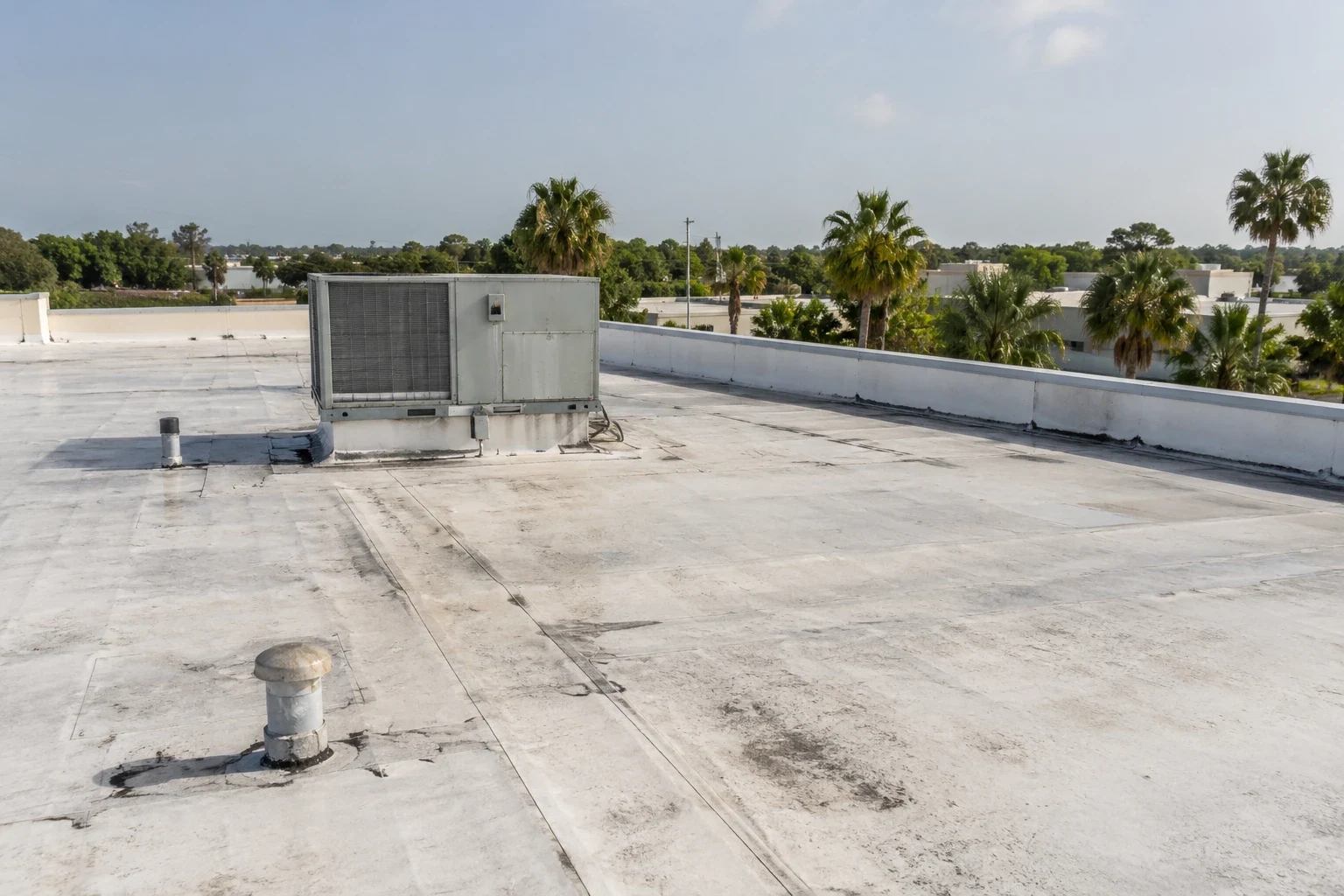
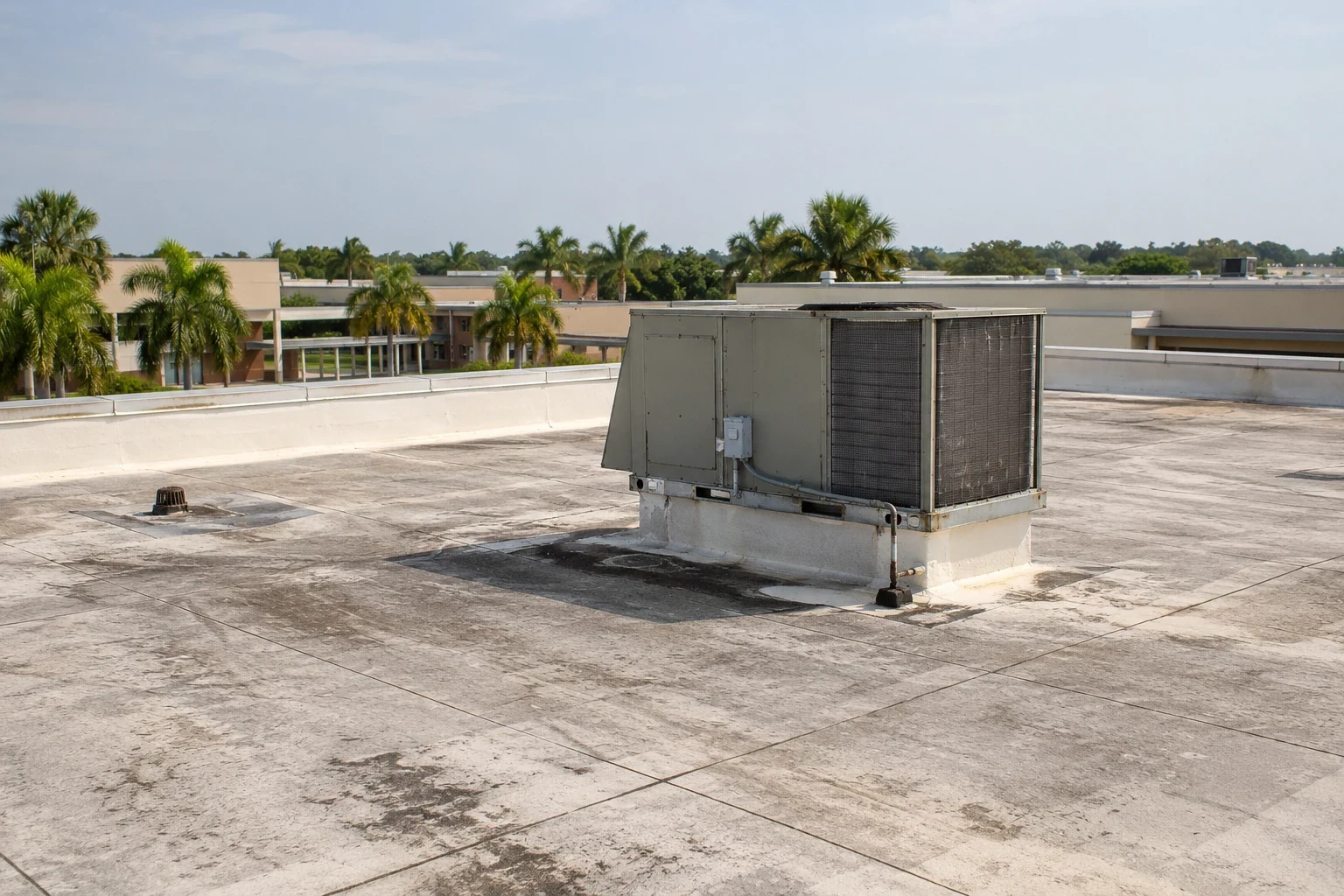
We inspect drain bowls, strainers, leaders, scuppers, overflows, and visible low points. A clogged strainer may be cleared, while persistent water can require a separate look at slope or downstream connection. The report ties each observation to a roof section and notes where the outlet was not accessible. If runoff could reach a dock or yard route, the facility contact receives the location before the next storm.
A drain and scupper correction can be paired with seam repair if both conditions are confirmed. Otherwise, we keep the drain test separate from the membrane scope. This prevents a scheduled dock closure from becoming a broad, undefined repair window. The work plan identifies what can happen during active operations and what needs a lower-traffic slot.
The roof system sets the repair method
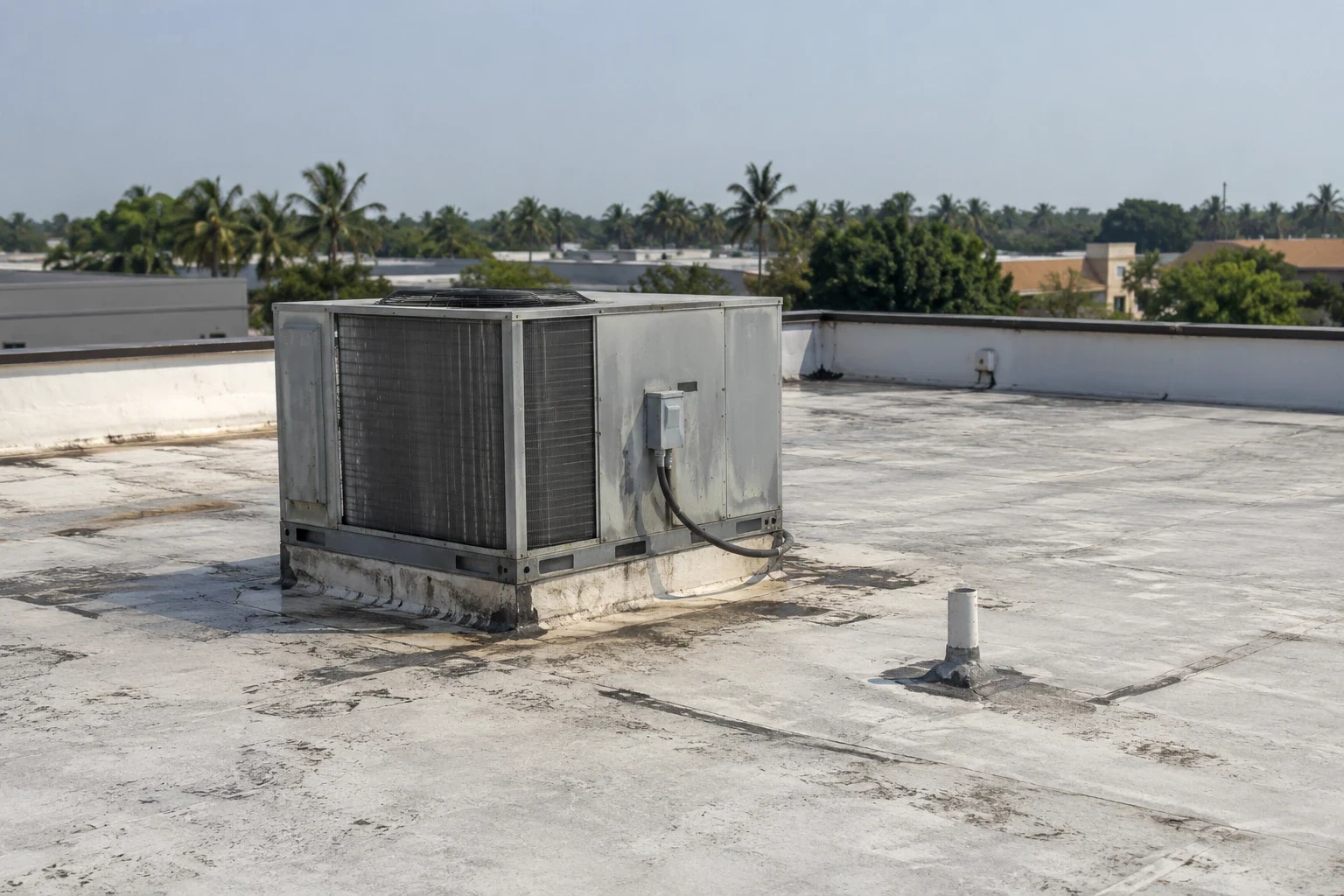
We identify the installed roof material before selecting a repair. Single-ply membrane, modified bitumen, built-up layers, and metal panels need different seam and flashing details. We check perimeter attachment, penetrations, equipment curbs, and visible prior patches. A compatible repair must reach sound material; a surface patch cannot resolve wet insulation or a loose panel edge underneath.
A local seam failure may support targeted work. Several leak locations, moisture across the deck, or repeated repair failure can justify testing and a larger proposal. A commercial roof repair scope distinguishes immediate dry-in from permanent correction. If replacement is under review, replacement planning identifies how docks, freight, equipment, and weather closure fit the project. Operations receives a defined limit and approval step before any broader work begins.
Rain and heat reset the shift
Summer roof access in Davie must account for daily heat-index peaks that often reach 100 degrees. A distribution roof has to close by a defined point before crews move between dock zones, particularly when afternoon storms are possible. We set a manageable zone, material staging, and closure point before work starts. If an afternoon cell forms, the crew secures the open section before moving to a different dock area.
During tropical weather, wind and heavy rain can reach South Florida ahead of the storm center. Dispatch managers need an updated hold or restart decision tied to the roof zone and truck lanes, not just a regional forecast label. We tell the facility contact what has been secured, what remains temporary, and which conditions are needed to return. Urgent roof concerns are accepted any time, including holidays, but safe access and truck circulation still govern the immediate response. The dispatch team receives an updated restriction rather than a general delay notice.
Every facility keeps its own status
At closeout, the site contact receives the zones inspected, photographs, repair work, areas not reached, and any open test or approval. The report distinguishes temporary protection from permanent correction and names any dock, yard, or route restriction still in place. A portfolio summary can show which sites are ready, but it does not extend findings to an unvisited building.
A multi-site roof program can coordinate inspections across locations while preserving a separate map and decision owner for each property. A manufacturing operator may have production access and material-handling needs; a property management company may coordinate tenant notice. For a building near the Davie Griffin Road corridor, regional access can support mobilization, while yard rules define actual staging. The next approval names the roof zone, operating hold, and safe return window.
Related Roofing Work
- Distribution Center Roofing
- Commercial Roof Inspection
- Commercial Roof Drains and Scuppers
- Commercial Roof Repair
- Commercial Roof Replacement
- Multi-Site Commercial Roof Programs
- Manufacturers
- Property Management Companies
Browse every page in Industries We Serve, or request a roof assessment and we will walk the roof with you. Call 555-555-5555.
Questions Owners Ask
Can roofing work happen during active dock hours?
It can if the roof zone and ground controls stay clear of dock and truck circulation. We confirm a staging location, any temporary door restriction, and the contact authorized to adjust dispatch. If a safe route cannot be maintained, the work moves to another slot.
How do you protect freight when a leak is over a dock?
We map the reported area, inspect the roof above it, and coordinate any protection below with the facility contact. If the water-entry point is not confirmed, we identify the test needed before opening material. The report names the dock or storage zone affected and any remaining exposure.
What should a 3PL provide before the inspection?
Share the leak location, yard and dock rules, peak trailer periods, roof access, and any restricted freight area. We confirm what can be reached and when equipment can stage. An inaccessible roof zone stays open in the record until the facility authorizes a return.
Can several logistics buildings be inspected under one visit plan?
Yes, the route can group sites and reduce repeated setup, while each property keeps a separate condition record. We list the buildings reached, access limits, photographs, and next steps so the grouped schedule does not overstate inspection coverage. A dispatcher can see which location needs another slot.
What happens when weather stops a repair mid-shift?
The crew secures the active area at its planned dry-in point, then updates the site contact on dock restrictions and unfinished work. The next visit is set when the forecast and yard access allow a safe return.
Share the affected dock, trailer peaks, roof access, yard controls, and available work slot. We will map the work zone, set the closure point, and identify the next approval for your Davie-area logistics property.