
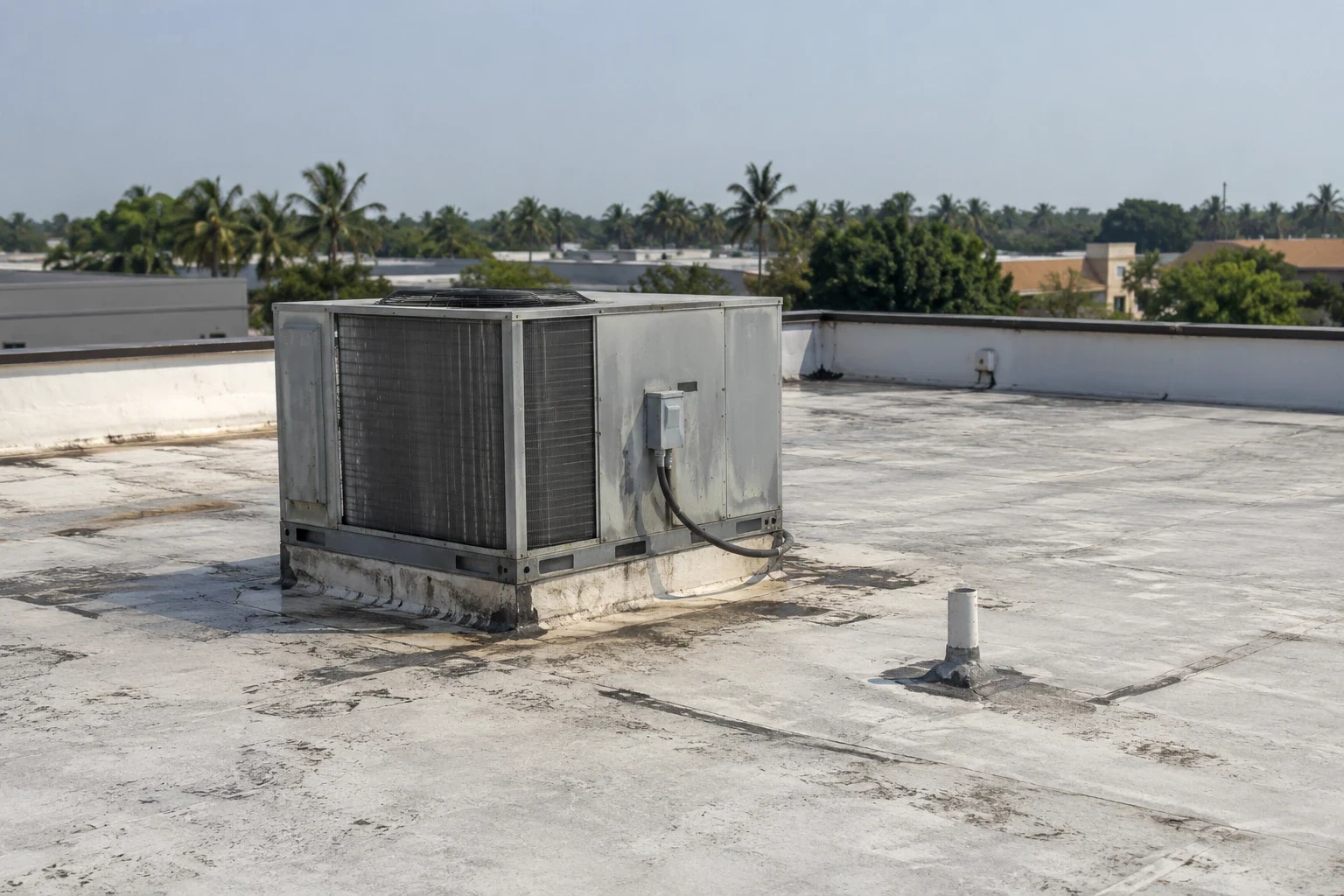
Commercial Roofing for Real Estate Investors in Davie, FL
Put roof findings beside the capital decision
An investor deciding whether to fund a repair needs the roof condition, the extent of the affected area, and the next approval in one record. A weather window can close before a property review is complete, so we begin with the active leak or exposure and define the inspection boundary. We document what the roof shows, what could not be reached, and which work is urgent before discussing a larger capital path.
Davie's SR 7 corridor brings workplace, industrial, technology, and commercial-service uses together. Nearby Plantation Midtown spans office, medical, retail, residential, and open-space properties across a broad district. A regional owner may hold several building types around these corridors, each with a different system and operating schedule. Portfolio-level reporting helps compare decisions; it cannot substitute for a building-by-building inspection.
Urgency starts with exposure
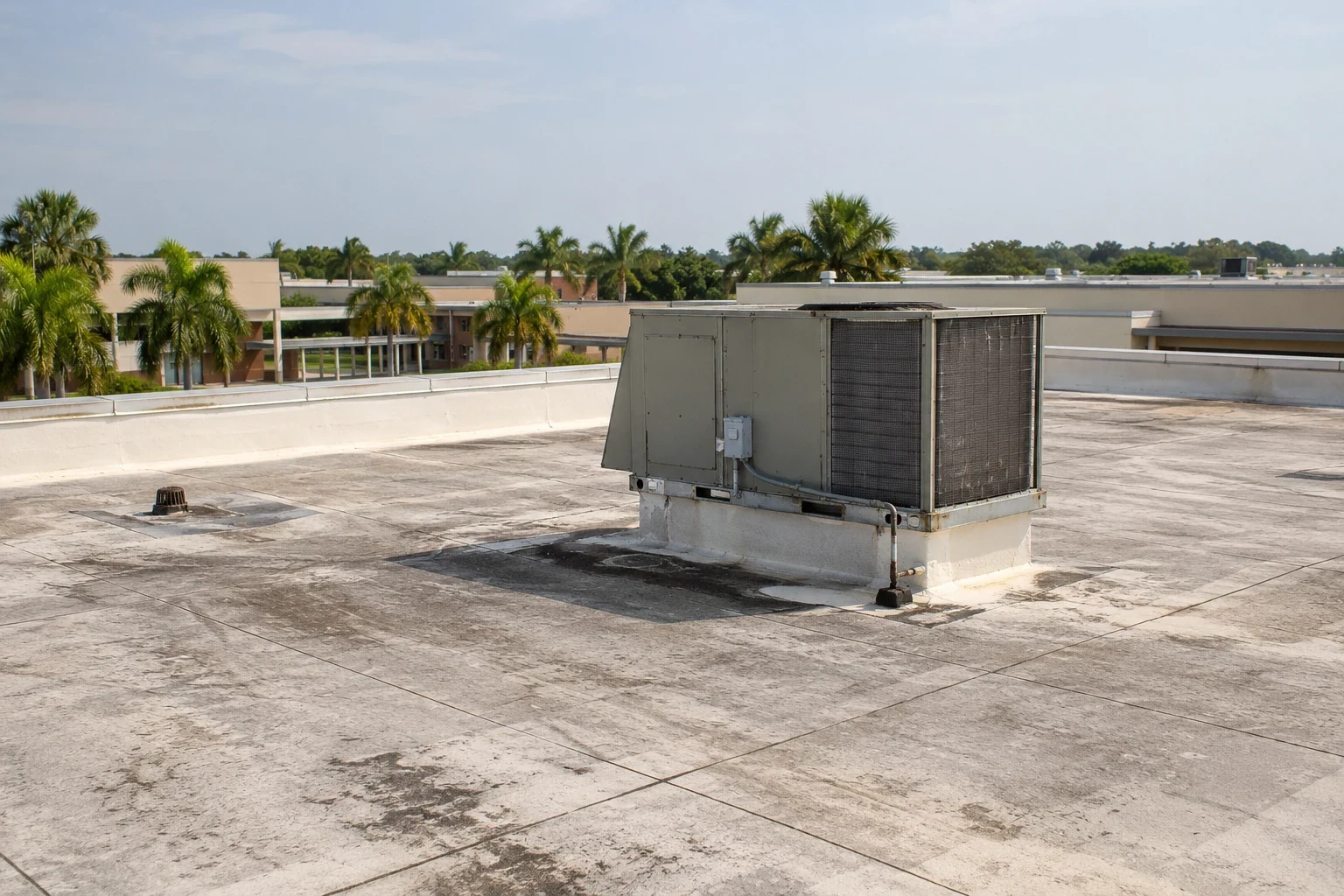
We sort findings by current water entry, safety concerns, and the chance that weather will widen the affected area. A roof with one active leak may need immediate temporary protection, while a second site might need an inspection before a budget decision. The report identifies the affected roof zone and separates confirmed damage from a suspected path. A regional storm or forecast does not prove that every asset sustained damage.
Fort Lauderdale averages 60.95 inches of rain annually. Between May 15 and October 15, the region receives about 60 to 70 percent of its yearly rain, a concentration that matters when a capital schedule includes roof openings. That pattern makes drainage, moisture checks, and dry-in planning important parts of an asset review. A roof capital plan can track the timing and basis for future work while keeping current repair needs visible.
Condition evidence supports a decision
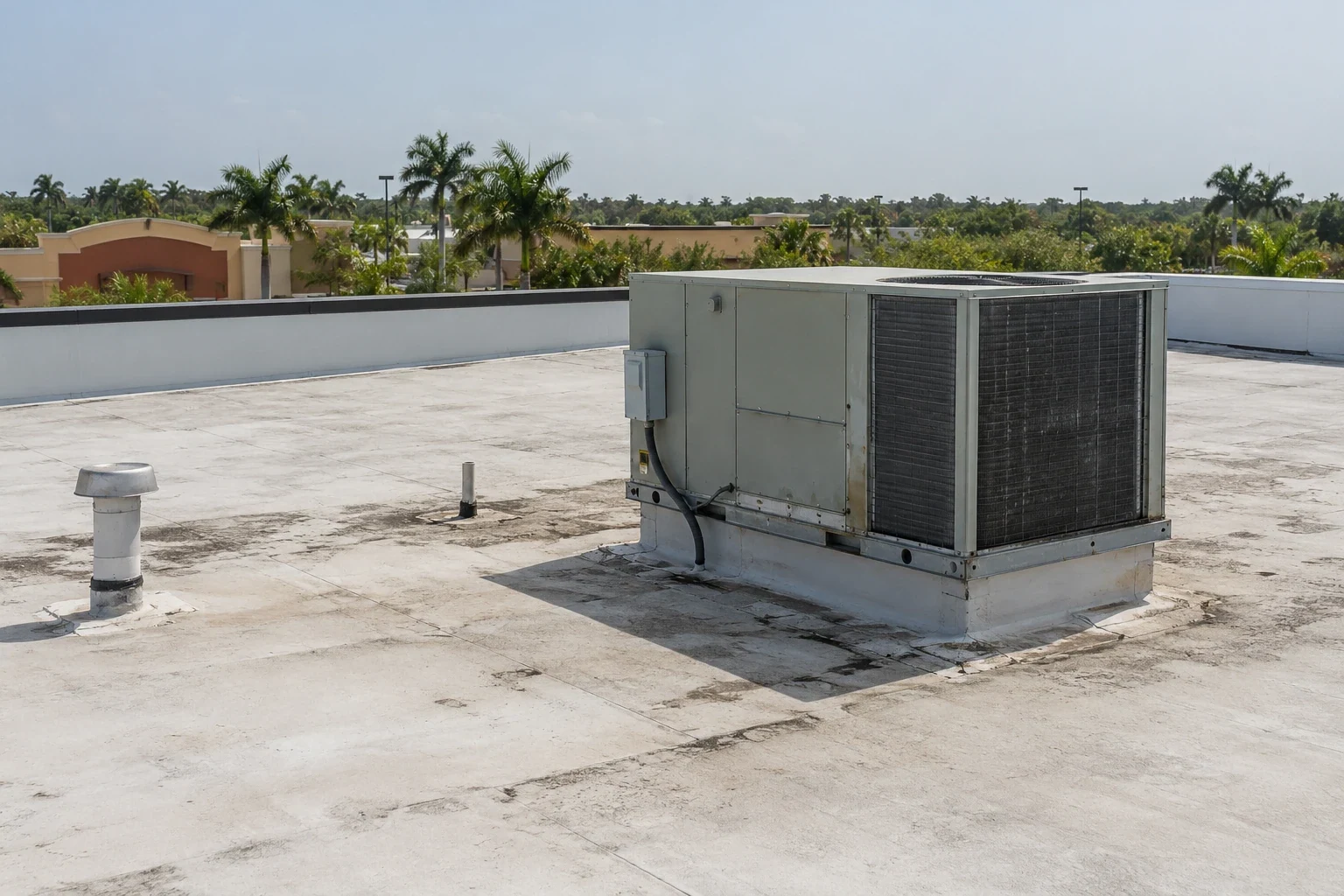
We identify the roof system and inspect seams, flashings, edge metal, penetrations, rooftop equipment, drains, and previous repairs. Photos are tied to a roof zone so an asset manager can see where an issue sits and what was accessible. If moisture is suspected beneath the surface, the report states whether an infrared survey or test cut is appropriate. We do not describe untested areas as dry or sound.
A commercial roof inspection can establish observed conditions, and gives findings, limits, and recommended action. Davie Road runs through downtown's center and serves commercial and mixed-use properties; SR 7 connects broader workplace and commercial zones. Those routes may affect mobilization, but the evidence stays attached to the individual roof section. That separation matters when several properties enter a capital discussion at once.
The assembly narrows the options
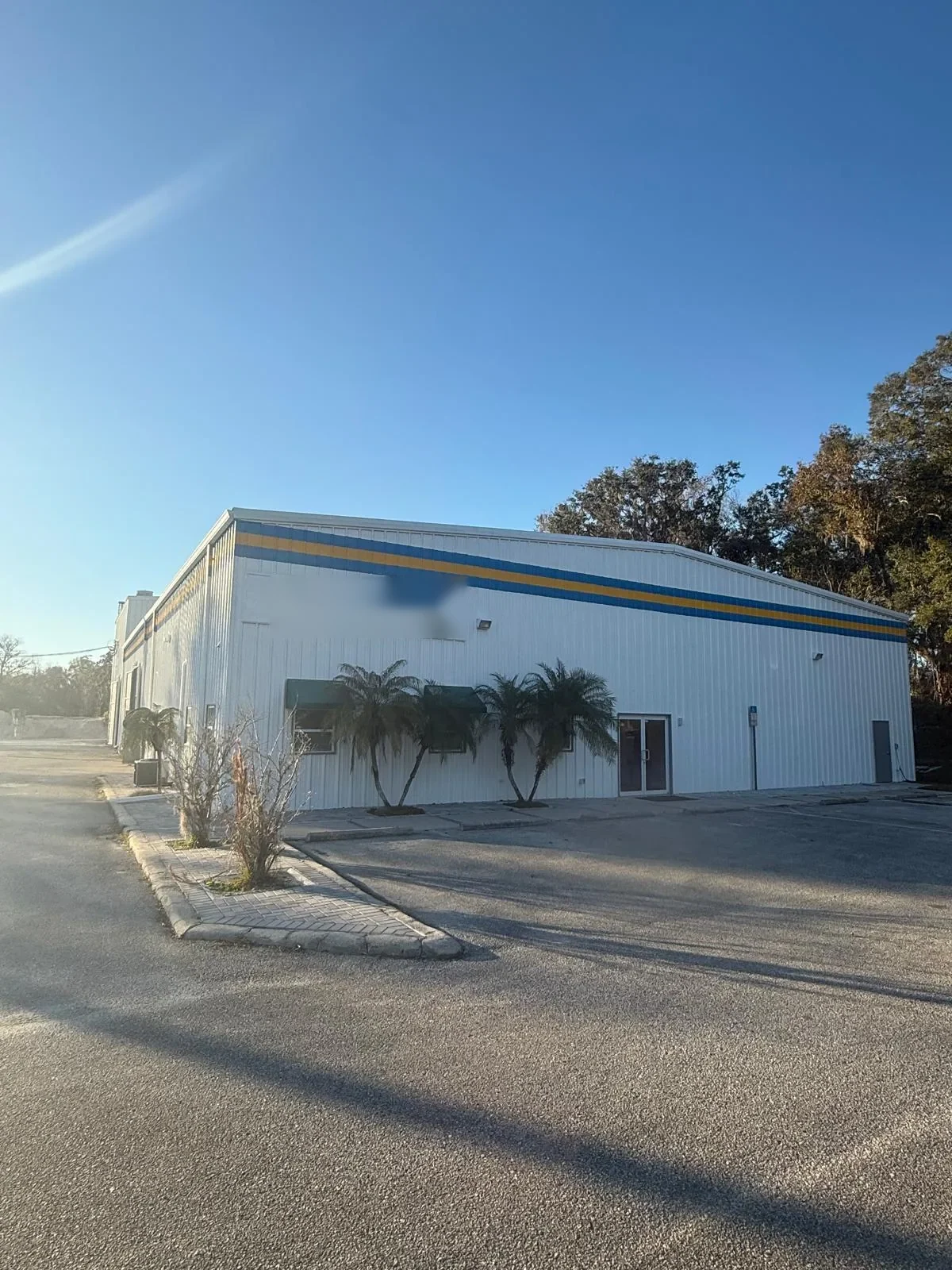
A localized seam or flashing failure may be a repair when surrounding material remains serviceable. Wet insulation, broad attachment loss, repeated leaks, or widespread surface breakdown can point toward testing or a larger scope. We compare repair, recover, coating, and replacement only after confirming the roof type and affected limits. Each option includes the work boundary and a description of what it will not resolve.
A coating cannot remove trapped moisture or correct a failed drain. Recover work depends on the existing assembly, attachment, and moisture condition. If replacement is justified, the removal area, staging, temporary protection, and building occupancy need to be visible before approval. A repair may stabilize one section while a separate replacement scope is developed for broader deterioration. The capital decision follows the inspection rather than assuming the highest-cost option.
Ownership does not simplify access
A leased property can have tenant notice periods, restricted roof hatches, sensitive equipment, or delivery windows that limit work. We confirm who controls each access decision and who can authorize a test opening. If a tenant area needs protection below the roof, the manager and tenant contact agree on the boundary before a crew opens the assembly. The schedule lists any area that remains out of reach.
Davie's corridor mix includes workplaces and commercial services, while Pembroke Pines has retail, industrial, office, and healthcare property. A property management company often coordinates the daily notice and access requirements for an investment owner. The asset owner still receives a clear decision record. On an occupied property, a phased reroofing sequence can maintain defined routes while each roof zone is completed and closed.
Weather changes the work sequence
Davie's daily heat index can exceed 100 degrees during July and August. Heat affects the safe length of roof access and the amount of material that can be opened in a shift. We define a working footprint and dry-in point before removal starts. If an afternoon cell forms, the crew closes the active area before moving to the next task.
The May-to-October wet season delivers about 60 to 70 percent of the region's annual rainfall. For an owner reviewing capital needs, that seasonal concentration makes open-roof exposure and drainage status relevant to the timing decision. A tropical forecast can still alter access, so each asset record should show whether protection is temporary, permanent, or awaiting a safe return. We update the owner or manager on the affected zone, temporary protection, and conditions needed to return. Urgent calls can be made any hour, holidays included, but immediate work still depends on safety and site access. Each building's schedule records the next action instead of using a portfolio-wide start date that conceals local constraints.
The closeout carries forward open decisions
For each property, the handoff includes photos, zones inspected, observed conditions, work performed, inaccessible areas, and open tests or approvals. Temporary measures are identified separately from permanent repairs. The manager can use those details to update the maintenance plan or bring a capital request forward. A building that has not been inspected remains a separate item, even if it shares an owner or corridor with a completed project.
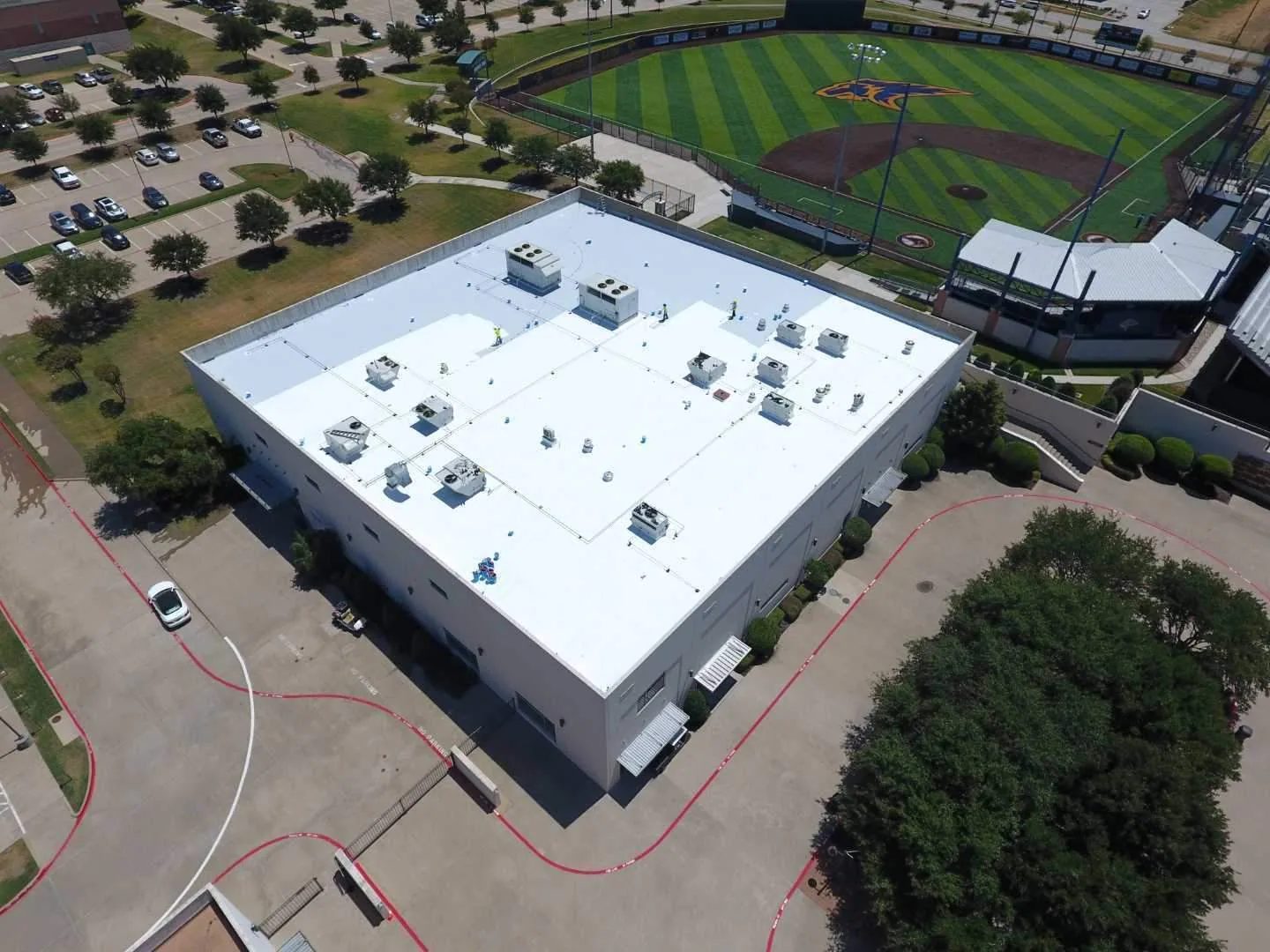
A healthcare system can use the same property-level history while adding patient access and continuity requirements. For multi-property owners, a portfolio roof program can coordinate visits and group findings without blending building-level scope. Properties near the Plantation Midtown district still need access and staging plans set for their own site. The next approval names whether to repair, test, monitor, or develop a replacement scope. If a sale, refinance, or annual budget review is underway, the record also shows which unanswered roof question could change that decision.
Related Roofing Work
- Commercial Roof Capital Planning
- Commercial Roof Inspection
- Commercial Roof Replacement
- Property Management Companies
- Occupied Commercial Building Reroofing
- Healthcare Systems
- Multi-Site Commercial Roof Programs
- Plantation Midtown Development District, Plantation
Browse every page in Industries We Serve, or request a roof assessment and we will walk the roof with you. Call 555-555-5555.
Questions Owners Ask
What does an owner need before approving a roof project?
The decision record should identify the roof system, affected zones, photos, access limits, and the basis for the proposed work. We distinguish confirmed conditions from testing still needed. The scope then states what the selected repair or replacement addresses.
How do we compare repair with replacement across properties?
We compare each building's condition and system separately. A localized defect in sound material may support repair, while recurring leaks or broad deterioration can warrant testing and replacement planning. A portfolio summary can sort priorities without making one roof a proxy for another. The resulting sequence can be reviewed before capital is released.
Does a storm warning mean our Davie assets need new roofs?
No. A weather alert establishes regional conditions, not roof damage. Once access is safe, inspection documents physical changes and identifies any further test. We separate observed damage from work that remains uncertain.
Can the owner fund urgent protection before a full scope is ready?
Yes. We can identify immediate temporary protection separately from permanent repair. The owner receives the limit of that measure, the affected roof area, and what inspection or approval is needed to define the lasting correction.
What if a tenant prevents access during due diligence?
The report names the roof area not reached and the access authorization required to return. Findings from another property or roof zone do not fill that gap. The owner can decide whether to secure access, reschedule, or carry the open condition forward.
Share the building list, active exposure, tenant access rules, and approval timeline. We will map each inspected roof, set the safe work window, and provide a property-level basis for the next decision.
