PVC Commercial Roofing in Davie, FL
Review a PVC roof zone
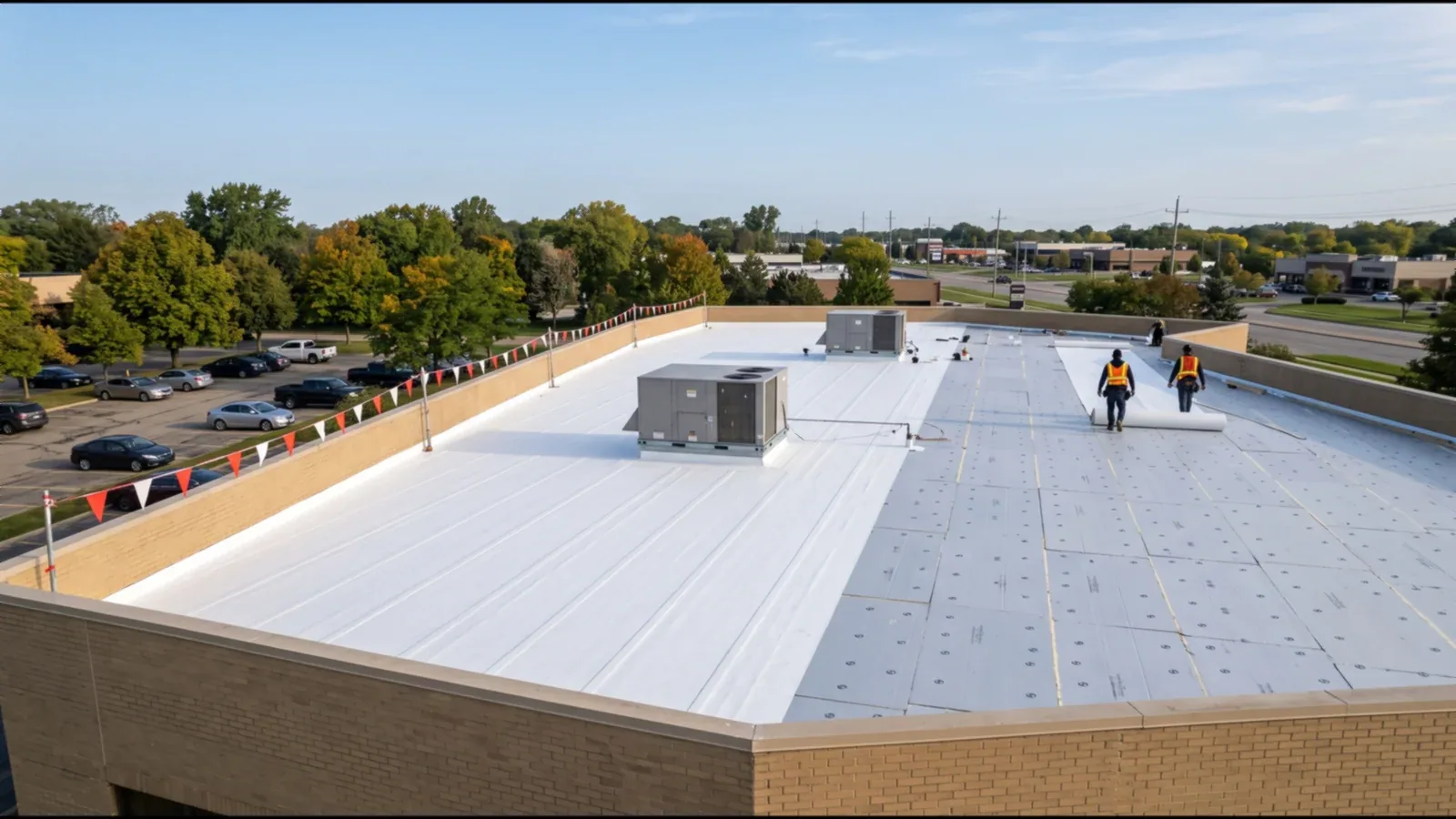
Davie's summer heat can raise roof-surface temperatures before an afternoon shower cuts the work window short. We start a PVC roof visit by tracing the reported area to nearby welds, flashings, drains, and equipment curbs. Before a seam is opened, the manager sees the work zone and dry-in limit. In South Florida's wet season, which runs roughly from mid-May to mid-October, surface preparation and a clear stop point matter as much as the patch itself.
Fort Lauderdale averages 60.95 inches of rain annually, with a 77.2°F normal mean temperature. Heat and humidity still make surface preparation and dry-in timing important. We use the rainfall and temperature averages to plan weld checks, then assess each roof from its assembly and observed condition. We record the existing PVC assembly and any limitations before comparing repair, recover, or replacement options.
Weld quality follows the surface
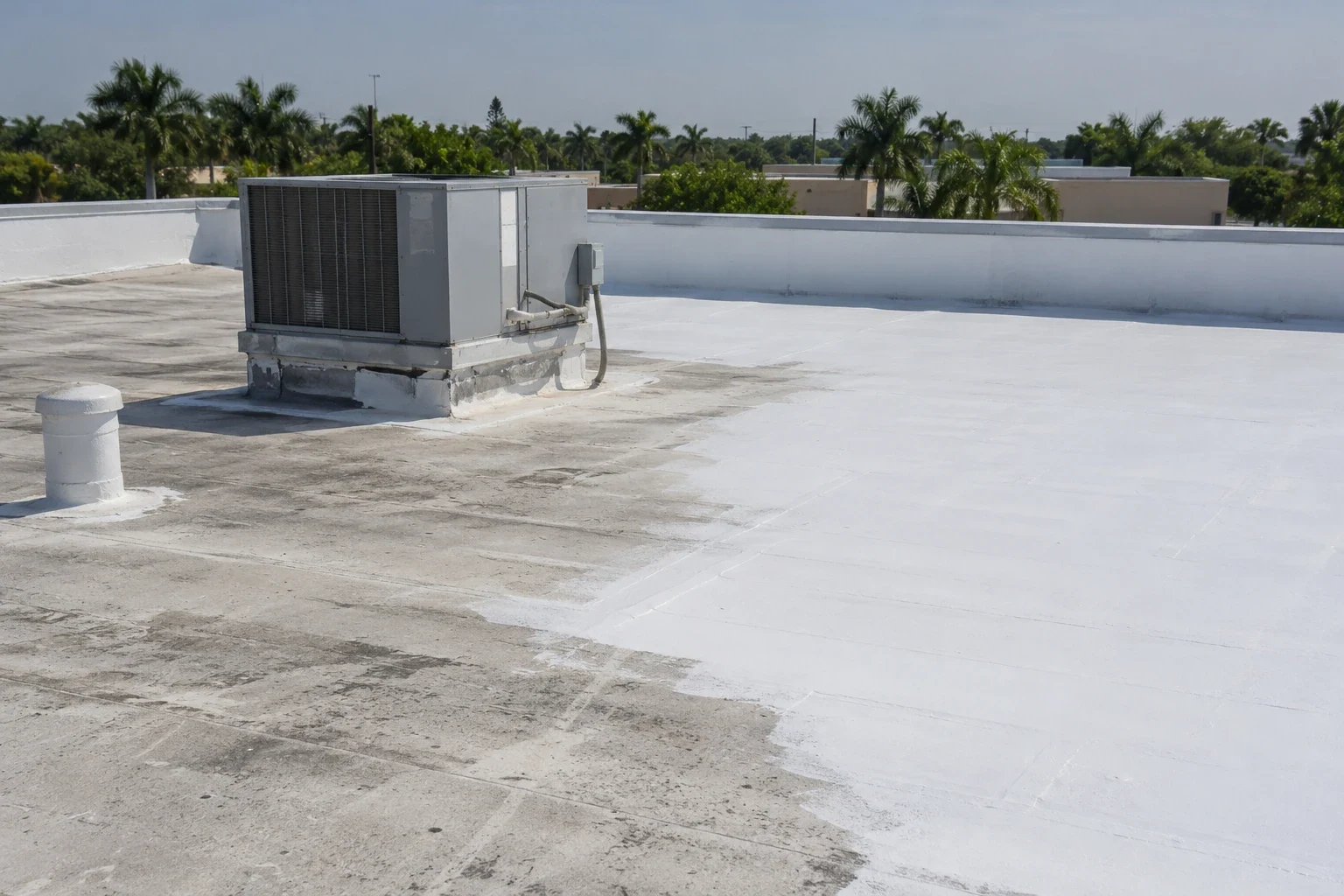
PVC sheets are typically joined with hot-air welding. A sound lap depends on compatible material, clean surfaces, suitable temperature, and consistent tool movement. Dirt, moisture, wrinkles, or prior sealant can complicate a weld. We inspect the seam path and transitions, then test only where conditions permit. A repair returns to material that can accept the specified detail; it does not bury a weak joint under another layer.
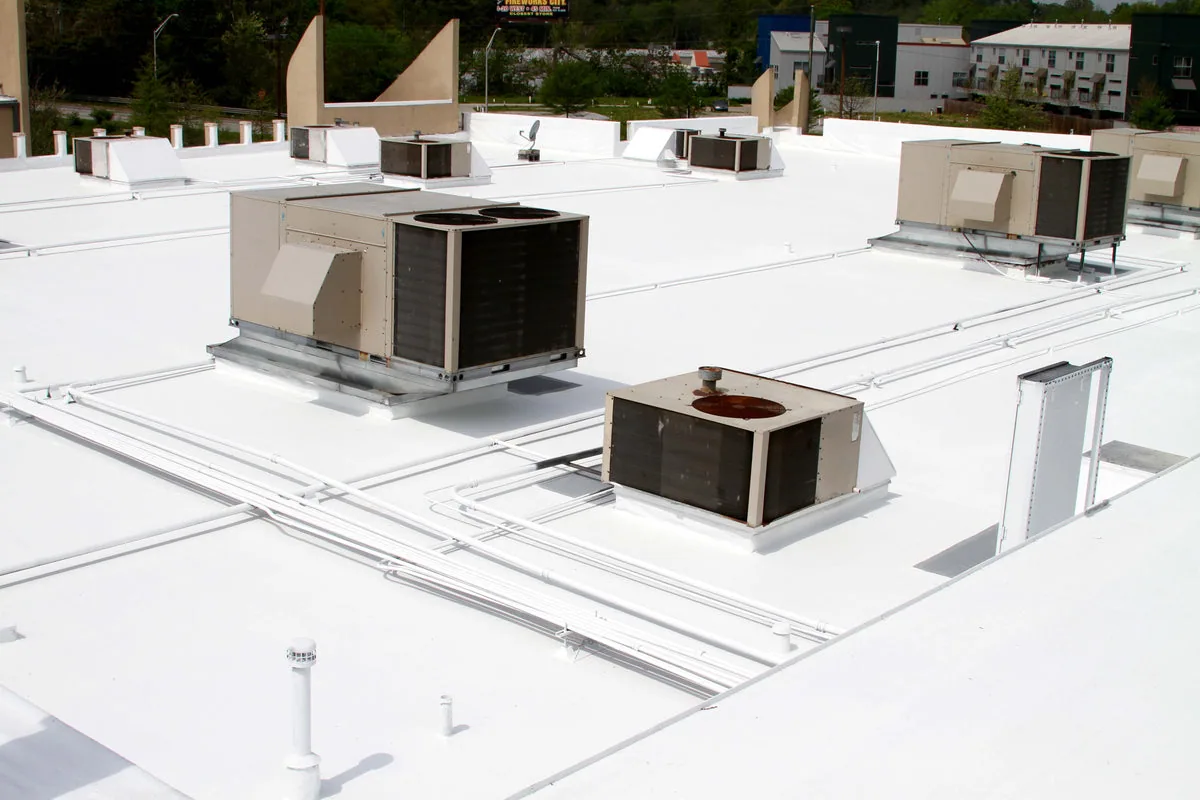
Field seams are only part of the review. We check perimeter terminations, corners, pipe flashings, skylights, curbs, and changes in plane. A membrane can be intact in the open field while a curb corner or edge connection lets water enter. If the leak report involves a rooftop unit, the equipment curb review can coordinate flashing work with unit access and any mechanical shutdown.
Commercial and institutional properties near the SR 7 / US 441 corridor can have active rooftop equipment and occupied operations. We confirm seam access, clearances, and tenant notice before staging a PVC repair; inspection establishes the assembly at that building.
The roof's use matters at transitions
PVC is selected in some commercial settings for its membrane characteristics and resistance to a range of exposures, but project suitability depends on the materials and conditions present. We review exhaust discharge, grease or chemical contact, maintenance traffic, and the roof details around those vents and equipment. A surface change near an exhaust does not by itself identify the cause. We document what is visible and compare it with operating history supplied by the facility.
Automobile-related industrial businesses, technology firms, and commercial services operate along Davie's SR 7 corridor. We inspect the roof's membrane markings, edge and seam construction, and available service records rather than infer system type from the property's use.
A roof with recurring water entry may need a condition inspection before the repair boundary is set. Where concealed moisture is suspected, an infrared moisture survey can help map areas for confirmation. We record the method and its limits; test openings need separate approval.
PVC details should preserve flow
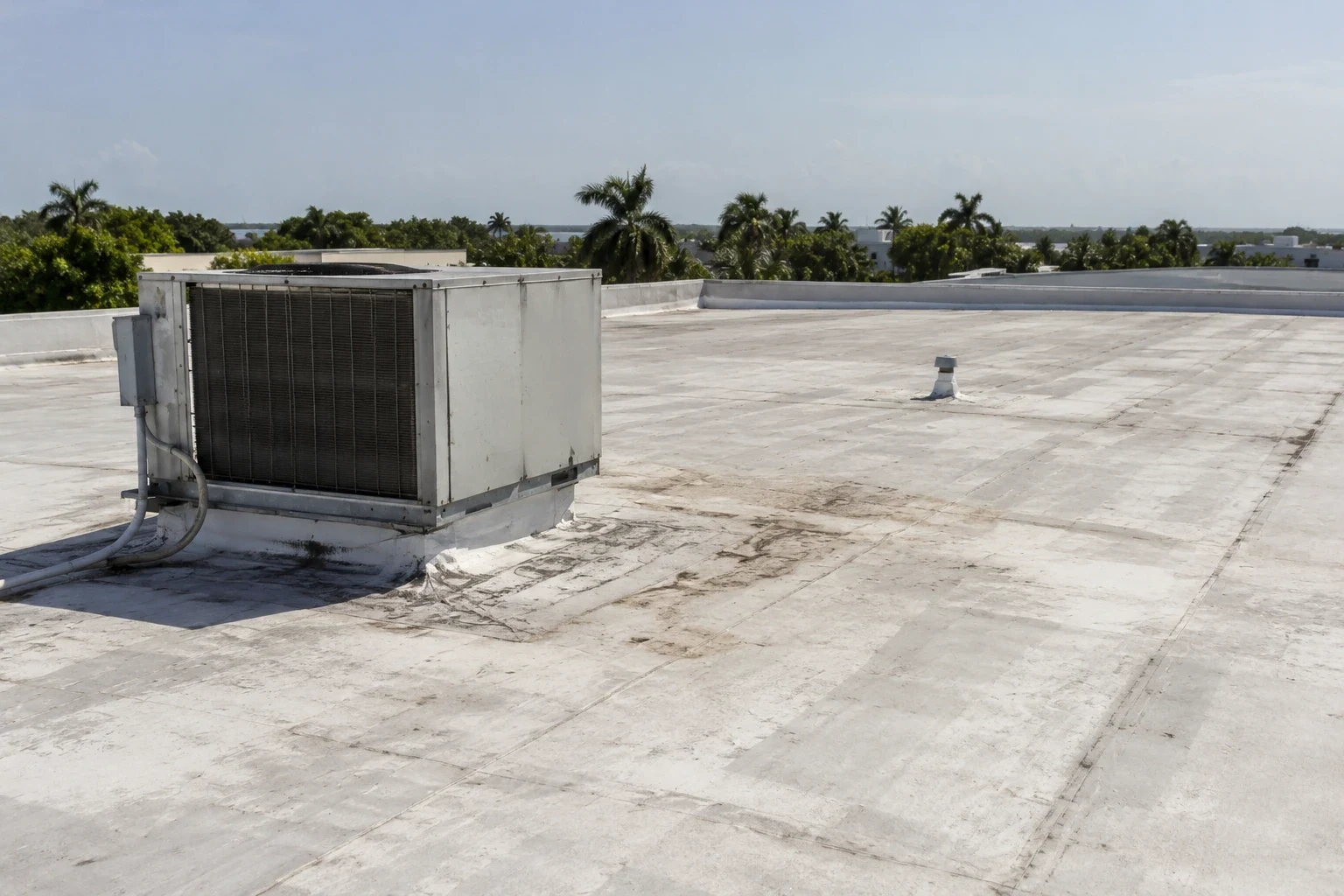
Drains, scuppers, overflows, and crickets must remain serviceable after a PVC repair or replacement. We inspect the membrane tie-in at the outlet, the surrounding field, and nearby low spots. Debris removal may address a blockage, while a loose drain connection calls for a different repair. If water remains after rain, we note the location and determine whether outlet access or a separate slope evaluation is needed.
Davie's seasonal rainfall makes drainage continuity important through repeated showers. The drain and scupper service can assess an outlet, while a ponding-water review documents a recurring low area. These checks keep a PVC seam repair separate from an unresolved drainage condition. Coating or membrane material should not obstruct a drain bowl or cover a required overflow path.
When PVC rolls or a lift are involved, we confirm the property's gate and receiving window before dispatch. Near the Griffin Road corridor , the property contact confirms lift access, delivery hours, and the roof route before materials arrive.
Repair and replacement solve different problems
A localized PVC repair can address a confirmed puncture, failed weld, or flashing defect when surrounding membrane remains suitable. The proposal defines preparation, transitions, and concealed-condition limits. If the opening reveals wet insulation or a damaged deck, the crew stops, protects the roof, and requests approval before expanding removal.
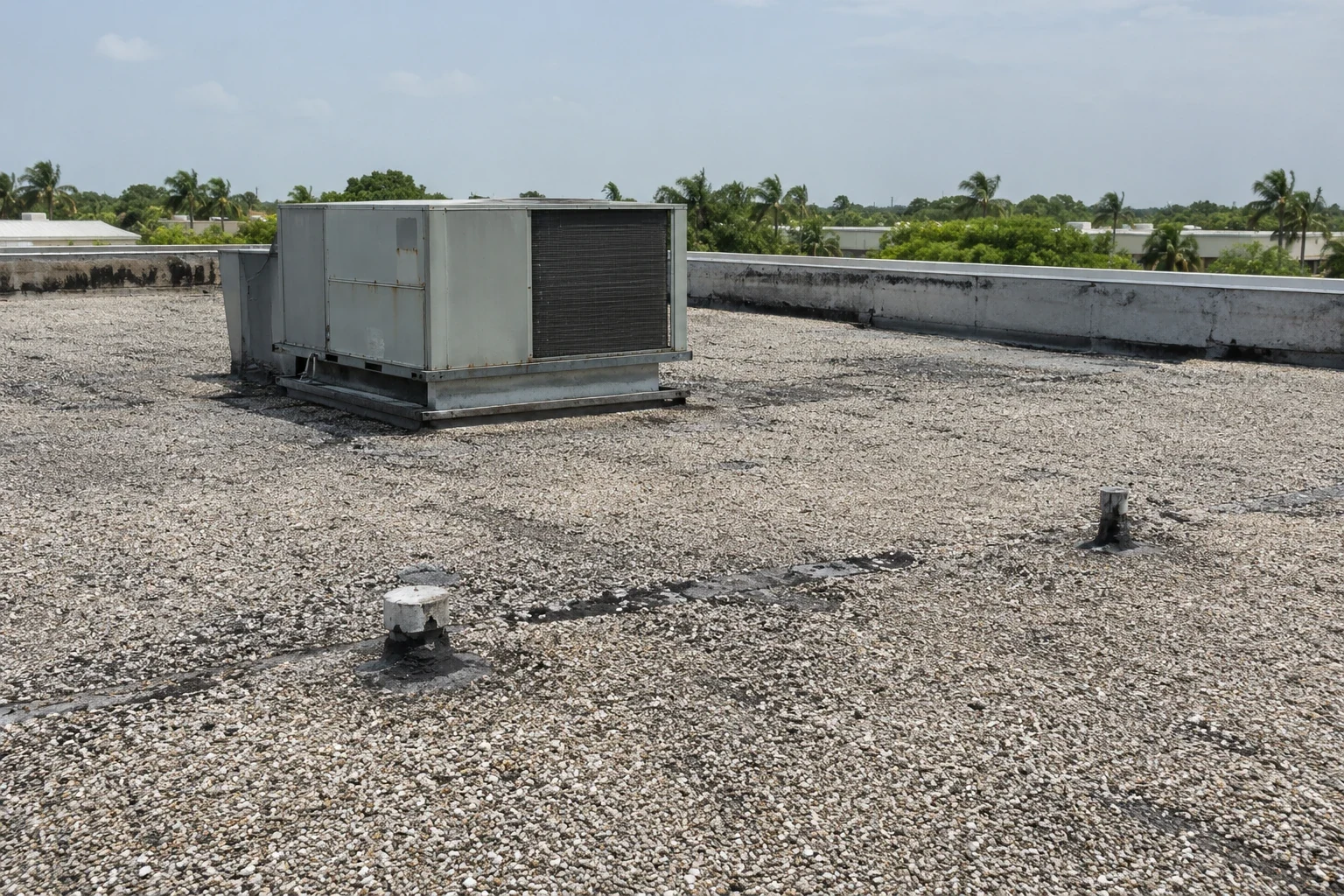
Multiple failures, widespread seam weakness, or moisture across several zones may call for a broader assembly review. A PVC replacement evaluation considers removal, insulation, cover board, attachment, edge metal, and the property's drainage plan. A recover assessment is appropriate only when the existing roof and project requirements support that approach. We explain why one route fits the observed condition instead of presenting every option as interchangeable.
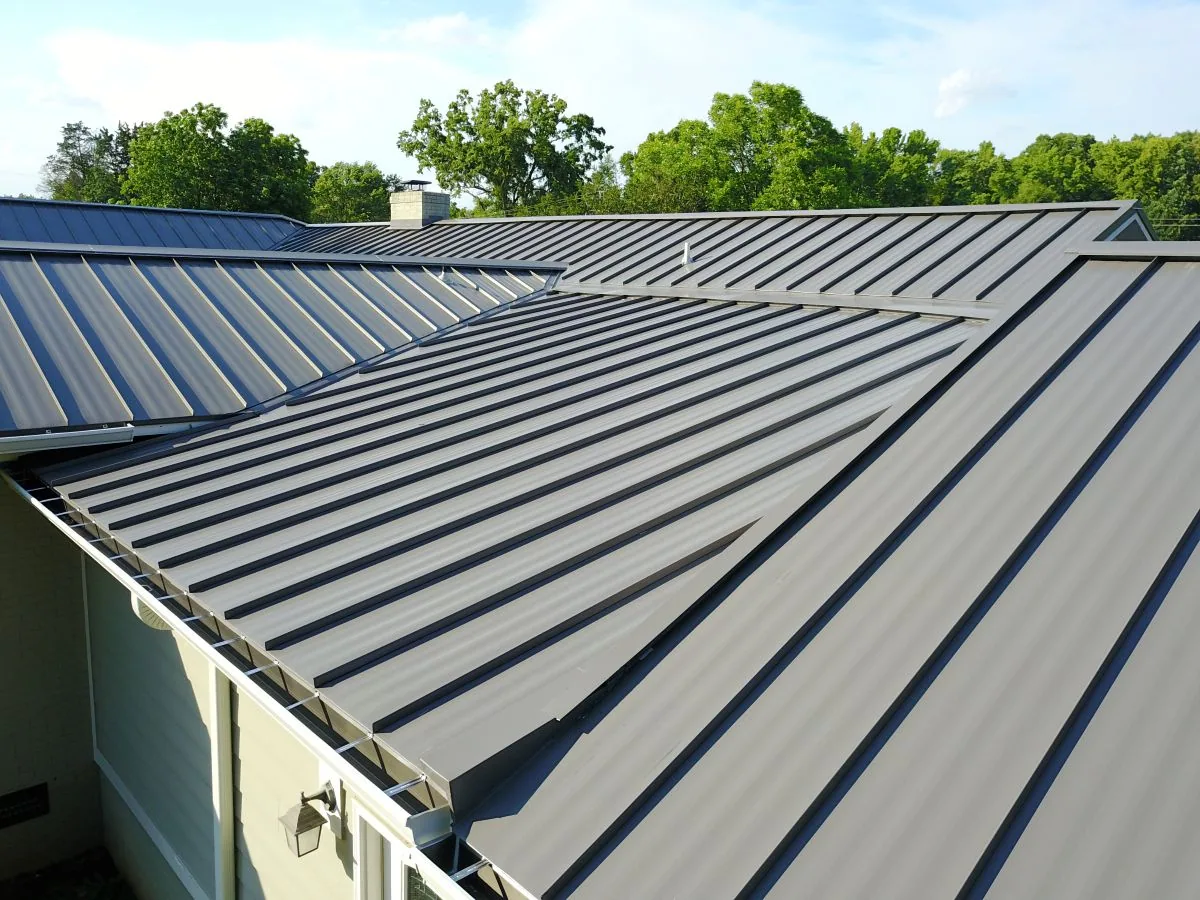
Before choosing a PVC system, the owner may compare the membrane with TPO roofing or KEE roofing. Seams, exposure, flashing details, maintenance, and compatibility should be part of that comparison. The installed assembly and project documents determine material selection; a broad product label cannot replace that review.
Weather sets the weld window
PVC welding needs suitable surface conditions and controlled preparation. Rain, dew, dirt, or a damp substrate can affect the detail, so the crew checks conditions before starting. We define a dry-in line before opening any PVC roof section. If the rain gap closes, the team stops at that point, protects the open area, and tells the manager what remains.
Summer heat affects surface preparation and safe access time. The crew plans PVC seam work for a safer part of the day and follows the membrane's surface-temperature requirements. The field lead coordinates work timing, water, shade, and the membrane manufacturer's installation requirements. An early shift may reduce exposure but still needs approved access and material readiness. The daily update identifies any weather hold and the roof zone that must be revisited.
Downtown Davie's commercial and mixed-use center runs along Davie Road. Before PVC work starts there, the project lead confirms delivery timing and any pedestrian route protection. Near the Davie Road corridor, public-facing entrances and deliveries can affect staging. The property manager confirms the site's rules and any tenant communication needed before the crew occupies the work area.
The PVC record tracks each repair zone
At closeout, the manager receives roof-zone photos, seams or flashings repaired, material details, weather interruptions, and any area that was not accessible. If the leak entry point remains uncertain, the report says which detail was checked and what test or access is needed next. A patch is documented within its repair boundary, not as proof every membrane section was tested.
A maintenance visit can recheck drains, seams, and curbs before the next wet-season stretch. If damage followed a reported storm, a storm review can record visible changes and separate them from older observations. Each follow-up stays tied to the actual roof and documented conditions.
The final handoff identifies completed work, remaining exclusions, and the next approval. The property team can plan access, compare future observations, and distinguish a repair from a capital decision.
Related Roofing Work
- SR 7 / US 441 Corridor
- Commercial Roof Inspection
- Infrared Roof Moisture Survey
- Commercial Roof Drains and Scuppers
- Commercial Roof Replacement
- TPO Roofing for Commercial Buildings
- KEE Commercial Roofing
- Davie Road Corridor
Browse every page in Roof Systems, or request a roof assessment and we will walk the roof with you. Call 555-555-5555.
Questions Owners Ask
What can cause a PVC weld to open?
Contamination, moisture, poor preparation, movement, or an earlier repair can affect a welded lap. We inspect the seam and surrounding material, then test only under suitable conditions. The scope identifies the confirmed repair boundary.
Can you weld PVC during a Davie rain shower?
A hot-air weld needs a suitable dry surface and time to finish the detail. If rain closes the work window, we secure the agreed stop point and reschedule the remaining weld rather than work over wet material.
Is PVC a fit for every commercial roof?
No. Suitability depends on the existing assembly, exposure, building use, drainage, and project requirements. We inspect those conditions and compare the proposed detail with the alternatives under consideration.
Can ponding be repaired by adding a PVC patch?
A patch addresses a membrane defect, not necessarily the reason water remains. We document the low area and outlet path, then identify whether drainage or slope review should come before roof work.
What does the PVC closeout include?
It lists the inspected zones, seams or details repaired, photos, weather limits, and any unresolved item. The manager can see what was completed and which follow-up or approval remains.
Share the leak history, roof access rules, tenant hours, and any system records. We will inspect the membrane, map the repair boundary, and set a safe work window.