KEE Commercial Roofing in Davie, FL
Review a KEE membrane
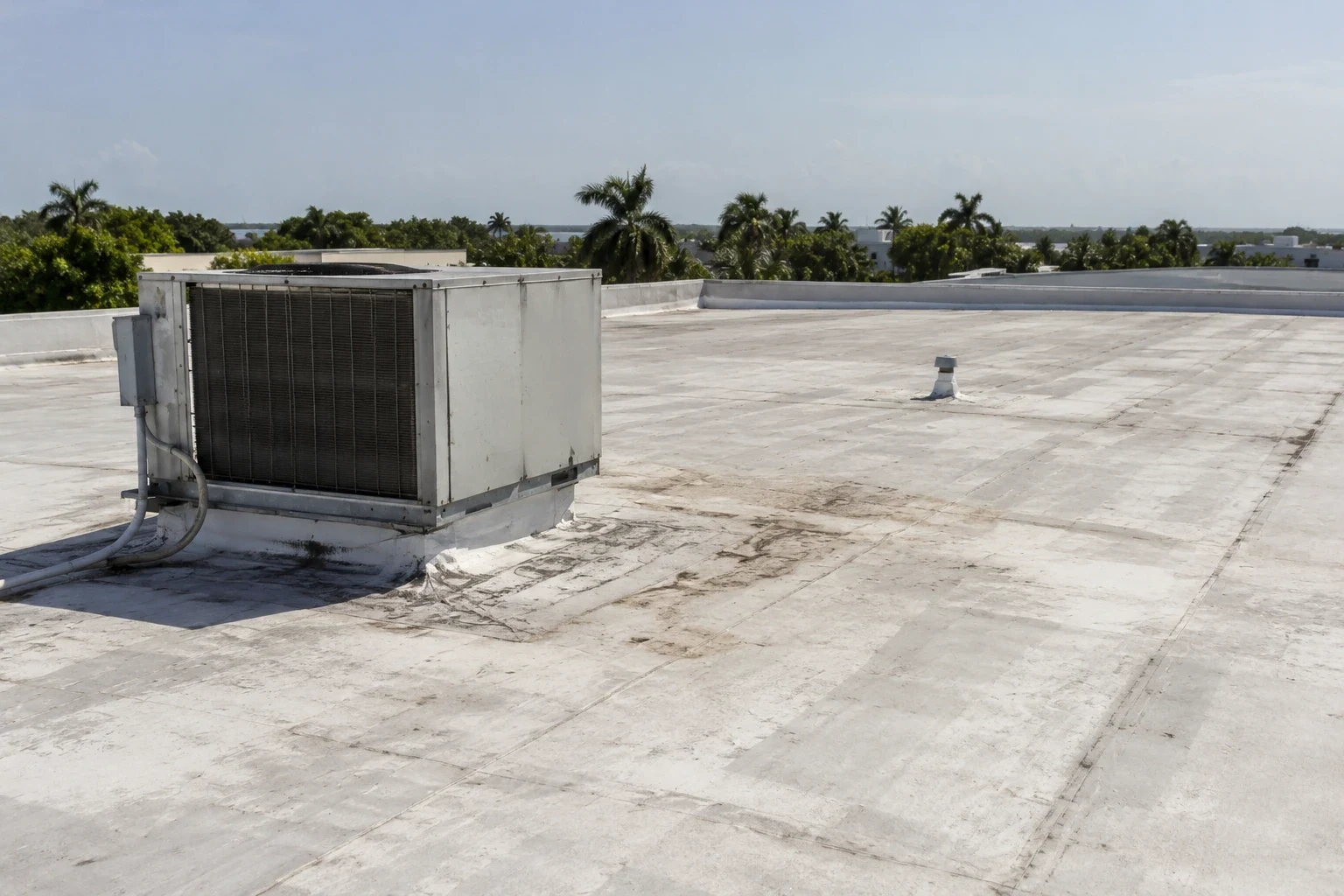
Davie's warm, humid weather can leave a roof damp after a passing cell, and a wet surface changes the timing of seam work. We begin a KEE roof visit by checking the sheet, welded laps, edge terminations, and the location of any reported leak. The property manager receives the inspected zone and the stop point before material is disturbed. South Florida's rainy season stretches from mid-May through mid-October, so a repair needs a dry interval and a defined closeout plan.
Nearby Fort Lauderdale averages 60.95 inches of rain a year and a mean temperature of 77.2°F. In Davie, we inspect the installed KEE membrane and record the detail conditions at the property. We use the field inspection, system records, and documented operating conditions to decide whether a KEE membrane can be repaired, coated, recovered, or needs replacement.
KEE starts with the installed formulation
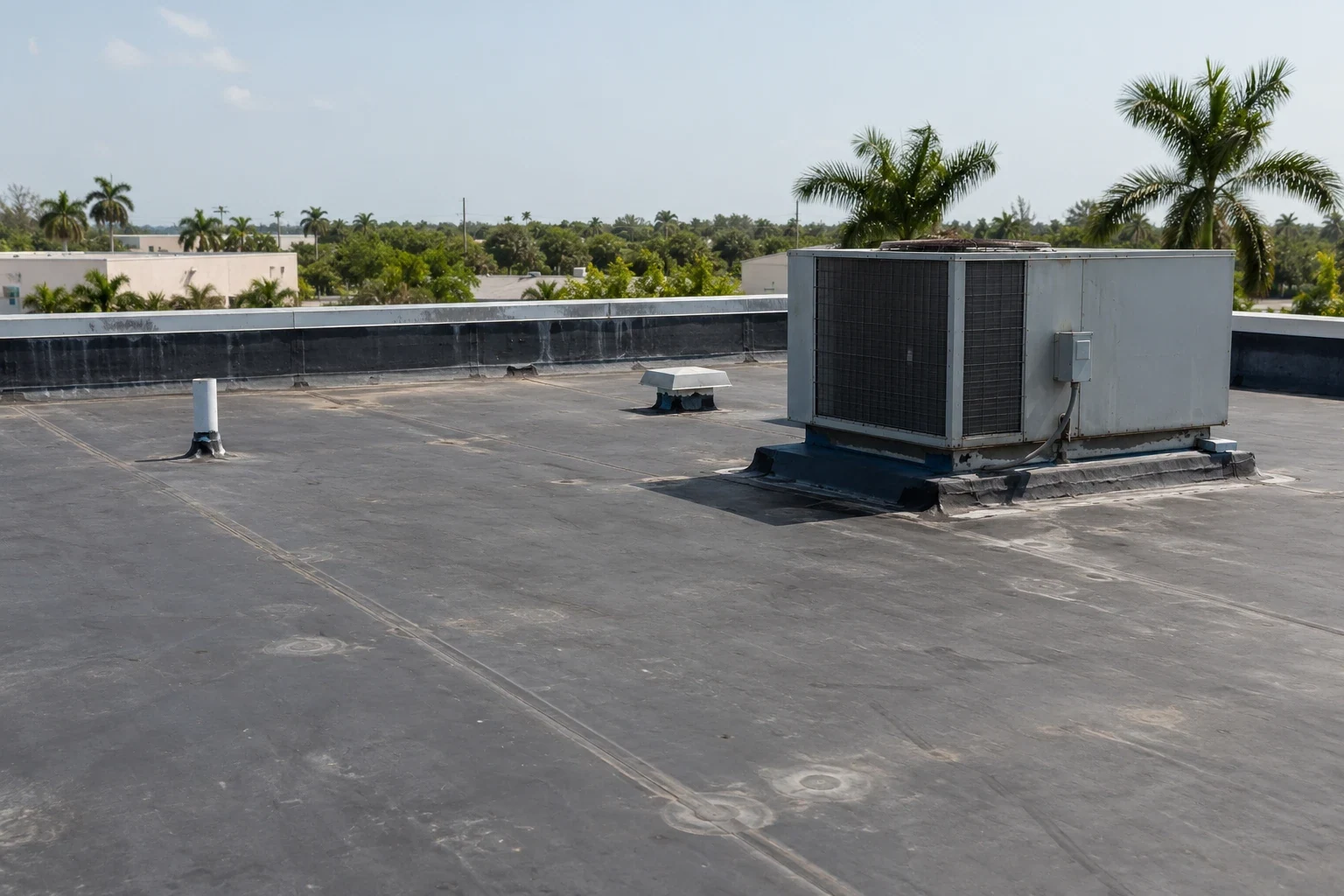
KEE is a PVC-based membrane formulation using ketone ethylene ester as a modifier. The installed product, reinforcement, thickness, and seam design should be identified from available records or field markings before repair materials are selected. Membranes that look similar may have different compatibility requirements. We record the product information available and avoid treating all white single-ply sheets as interchangeable.
A roof review checks welded seams, patches, punctures, flashing, corners, curbs, penetrations, and drainage. A lap that has lifted may need preparation and a compatible weld detail. A damaged curb transition may require new flashing rather than a field seam patch. We inspect enough surrounding material to define a safe work boundary and note whether additional testing could reveal concealed moisture.
The SR 7 land-use area spans campuses, tech offices, service businesses, and industrial workplaces. On a KEE membrane, we first map the areas where equipment, foot traffic, or access rules may limit seam testing. Equipment, exhausts, and maintenance routes can affect where the membrane is reachable. The SR 7 / US 441 area helps coordinate regional arrival, while the building manager confirms roof access, equipment clearance, and any tenant notice.
Exposure should match the roof record
KEE formulations are often selected where chemical exposure or rooftop service conditions warrant review, but the system must still be matched to the actual discharge and maintenance practices. We inspect areas near exhausts, kitchens, service equipment, and fluid lines when they are part of the reported concern. A discoloration or surface change is documented as observed; the cause requires evidence from the facility or a focused inspection.
South Florida's wet-season outlook names damaging thunderstorm winds, flooding, hail, and tornadoes among regional hazards, especially from mid-May into early July. After a severe-weather report, the membrane should be checked for displaced edge details, punctures, debris impacts, and open seams. After severe weather, we inspect edges, penetrations, and seams for visible changes and record the next repair step. A storm damage review can record site conditions and separate new observations from earlier maintenance findings.
Where a curb or pipe transition sits within the affected zone, the penetration flashing service can address a roof-side detail under a separate approved scope. The crew protects the open area and identifies any mechanical trade needed before work begins.
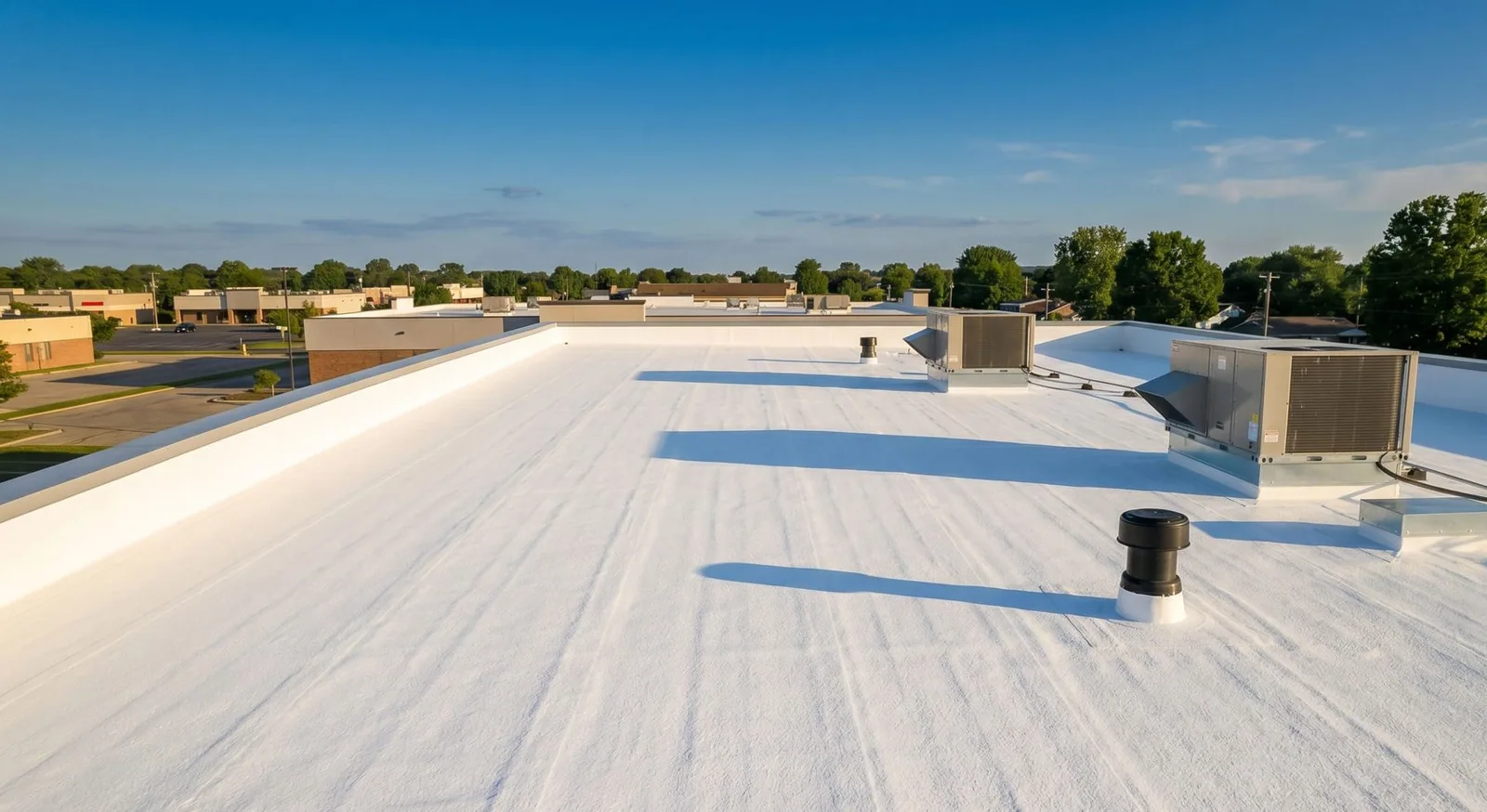
Welds and terminations carry the water line
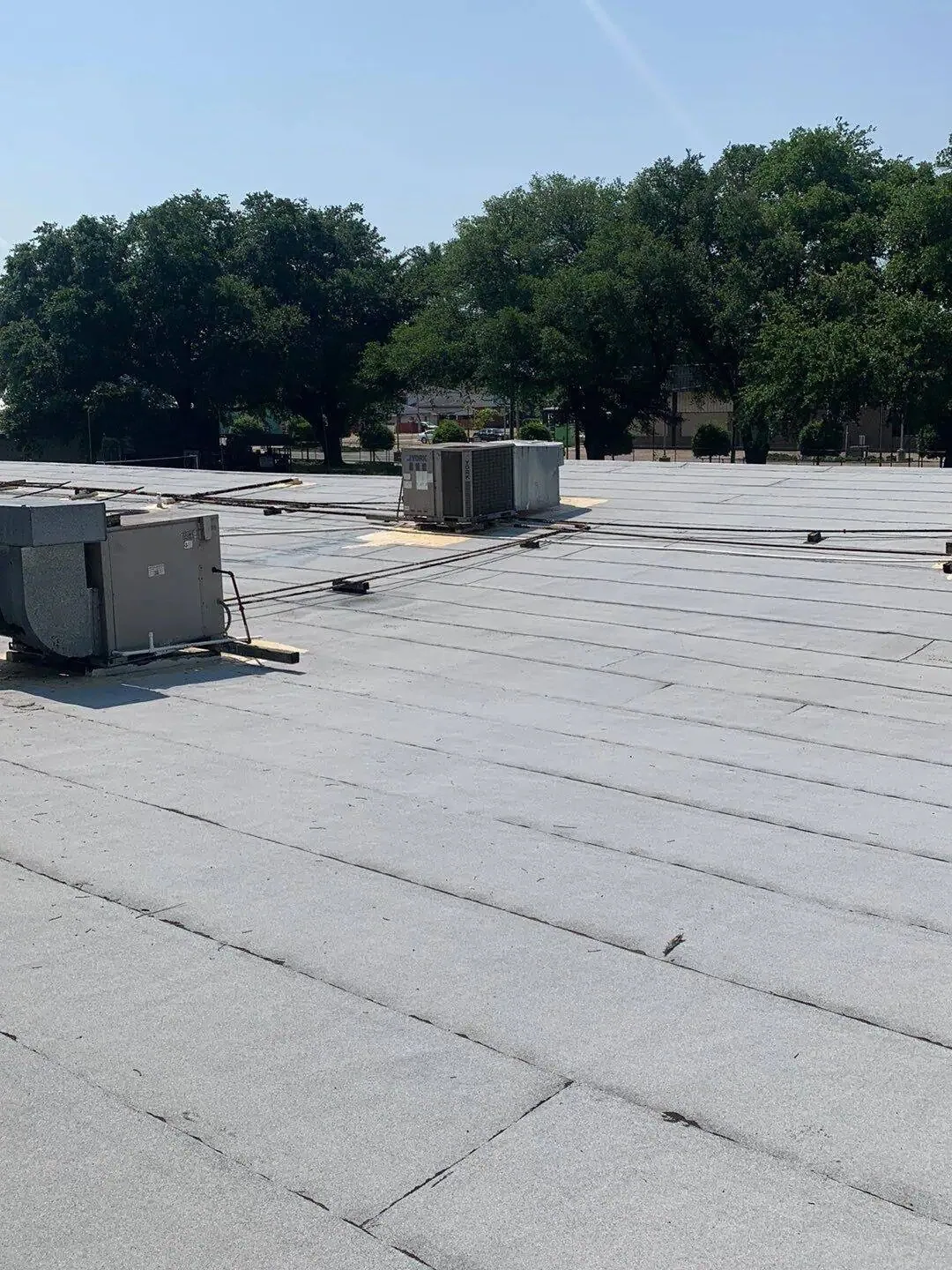
Heat-welded seams depend on clean surfaces, compatible material, and proper preparation. We check the full lap, including corners and terminations, rather than patching only the visible lift. A seam test can be useful when conditions support it, but the result applies to the checked area. We identify which roof zones were inspected and what remains outside access.
Perimeters, parapets, drains, and transitions to dissimilar materials are common points for movement. The inspection notes fastening, metal condition, membrane termination, and water paths at the detail. If the existing sheet is dirty, wet, or coated with an unknown repair material, preparation may require additional steps. The scope lists that work and pauses for approval if removal exposes a substrate issue.
A drain and scupper review checks outlet connections and flow paths. The adopted downtown plan centers Davie's commercial and mixed-use redevelopment on Davie Road. Near the Davie Road corridor, access and staging instructions still come from the property manager.
Options depend on moisture and attachment
A local KEE repair makes sense when the surrounding sheet remains compatible and the defect has a defined boundary. If failures recur across seams, edges, and penetrations, the owner may need a broader moisture and attachment review. An infrared survey can help map areas for selective confirmation. It does not replace test openings where the assembly needs direct verification.
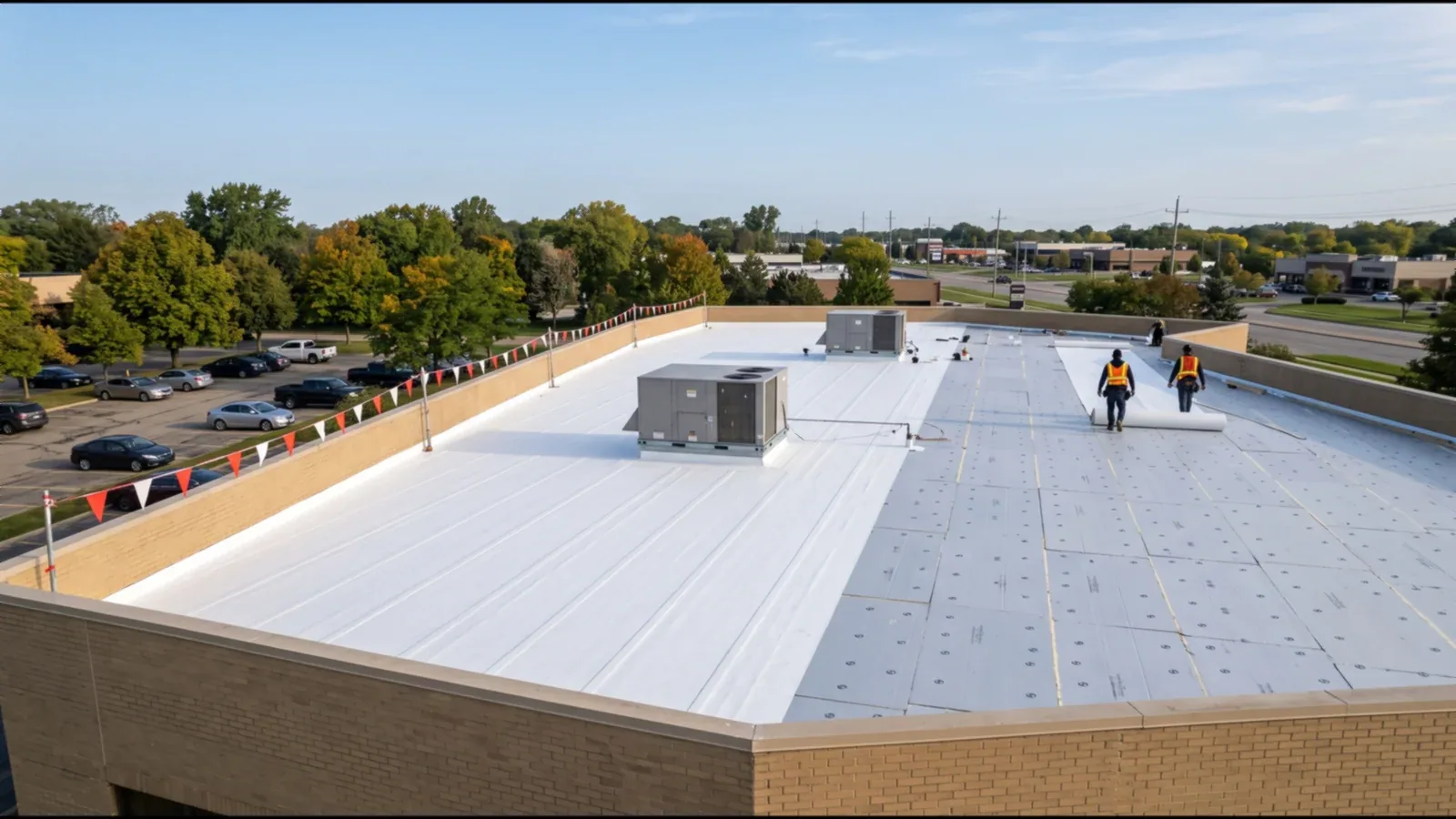
A coating or recover may be possible only if the existing membrane, attachment, moisture condition, and project requirements permit it. If removal is appropriate, the new system needs a complete plan for insulation, edge metal, drains, penetrations, and occupied-space protection. A replacement evaluation can compare those components when localized repairs no longer address the owner's concern.
For a system comparison, TPO roofing is another heat-welded single-ply option, while PVC roofing may share related welding methods but differs in formulation. We review available product information and intended exposure rather than select a system by color alone.
A dry surface sets the repair start
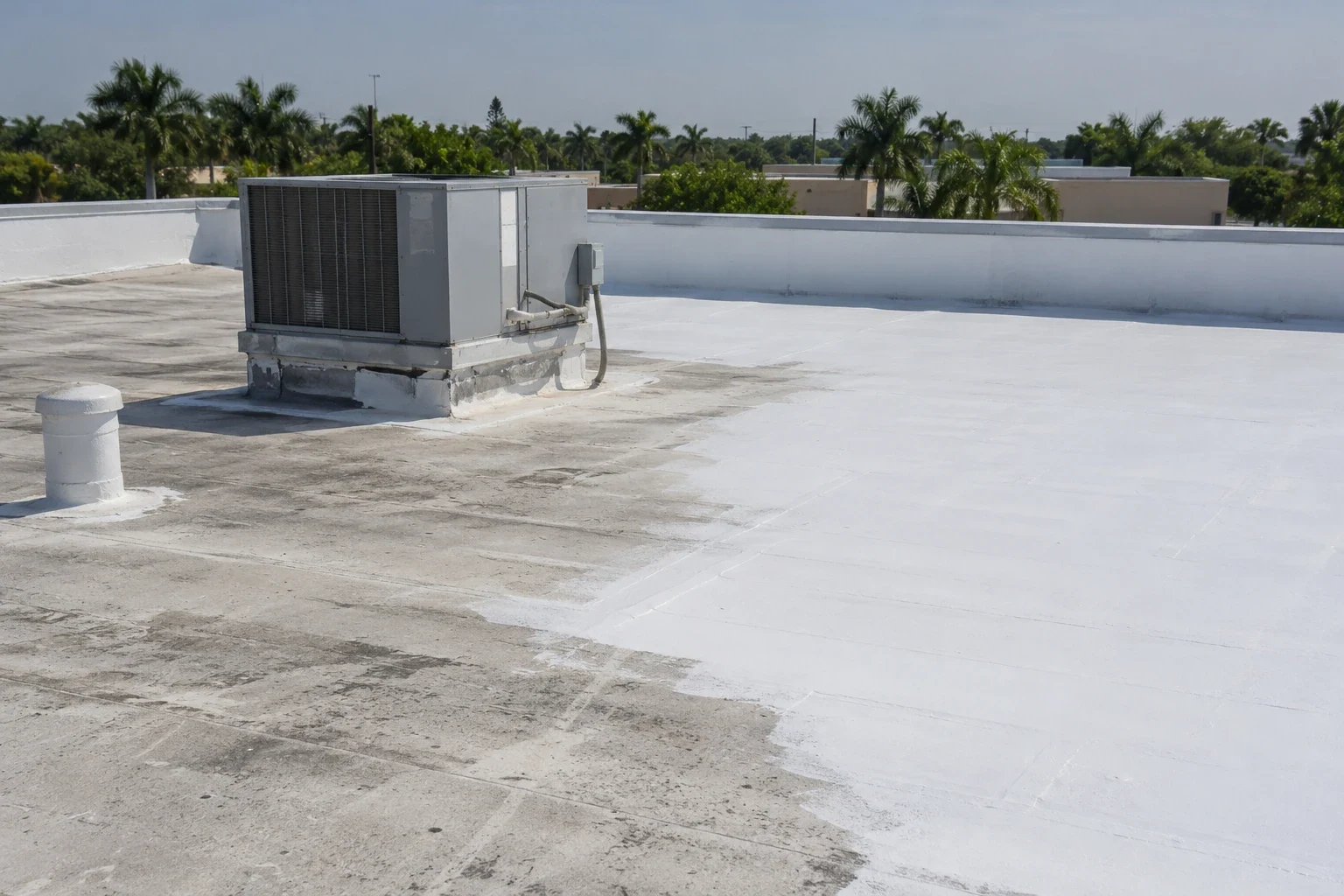
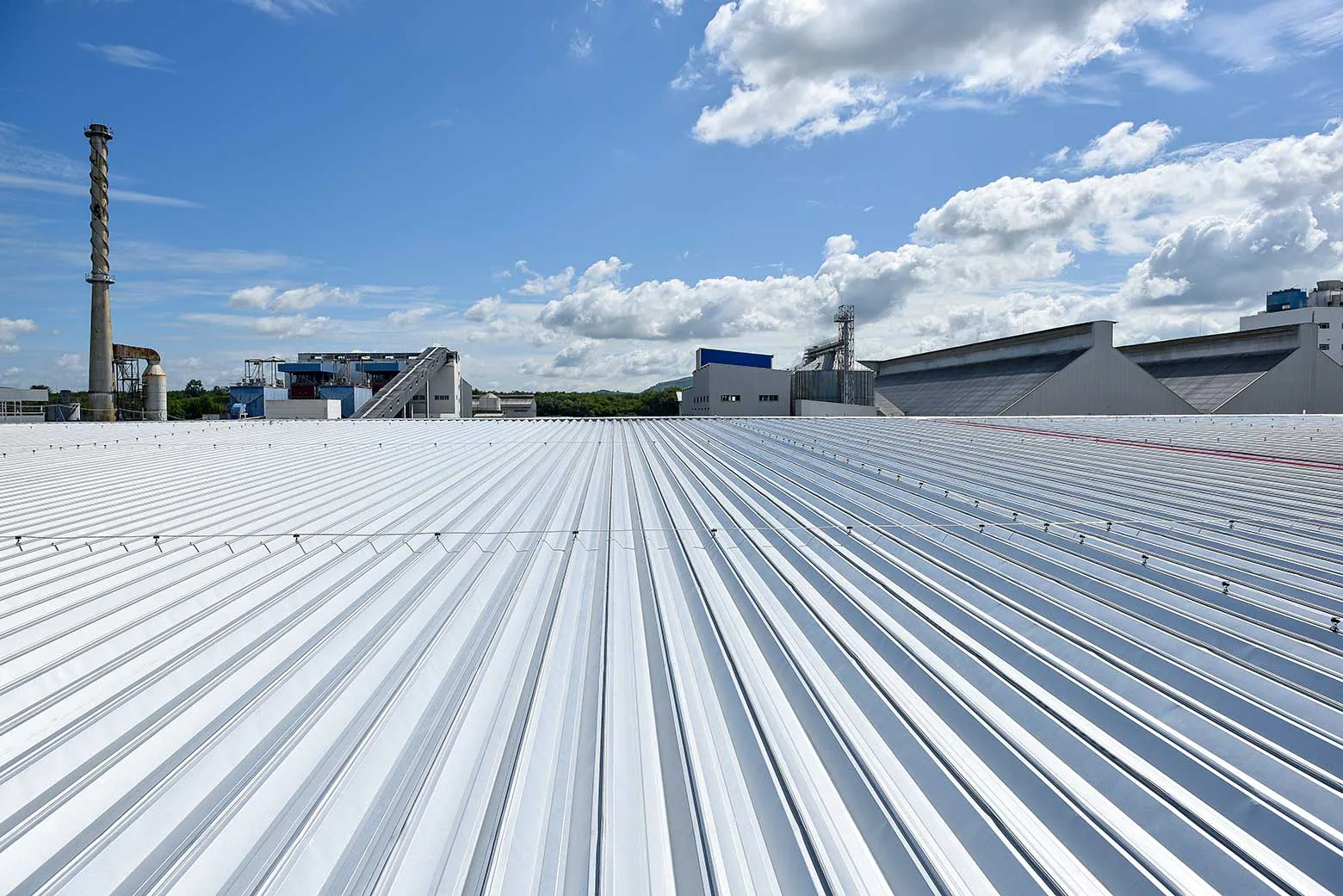
Humidity and rain affect surface preparation, welding, and coating work. We check the roof before starting and use a rain gap that fits the selected detail. If a shower threatens an open area, crews stop at the planned line, secure temporary protection, and report the zone still requiring work. The manager gets a clear next approval instead of a general delay message.
Peak summer heat index can rise above 100°F in July and August across South Florida. A KEE seam inspection should be scheduled to protect crew exposure and ensure the membrane surface is fit for testing. Work timing accounts for the exposure and material requirements. The property contact confirms early access or escorts before a morning start is planned. Davie's industrial and institutional properties may have shift changes or sensitive equipment that also shape the daily schedule.
For a job along the Griffin Road corridor, the six-lane east-west route is useful context; the property contact confirms the receiving point, lift staging, roof access, and escort requirements before material is released.
Closeout lists the KEE work limits
The closeout records product identification available, seams or details repaired, photos, weather holds, access limits, and any test result. If the installed membrane could not be positively identified, we state that and request the record needed before selecting a new material. Any area beyond the approved work remains listed for follow-up.
A maintenance program can revisit drains, seams, and transitions before the next wet season. For a building that remains occupied, the access and tenant limits are retained with the roof record so a future visit can avoid repeating the coordination work.
Before leaving, we review what is complete and which questions remain open. The owner receives the repair boundary, next test or monitoring step, and the approval required before broader work. The closeout ties product identification, observed conditions, and completed work to the KEE roof zones inspected.
Related Roofing Work
- SR 7 / US 441 Corridor
- Commercial Skylight and Penetration Flashing
- Commercial Roof Drains and Scuppers
- Davie Road Corridor
- Infrared Roof Moisture Survey
- Commercial Roof Replacement
- TPO Roofing for Commercial Buildings
- PVC Commercial Roofing
Browse every page in Roof Systems, or request a roof assessment and we will walk the roof with you. Call 555-555-5555.
Questions Owners Ask
How is KEE roofing different from standard PVC?
KEE is a PVC-based formulation that includes ketone ethylene ester as a modifier. Product and reinforcement details vary, so we identify the installed sheet and follow its compatibility requirements before repairing it.
Can KEE seams be repaired after a rain shower?
The surface needs to be suitable for preparation and welding. If it remains damp or weather closes the work window, we secure the approved stop point and return when conditions support the detail.
Does a KEE roof resist every chemical exposure?
No membrane should be selected without reviewing the actual discharge, concentration, and contact pattern. We document reported exposure and compare it with the specific product information available for the installed system.
Can a KEE roof be coated instead of replaced?
That option needs a review of sheet condition, attachment, moisture, compatibility, and project requirements. We identify repairs or tests first and explain whether a coating or recover is supported by the assembly.
What goes into the repair closeout?
The record lists roof zones, tested or repaired details, materials, photos, access limits, and weather interruptions. Any uncertain product identification or open condition is stated for the next approval.
Share the roof system records, reported exposure, access limits, leak history, and available work window. We will identify the seam or flashing detail and set the repair boundary.