Commercial Roofing in SR 7 / US 441 Corridor, Davie, FL
Coordinate an SR 7 Roof Inspection
Summer heat and sudden rain can make roof access a short-window task along Davie’s SR 7 corridor. We begin by checking the roof, identifying the path to drains and setting the size of a section that can be protected before the weather changes. Davie's Transit Oriented Corridor network includes SR 7, Griffin Road, and Orange Drive. Along SR 7, industrial, workplace, technology, and commercial-service properties call for site-specific roof access and work planning. Managers near Griffin Road and Orange Drive can use the same roof-first process, with each access plan confirmed at its own site.
Treat the Corridor as a Network
Ordinance 2020-006 establishes Davie's Transit Oriented Corridor District, with separate SR 7, Griffin Road, and Orange Drive segments. The named road network helps managers plan commercial roof access across Davie. Each property manager confirms the current gate, roof route, and delivery rules. Before the visit, we confirm the gate, roof hatch or ladder, escort requirement, delivery window and areas that must stay accessible.
On the roof, we identify the visible membrane or metal covering, seams, transitions, flashing, curbs, pipe penetrations, equipment bases, drains, overflow details and previous repairs. We note surface changes and areas where water remains, then trace a reported interior leak to nearby roof details. Water can travel through an assembly, so the location of a ceiling mark does not necessarily identify the opening. A hands-on inspection can document what was reached and which area needs further testing. If the problem is limited to a seam or flashing, a seam repair evaluation can define that work without assuming the whole roof has failed.
Keep the Rain Plan Practical
South Florida’s wet season runs approximately from mid-May to mid-October and brings a large share of annual rainfall. Frequent showers, thunderstorms and persistent humidity affect surface preparation, material handling and the time available to close each work zone. Before a roof is opened, we set a daily limit and a dry-in line, and agree on what triggers a stop. If rain, lightning, high wind or a slick surface makes the roof unsafe, the active area is closed and work pauses.
Fort Lauderdale averages 60.95 inches of rain annually. During Davie's wet season, we check each roof's outlet flow and set a secure dry-in limit. We inspect the actual flow path, check accessible drain bowls and scuppers, and note low areas or equipment that interrupts runoff. If water stands because an outlet is blocked, the scope should identify the drainage correction. If the surface shape or insulation plane is involved, additional evaluation may be needed before selecting a membrane. A drain and scupper check can document outlets, while a recover review can assess existing layers and moisture before another system is placed over them.
Build the Work Sequence Around the Site
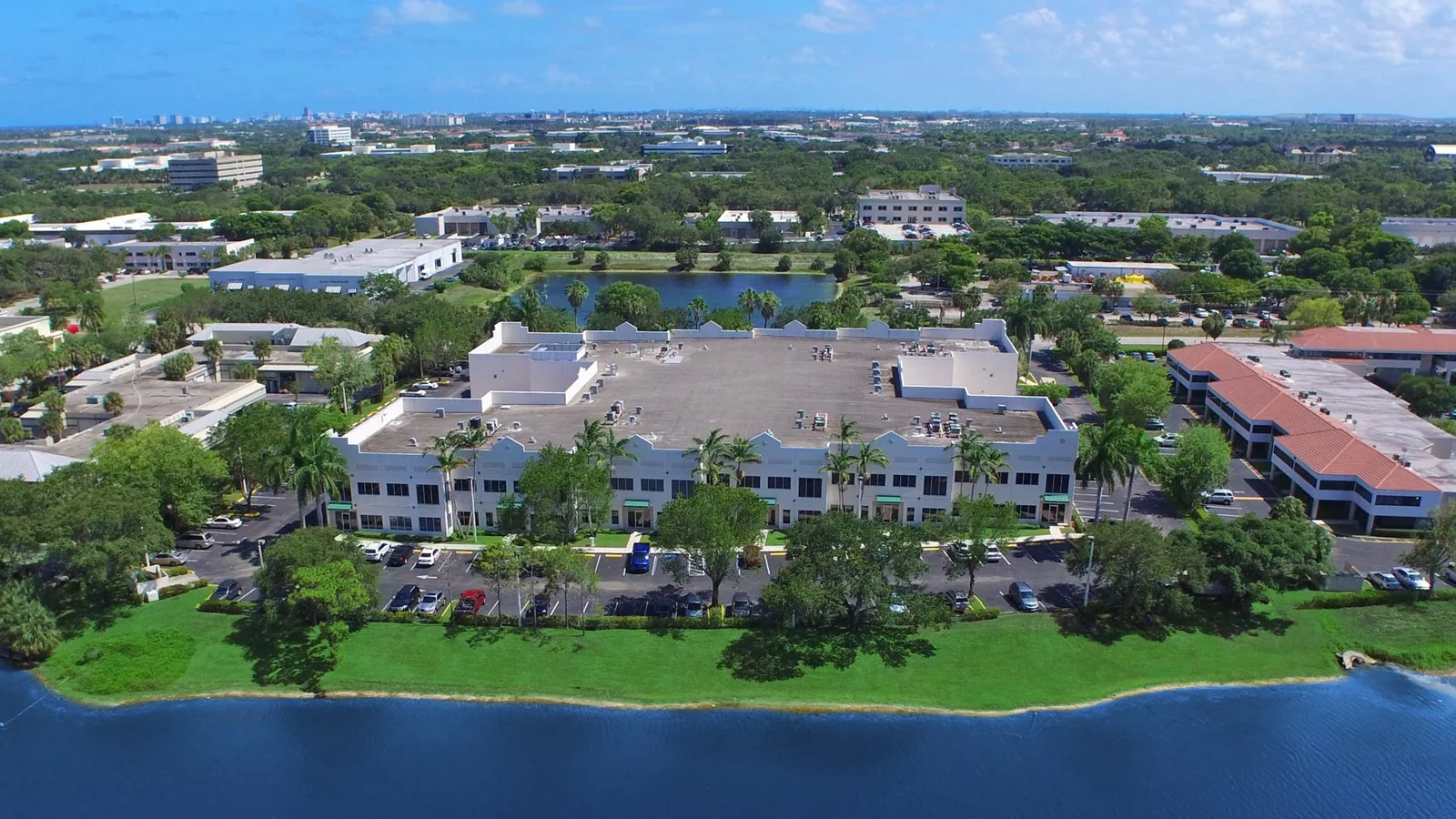
The SR 7 corridor includes industrial and workplace uses, commercial services, technology firms, and nearby institutional campuses. These market-level uses make access, rooftop equipment and operating hours important questions, but they do not tell us what exists on any one roof. We ask the manager which systems must remain in service, where lifts or material can be placed, and how tenant notice is handled. A restricted area or equipment shutdown can change the work sequence and cost, so we note it before the proposal is finalized. A commercial service entrance may share time with deliveries and daily operations. We agree on a loading slot, identify who can release roof access, and keep public routes clear before tools reach the roof. When equipment must remain live, the sequence preserves a service path and waits for the manager's approved access window.
An occupied building may need a zone-by-zone plan that keeps work above a protected area and avoids opening more roof than the crew can close. The manager can identify a rain contact, emergency access route and next approval before removal starts. If a weather hold delays one section, the sequence can move to another accessible zone only if the protection plan still holds. A phased occupied reroof can address these handoffs. For an industrial or technology property, a curb and equipment review can map service clearances and flashing transitions before the new membrane reaches the roof.
Set the Scope from Confirmed Conditions
Repair is one option when a localized defect is confirmed and surrounding areas remain sound. Recover depends on the existing layers, attachment, moisture, deck and project limits. Replacement may be more appropriate if several zones show deterioration, water has reached underlying materials, or the roof cannot accept another layer. We explain which observation supports each route and identify any selective opening or test that could change the recommendation. A single storm or interior leak does not prove uniform damage across the corridor.
Project cost and timing reflect more than membrane selection. Tear-off depth, wet insulation, deck work, edge details, drain adjustments, rooftop equipment, access windows, safety controls and tenant coordination all affect the work. Florida began statewide use of its eighth Building Code edition on December 31, 2023; the proposed work and building design guide permit review. Permitted work needs review against the specific building and project scope. The proposal should show the included assembly, protection, staging, testing, closeout, and how unforeseen conditions will be handled so the manager can compare the next approval with the actual roof evidence.

Keep the Record Tied to the Roof
We close the job with photographs and observations connected to the roof zones completed. The record notes seams, drains, curbs, edges, penetrations and any area that could not be accessed because of weather or site rules. If moisture remains suspected rather than confirmed, the report states what test or opening would help define it. The next manager can see which work is complete and what remains, without reading a broad claim as proof that every part of the roof was inspected.
Together, SR 7, Griffin Road, and Orange Drive form Davie's named corridor network. For each property, the roof record remains specific to the actual assembly and operations. A roof condition record can support future budget decisions, and a maintenance visit can recheck accessible details and outlets after the next heavy-rain period. We identify the owner’s next action and any access or testing decision that must be resolved before further work.
Related Roofing Work
- Griffin Road Corridor
- Orange Drive Corridor
- Commercial Roof Inspection
- Commercial Roof Seam Failure Repair
- Commercial Roof Drains and Scuppers
- Commercial Roof Recover
- Occupied Commercial Building Reroofing
- Commercial Rooftop Equipment Curbs and Supports
Browse every page in Service Areas, or request a roof assessment and we will walk the roof with you. Call 555-555-5555.
Questions Owners Ask
Does the SR 7 corridor program identify individual building roofs?
No. It establishes a town planning framework and corridor segments. We inspect the specific property to identify its roof materials, drainage, access limits and maintenance needs.
What should the property manager have ready for a roof visit?
Share the leak history, access route, escort rules, operating schedule, rooftop equipment limits and any area below that needs protection. Those details shape the inspection route and work window.
Can you work during the South Florida wet season?
Yes, with a defined daily work area, dry-in line and stop condition. Rain, lightning, humidity and surface readiness can change the sequence, so we close each zone before conditions become unsafe.
How do you decide between repair and replacement?
The inspection looks at the extent of failure, moisture, substrate, drainage and surrounding details. We explain what supports repair, recover or replacement and identify testing that could change the answer.
What happens if the building is operating during roof work?
We coordinate access, tenant notice, equipment clearances and any shutdown approval, then divide work into protected roof zones. The plan identifies the daily handoff and what happens when weather interrupts the sequence.
Send the roof history, access and escort rules, operating hours and available work window. We can inspect the assembly, document roof zones and prepare a protection and repair plan.