Commercial Heat and UV Roof Damage Repair in Davie, FL
Schedule a heat and UV roof assessment
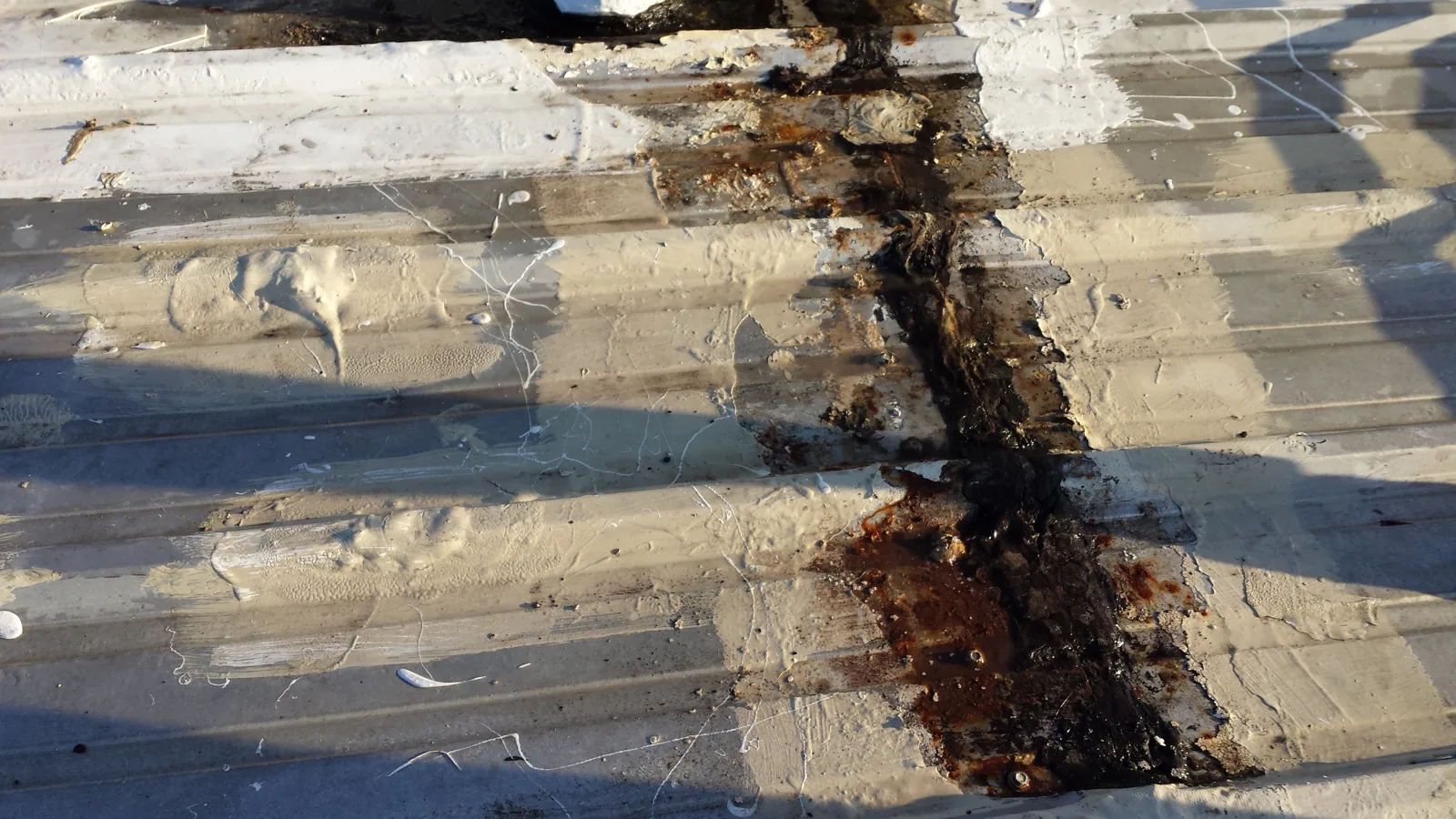
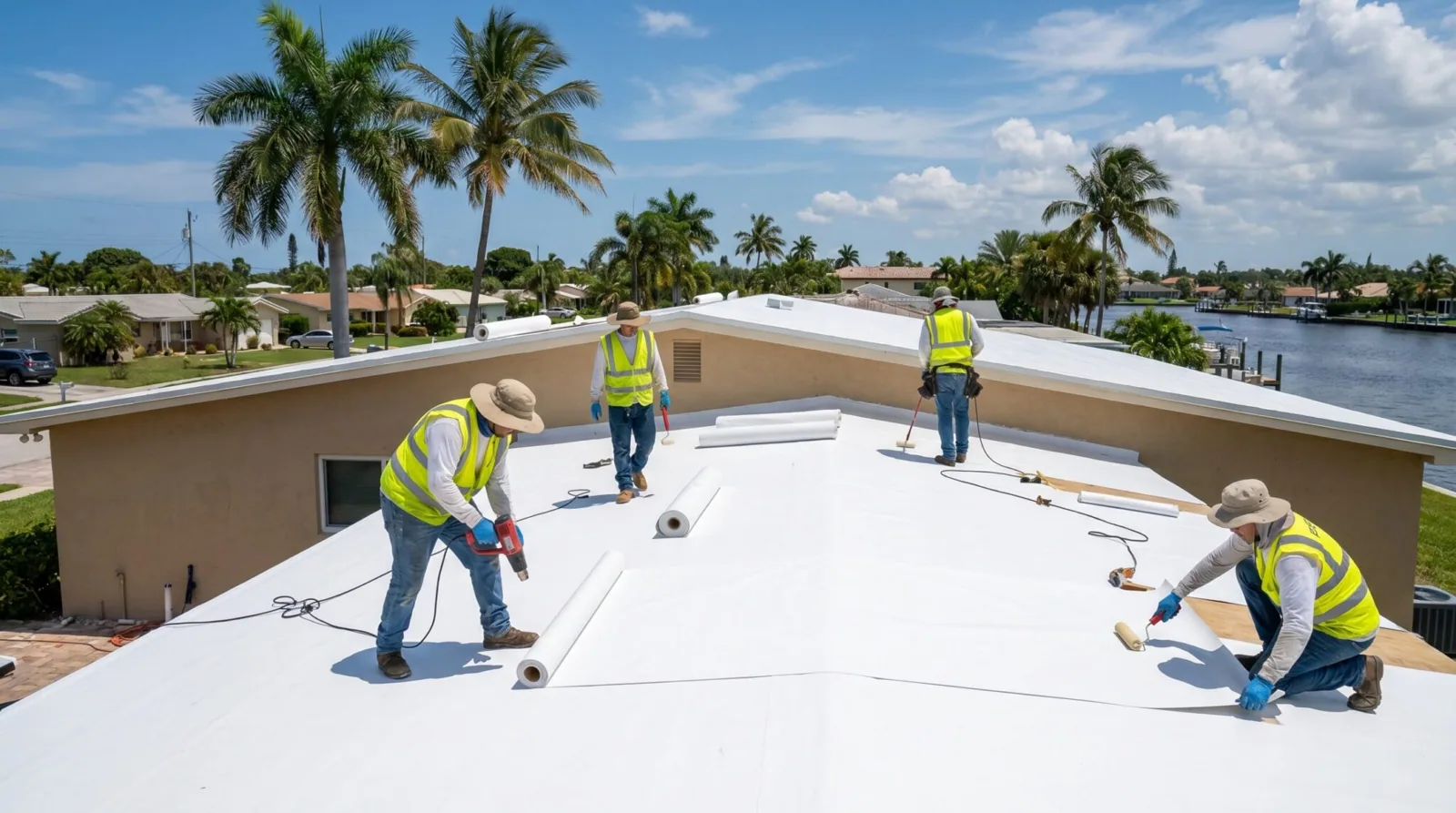
Heat and ultraviolet exposure work on a roof slowly. Surface chalking, brittleness, cracking, seam movement, and coating wear can appear after long periods of sun, then become more noticeable when rain reaches a weakened detail. In July and August, South Florida's maximum daily heat index commonly crosses 100 degrees. Heat can shorten a safe work period. We inspect the membrane, seams, flashing, fasteners, and visible substrate to determine the roof's condition. The report distinguishes normal surface change from an opening, loss of bond, or material condition that needs a repair. We also note what cannot be confirmed without testing. The owner receives a roof-zone record and a practical next step, whether that is monitoring, a localized repair, or further evaluation.
Look for change that affects water control
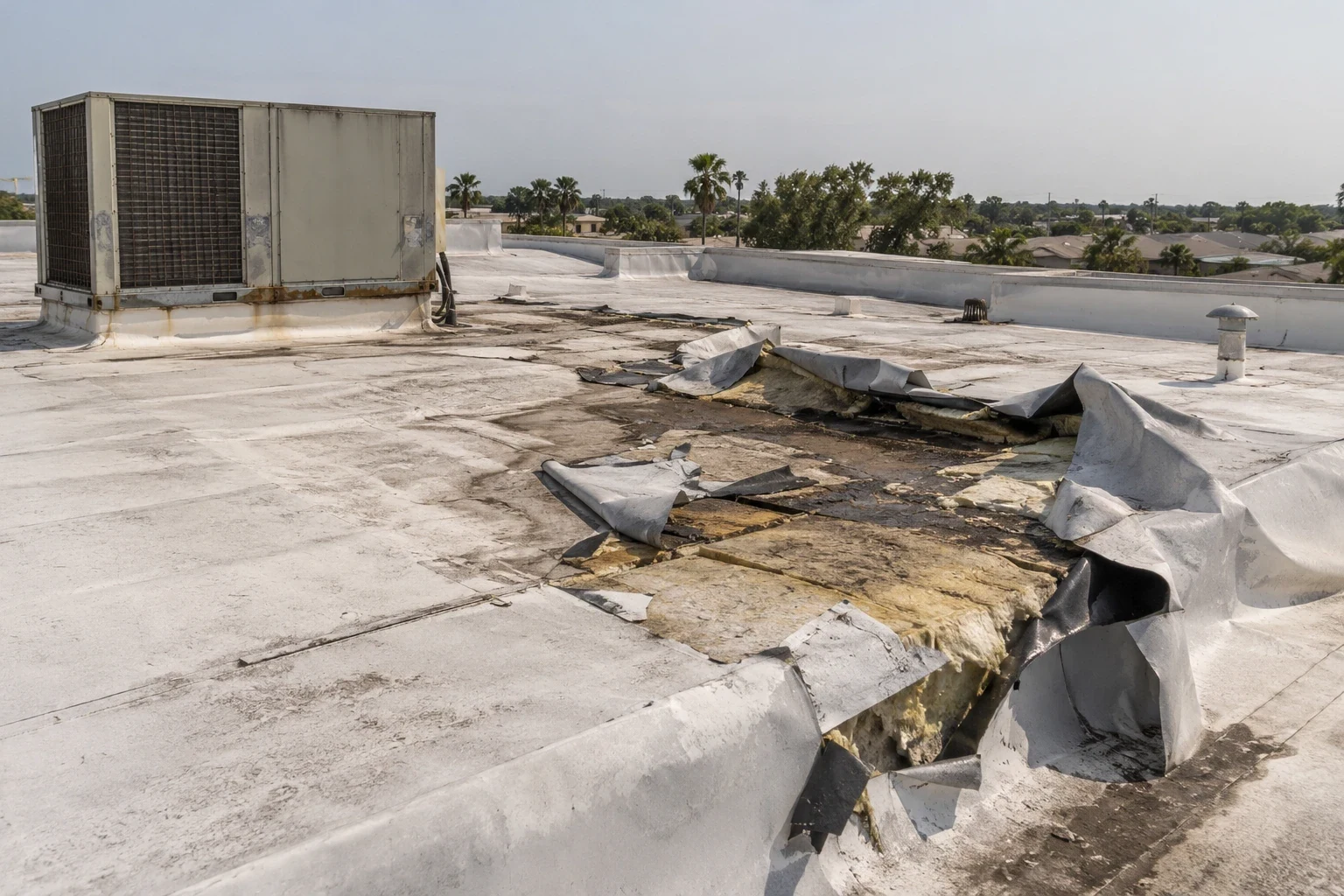
Sun-exposed materials can fade or chalk without losing their ability to shed water. More serious indicators include cracks, shrinking membrane, brittle flashing, exposed reinforcement, open seams, loose fasteners, and coating that has separated from its substrate. We check the field and transitions together. A surface that looks dry during inspection may still have concealed moisture, while a weathered color alone does not establish a leak. We document each condition by location and photograph the detail. If the condition is near equipment, drains, or a roof edge, those transitions receive a separate look before the repair boundary is chosen.
On membrane roofs, the system matters. TPO, PVC, EPDM, modified bitumen, built-up roofing, and metal have different response to heat, movement, and surface exposure. A compatible repair depends on preparation and sound substrate, not simply on applying new material over an aged area. We check whether the membrane is supple enough for a repair, whether seams remain closed, and whether insulation or attachment shows a concern. A commercial roof inspection can map those findings and identify any section that could not be reached safely.
Davie's summer heat tightens the work window
During Davie's July and August afternoons, heat-index values often pass 100 degrees. We plan safe access, material handling, and application time around conditions at the roof surface. We schedule around the actual conditions and limit the area opened at one time. The roof's surface temperature and assembly condition guide product handling; a forecast reading is not a substitute for following system requirements. If the work cannot be performed safely, the property contact receives a revised access window and any temporary protection status.
Davie's wet season runs from roughly mid-May to mid-October and brings about 60 to 70 percent of average annual rainfall. Fort Lauderdale's long-term annual rainfall normal is 60.95 inches. Sun-aged details may face frequent showers during that period, so drains and closure points matter. Tropical systems can add wind and heavy rain across the region. For a roof near Davie Road, commercial and mixed-use redevelopment shapes the wider setting; along SR 7 and US 441, industrial, workplace, and technology uses bring different access needs. We confirm each property's roof and operating schedule directly.
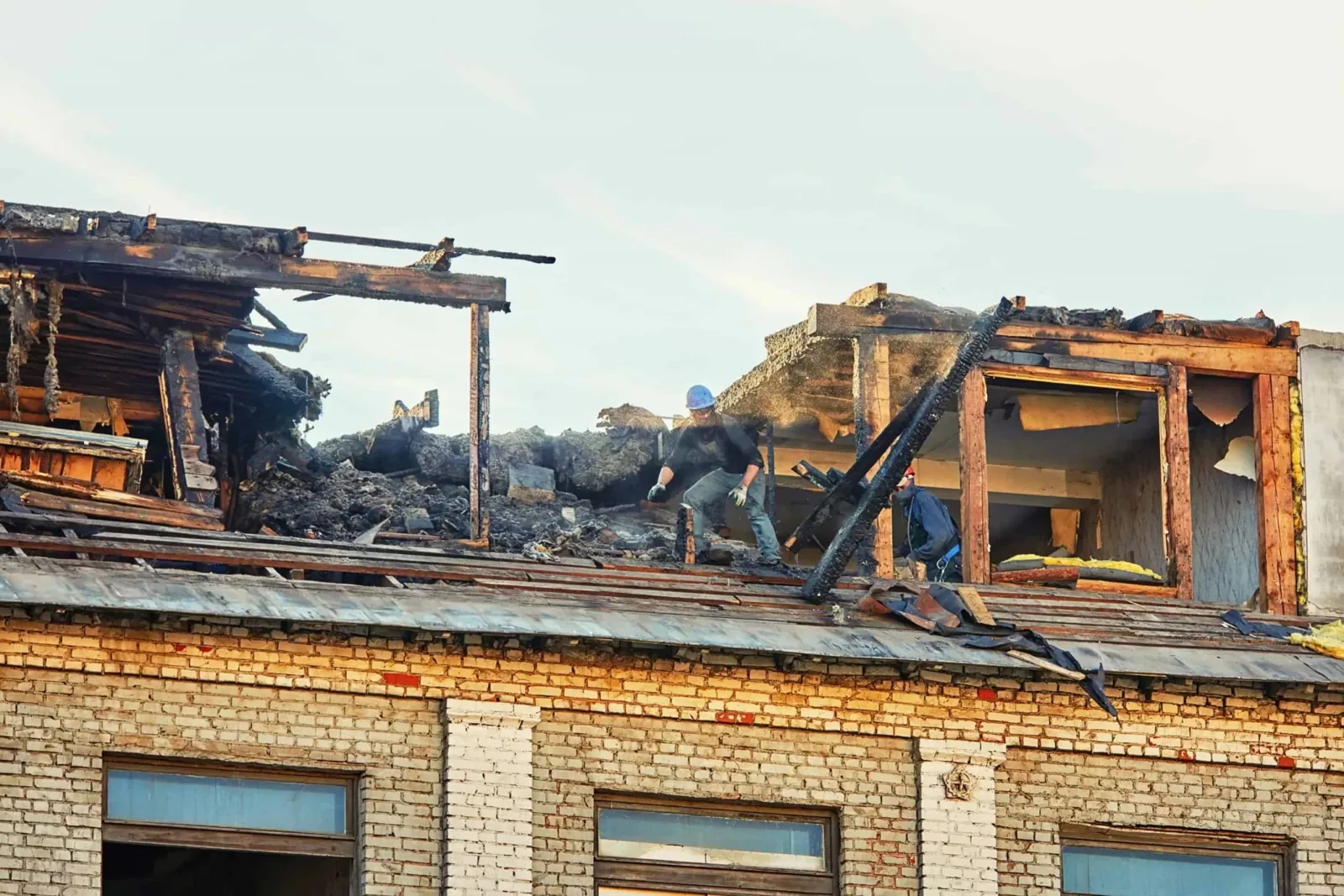
Separate aging from active system failure
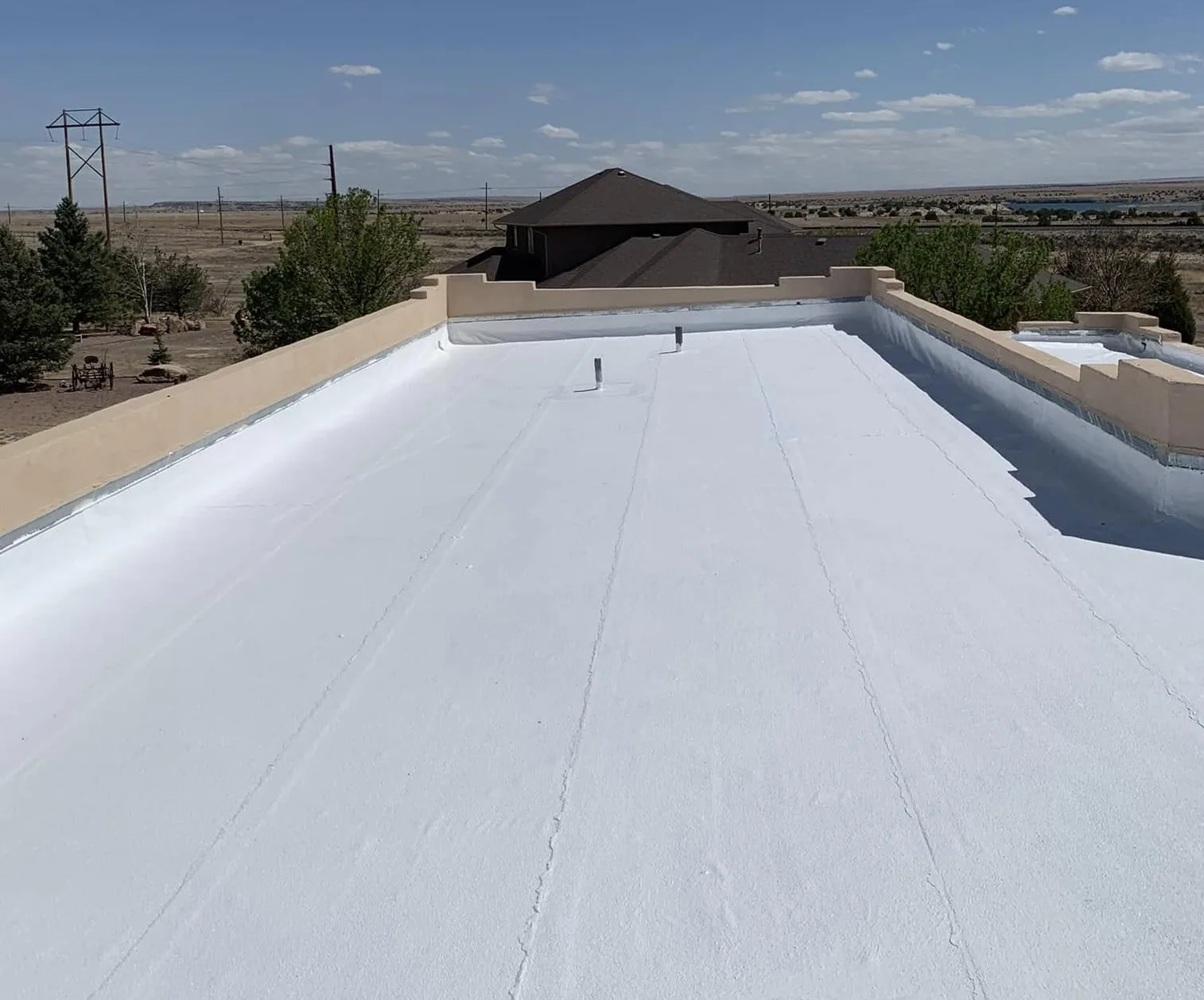
We check whether cracking or brittleness has reached a seam, termination, penetration, or fastener. A small split may admit water; surface discoloration without a breach may need monitoring. If the roof has a liquid-applied coating, we look for adhesion, cracking, exposed areas, and moisture below rather than judging the system by color. A coating may be a viable restoration only when the existing roof is compatible, dry enough, and structurally suitable. It cannot correct a failing drain, loose metal, or wet insulation. A seam-failure evaluation applies when the lap has opened; a puncture assessment addresses a discrete hole or cut.
If water remains after rain, the cause may include both material aging and drainage. We inspect strainers, outlets, overflows, visible low areas, and membrane stress where water collects. A ponding-water assessment can separate a blocked outlet from slope or assembly concerns. The report notes whether the inspection confirmed wet insulation or whether a test is needed. Coating belongs in the scope only after the leak path, drainage, and moisture conditions are resolved.
Match restoration or replacement to the findings
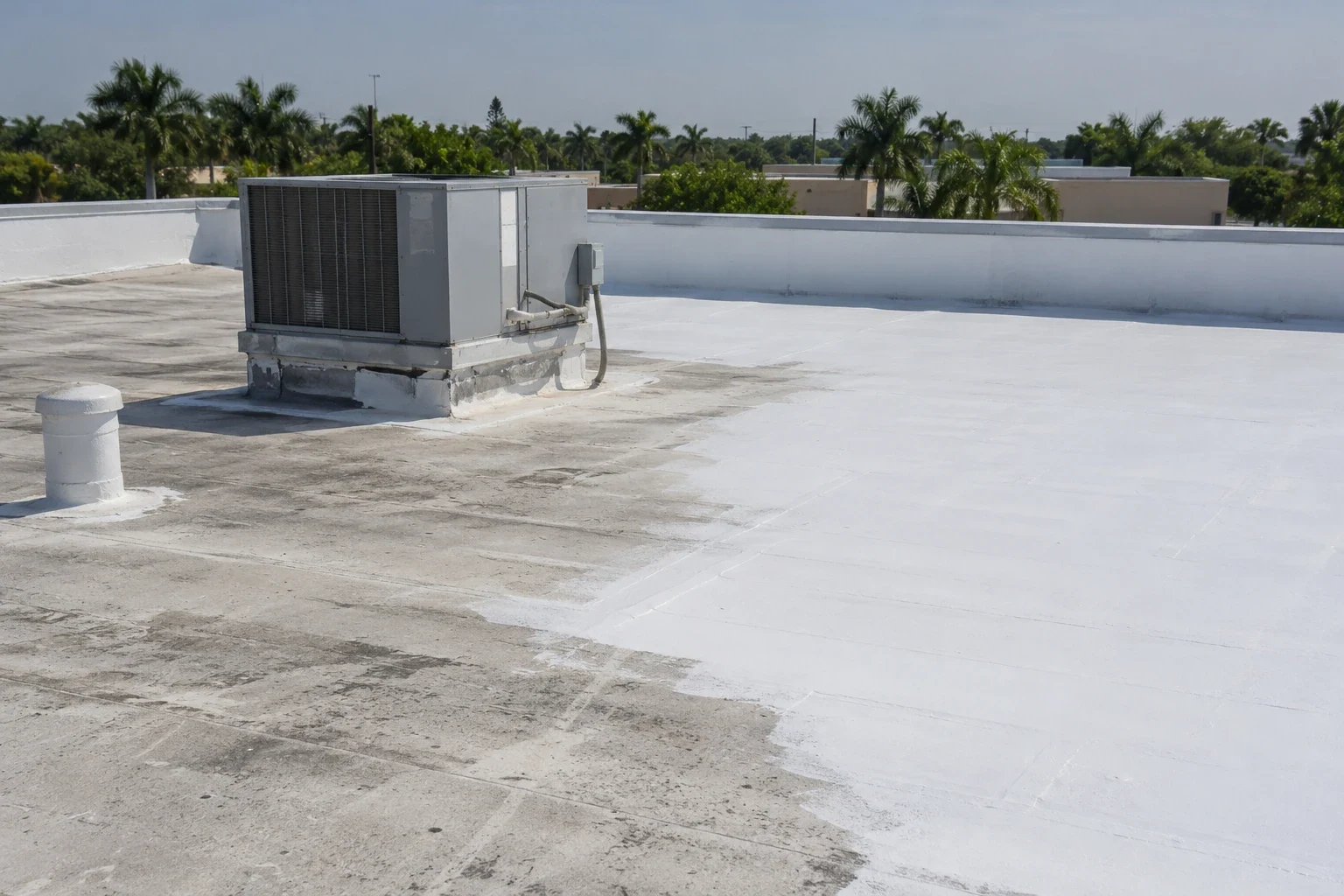
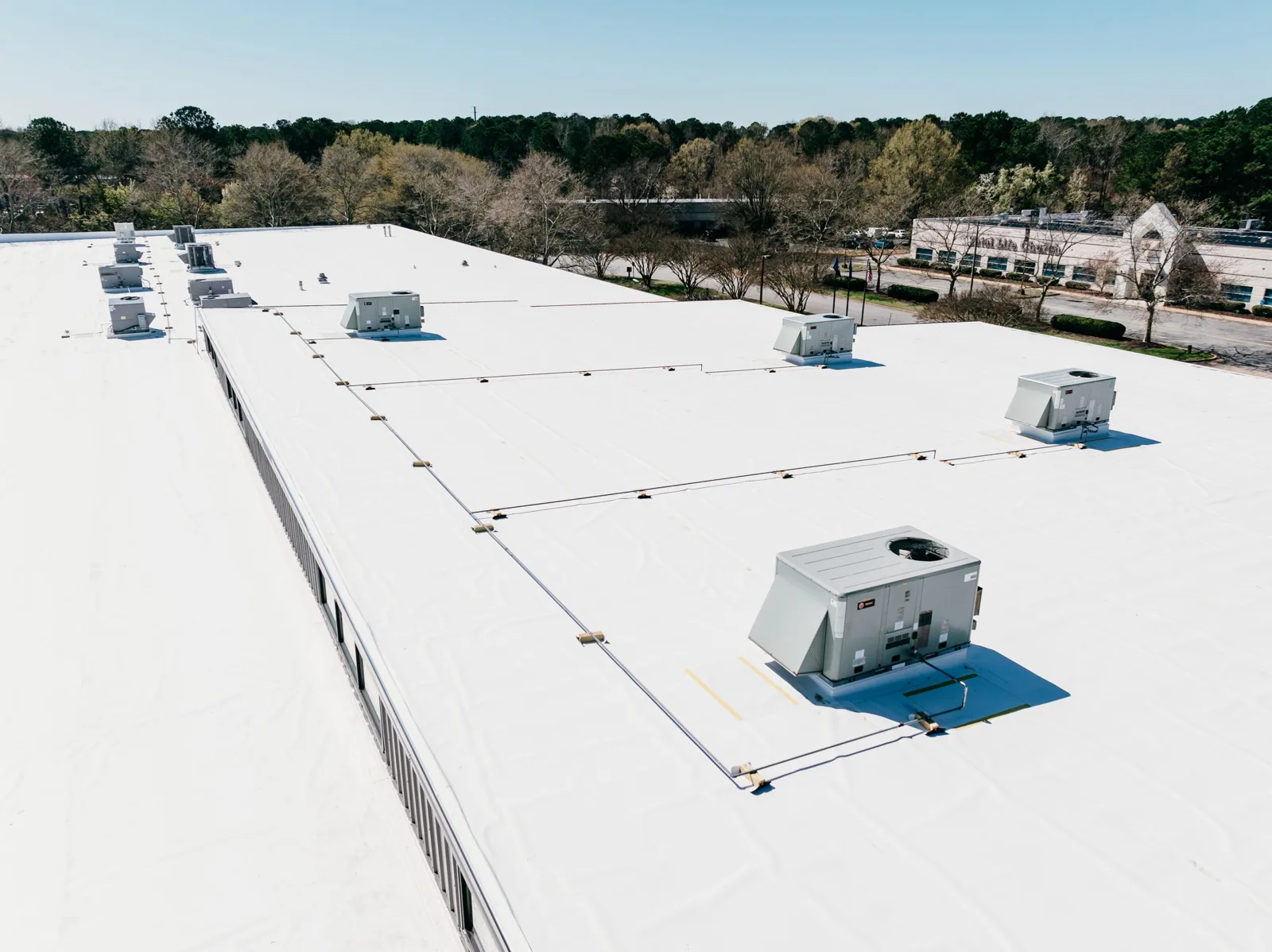
A repair may be suitable when damage is localized and the adjacent roof remains sound. We identify the failed material, prepare the surface, and specify the compatible repair method and tie-in. If aging extends across multiple roof zones, moisture, attachment, and substrate condition affect whether a recover or replacement should be evaluated. The owner receives options only when supported by inspection. A roof coating restoration scope identifies substrate requirements, surface preparation, and any repairs needed first. A roof recover assessment checks system compatibility, moisture, and drainage before another layer is considered.
Replacement becomes relevant when the assembly cannot support a reliable repair or recover. The plan names removal limits, insulation, drains, equipment curbs, and edge details. It also sets the daily dry-in line, especially during the wet season. We keep immediate protection separate from capital work and state what evidence would change the decision. A commercial replacement scope should reflect the roof in front of us, not simply its age or the intensity of summer heat.
Protect access below the affected roof
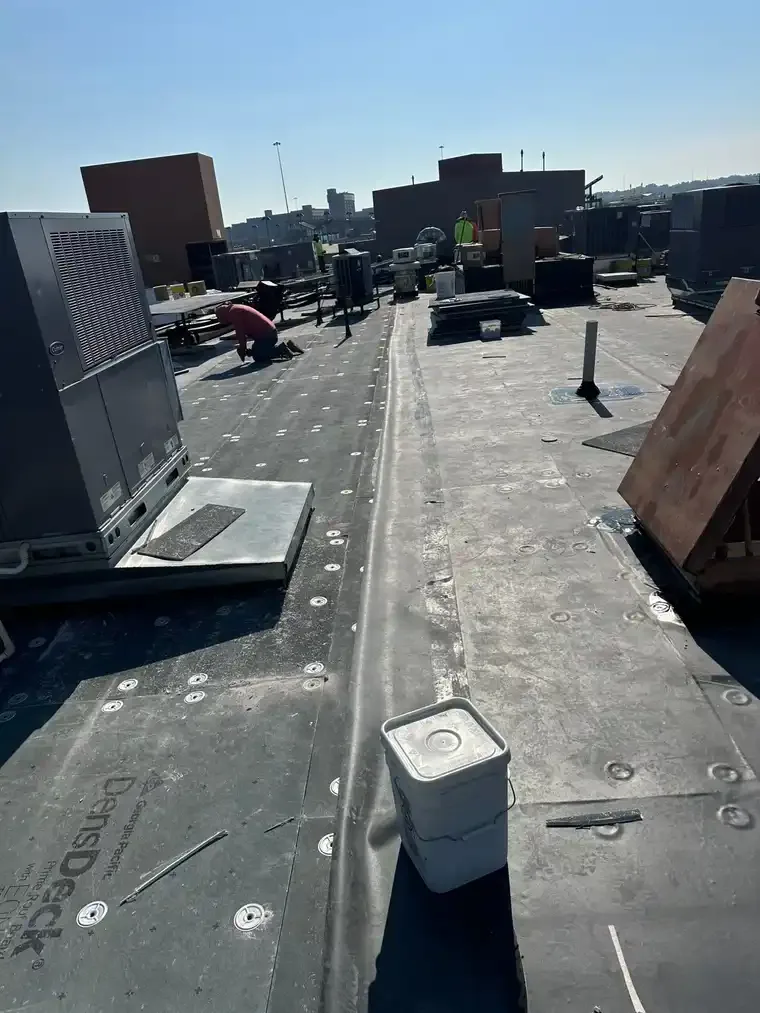
Roof work can affect tenants, staff, production, or customers below. We confirm the access route, staging, equipment clearances, operating hours, and any interior space that needs protection. In a mixed-use area such as Plantation Midtown, a medical office and a retail entrance may need different notifications and work boundaries. A manufacturing property may require equipment shutdown approval; an office may need a quieter window. The property contact identifies those restrictions before material is moved. We update the plan if weather or site access changes the work sequence.
Emergency roof concerns can be reported around the clock, including holidays. Immediate work still requires safe roof access and current conditions. If the crew cannot reach an affected area, we document why and set the next approval or return condition. A work zone remains distinct from sections that have not been inspected. That matters when only one part of a larger building shows heat-related wear, or when a portfolio includes roofs with different systems and service schedules.
Keep the roof condition useful over time
The report records the observed surface, seams, flashing, visible moisture signs, work performed, and limitations. It notes whether repair is complete, monitoring is appropriate, or more testing is needed. The record does not turn a surface-aging observation into a claim about the whole assembly. The property record can keep photos and roof-zone notes for future maintenance.
To arrange a heat and UV roof assessment in Davie, share the system type if known, reported leak areas, roof access rules, and any work-hour limits. We will inspect accessible surfaces and transitions, then explain whether the condition supports repair, testing, restoration, or replacement evaluation. The scope identifies materials, dry-in plan, and approvals needed before work starts.
Related Roofing Work
- Commercial Roof Inspection
- SR 7 / US 441 Corridor
- Commercial Roof Seam Failure Repair
- Commercial Roof Puncture Repair
- Ponding Water Roof Repair
- Commercial Roof Coating and Restoration
- Commercial Roof Recover
- Commercial Roof Replacement
Browse every page in Roof Damage Repair, or request a roof assessment and we will walk the roof with you. Call 555-555-5555.
Questions Owners Ask
Does a faded roof mean the membrane has failed?
Not by itself. We look for cracks, open seams, brittle flashing, exposed reinforcement, loss of bond, or other conditions that affect water control.
Can a coating fix heat-damaged roofing?
Only when the existing assembly is compatible and sound enough for restoration. Coating cannot correct wet insulation, failed attachment, or an open drain or seam.
How do you tell UV aging from a puncture?
We inspect the shape and edge of the damage, the surrounding surface, seams, and roof traffic route. The report records a confirmed opening separately from general surface wear.
Can repair work happen during a hot afternoon?
The work window follows actual roof conditions, material requirements, and safe access. We may limit the work footprint or move the visit if the planned steps cannot be completed safely.
When should we consider broader replacement?
That discussion follows findings across the membrane, seams, insulation, attachment, and deck. The proposal explains whether localized repairs remain suitable or broader work needs evaluation.
Share the roof system, reported conditions, access rules, and available work hours. We will document surface aging and active defects separately, then outline the next repair or evaluation step.