Auto Dealership Roofing in Davie, FL
Set a roof plan around dealership operations
A dealership roof has several operating zones, and a leak over a service bay carries different timing from one over a showroom or parts room. We begin with the report, identify the affected roof area, and check drains, seams, curbs, and penetrations before proposing a repair. The service manager receives a work boundary and stop point. That makes vehicle movement, customer entry, and the dry-in line part of the same schedule.
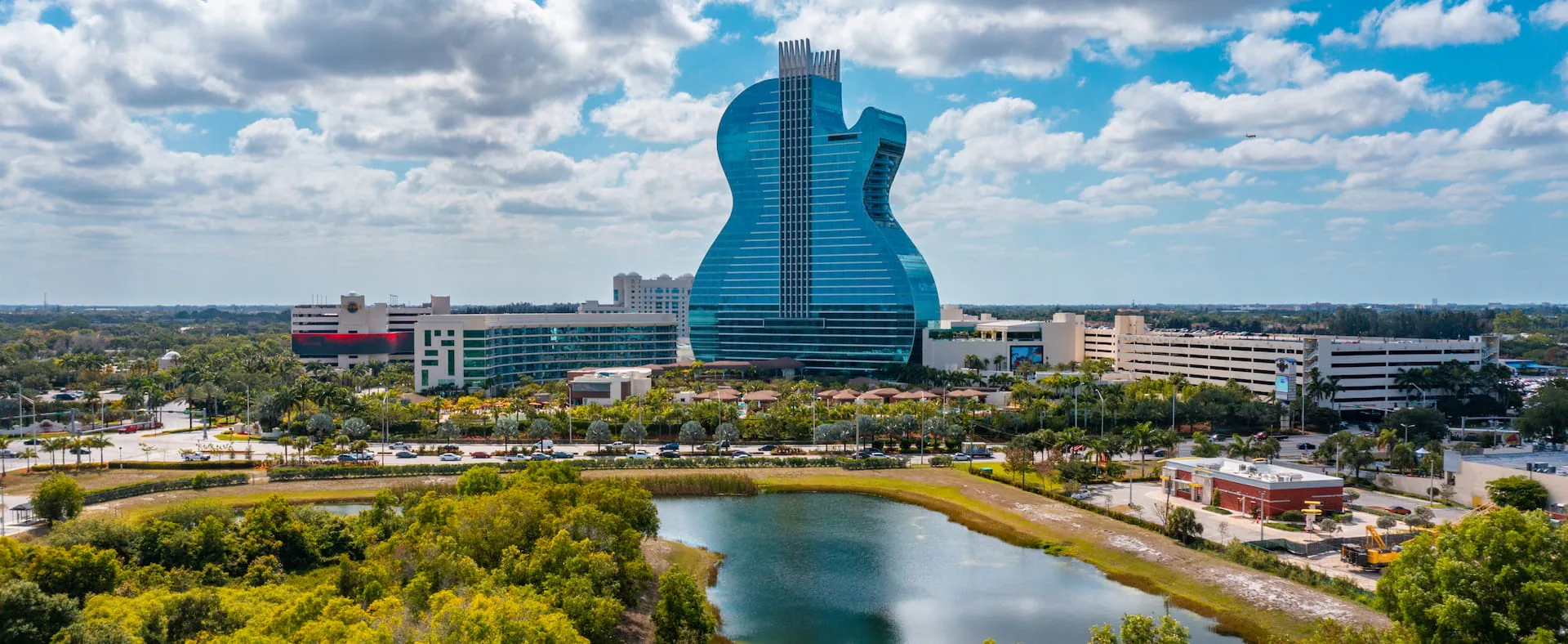
Davie's SR 7 corridor includes automobile-related industrial businesses alongside commercial services, technology firms, and institutional campuses. The planning corridor connects toward I-595 and the Florida Turnpike, while Griffin Road provides an east-west route between SR 7 and the airport area. A dealership roof needs its own inspection of the installed assembly, vehicle lanes, and hours that shape the project.
Each dealership zone needs a plan
We map the showroom, service bays, parts storage, offices, and vehicle staging areas against the roof plan. A stain near a lift or entrance can change the work area or public route. The manager identifies which operations cannot pause and who can authorize a temporary lane closure. We then define the roof zone and the protected area below it.
Davie's commercial corridors connect a mix of workplace and service properties, but each dealership has its own circulation pattern. We confirm where a lift can stage without blocking customer parking or vehicle delivery. A phased occupied-building reroofing plan can isolate one roof section while the rest of the operation stays in use. The sequence names the area under work, any temporary access change, and the next approval before material is moved.
A leak report needs a roof-side match
The visible drip may be several feet from the entry point. Water can follow a deck flute, insulation joint, curb, or conduit before appearing at a ceiling tile. We compare the report's location and timing with roof seams, equipment supports, drains, and previous repair edges. If the water-entry point remains concealed, the report states what a controlled test opening could reveal and how the opening would be closed.
Mid-May through mid-October is South Florida's main rainy period, with showers and thunderstorms returning frequently. Fort Lauderdale averages 60.95 inches of rain annually. During the wet season, that makes clear drainage and temporary protection important parts of a dealership roof plan. A commercial roof inspection ties each observation to a roof zone and notes where access or weather limited the review.
Drainage can affect distant work areas
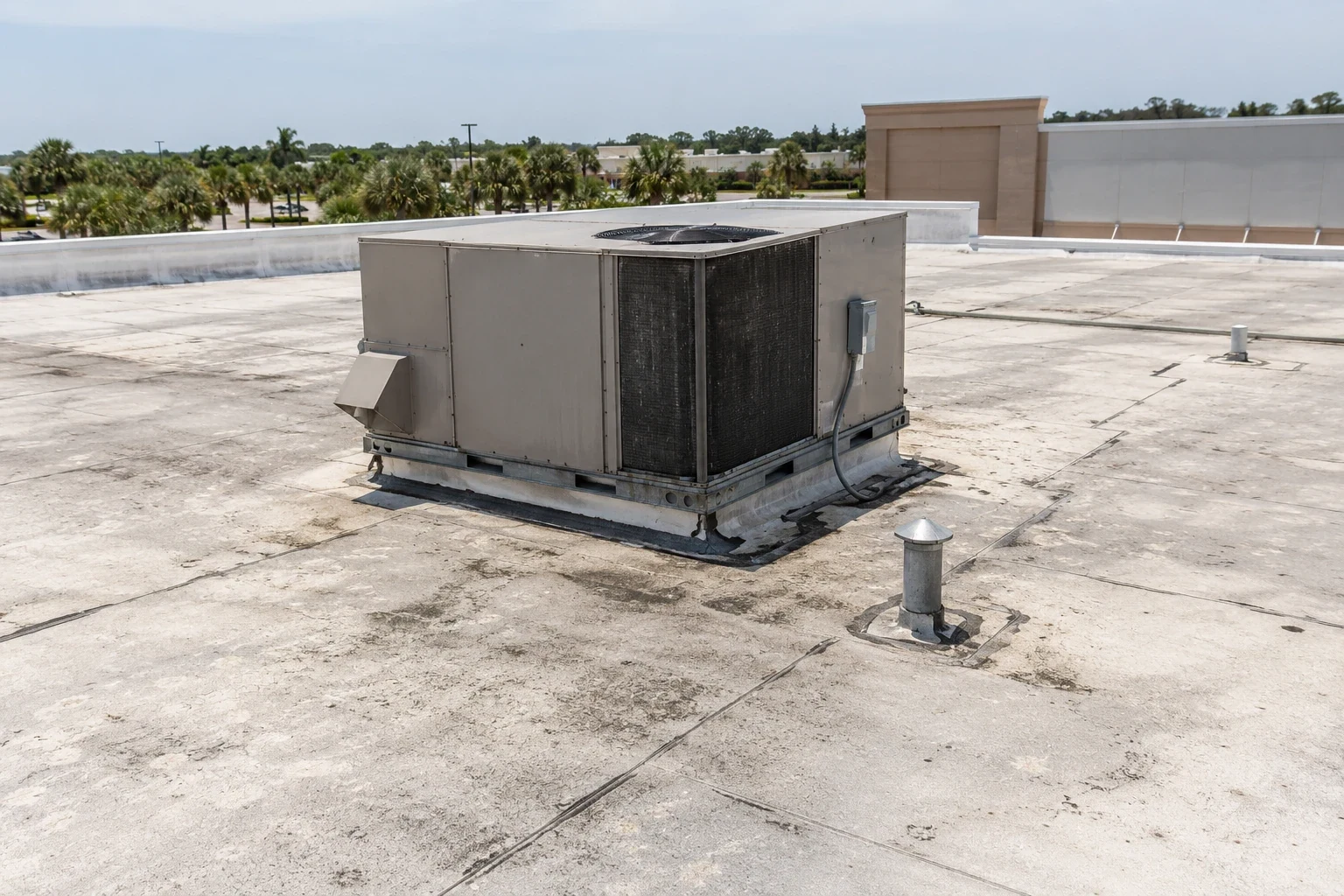
We inspect drain bowls, strainers, leaders, scuppers, overflow paths, and visible low points. A blockage is one possible cause of ponding, but the outlet connection or roof slope may also be involved. We separate a condition that can be cleared from one needing additional diagnosis. If water is present, the scope records where it stands and whether the roof was safe to cross.
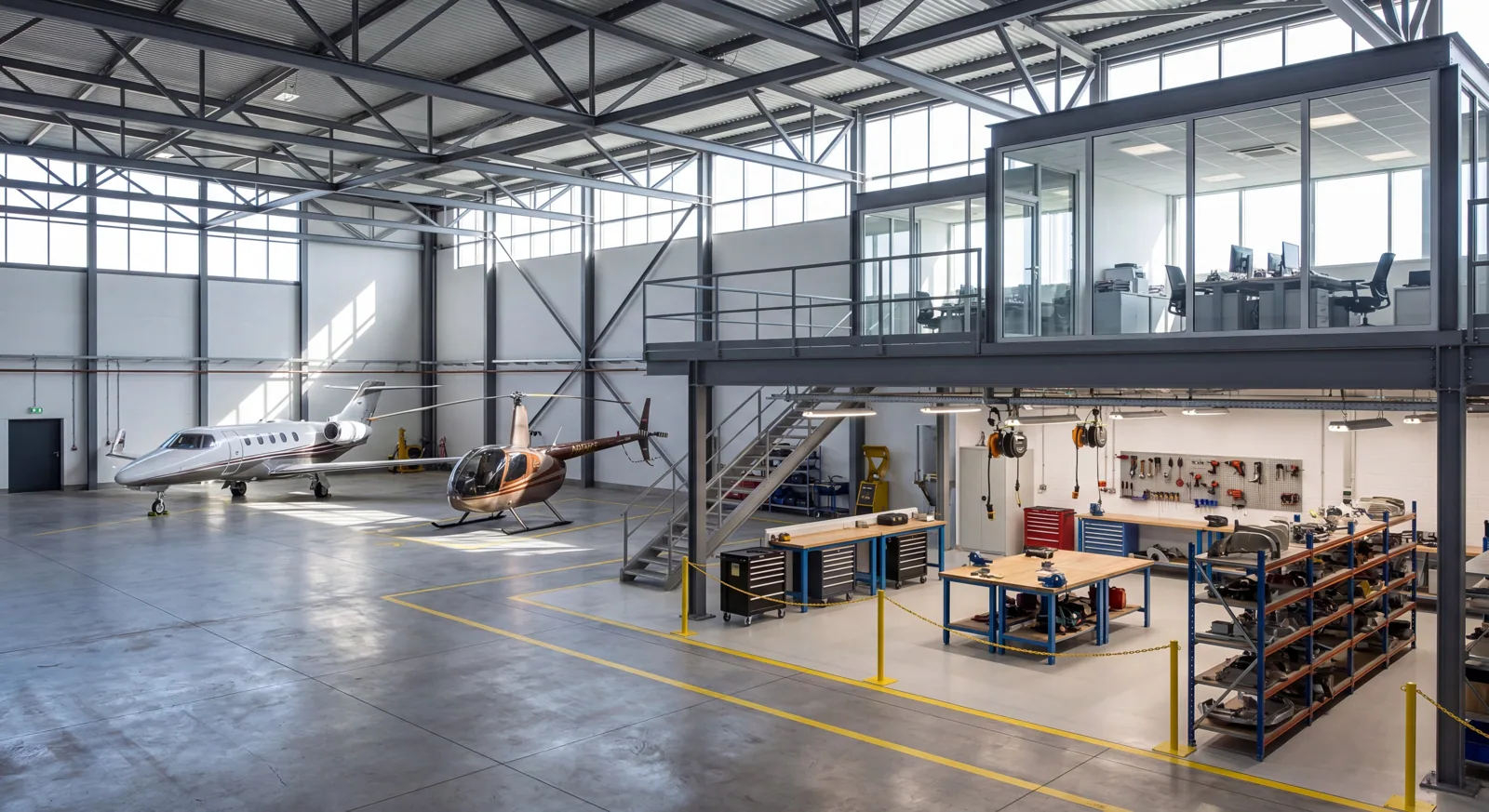
A service department may have equipment, parts, and electrical work beneath the roof. Before repairs, we confirm whether the crew needs a lift, a service-bay closure, or protection around sensitive work areas. A drain and scupper repair can be coordinated with a membrane repair when the scope supports both. On a larger plane, we also examine how overflow would discharge and whether the planned work leaves a temporary path for water. We report the limit of any inspection rather than assuming every drain is connected in the same way.
The existing roof determines the repair
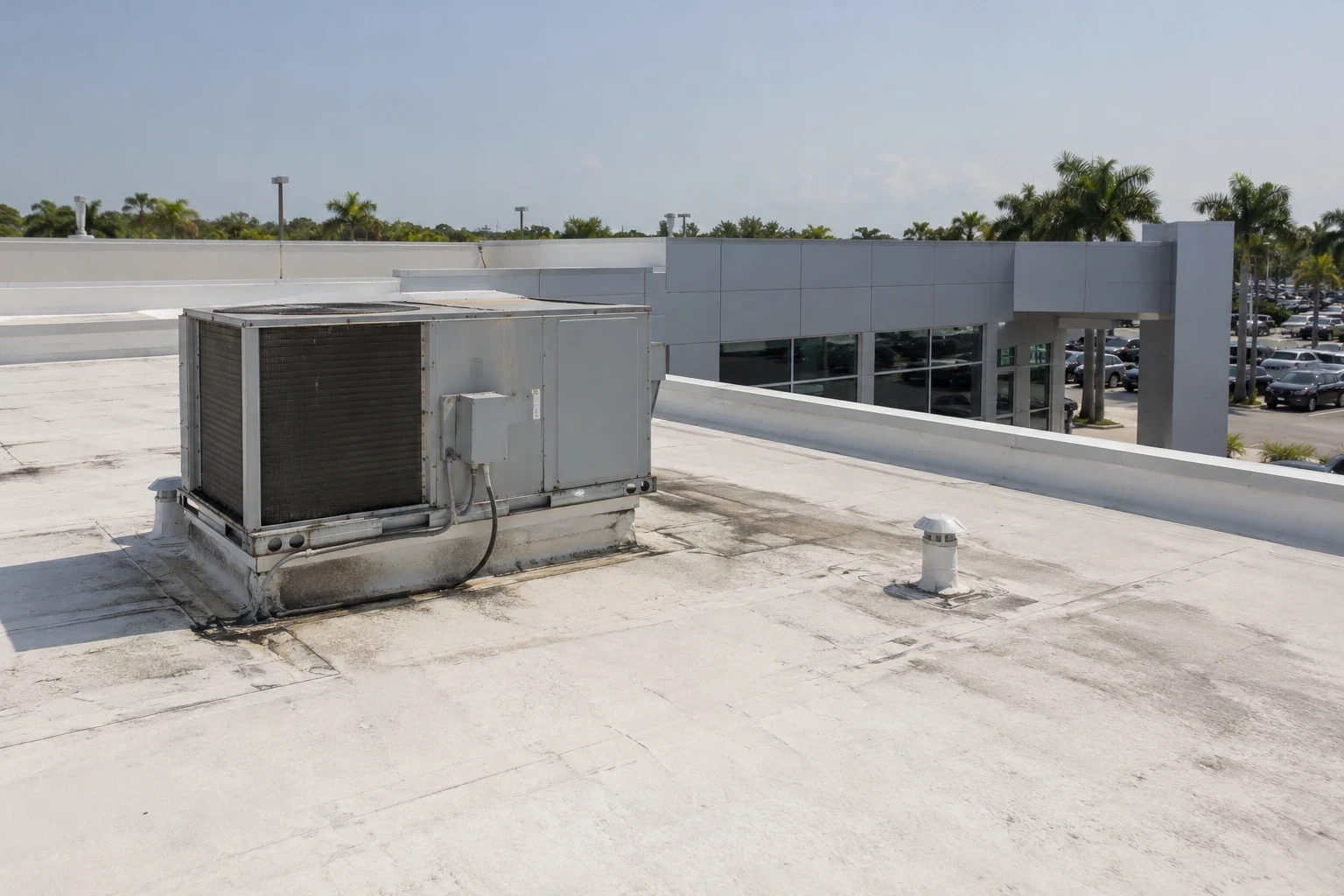
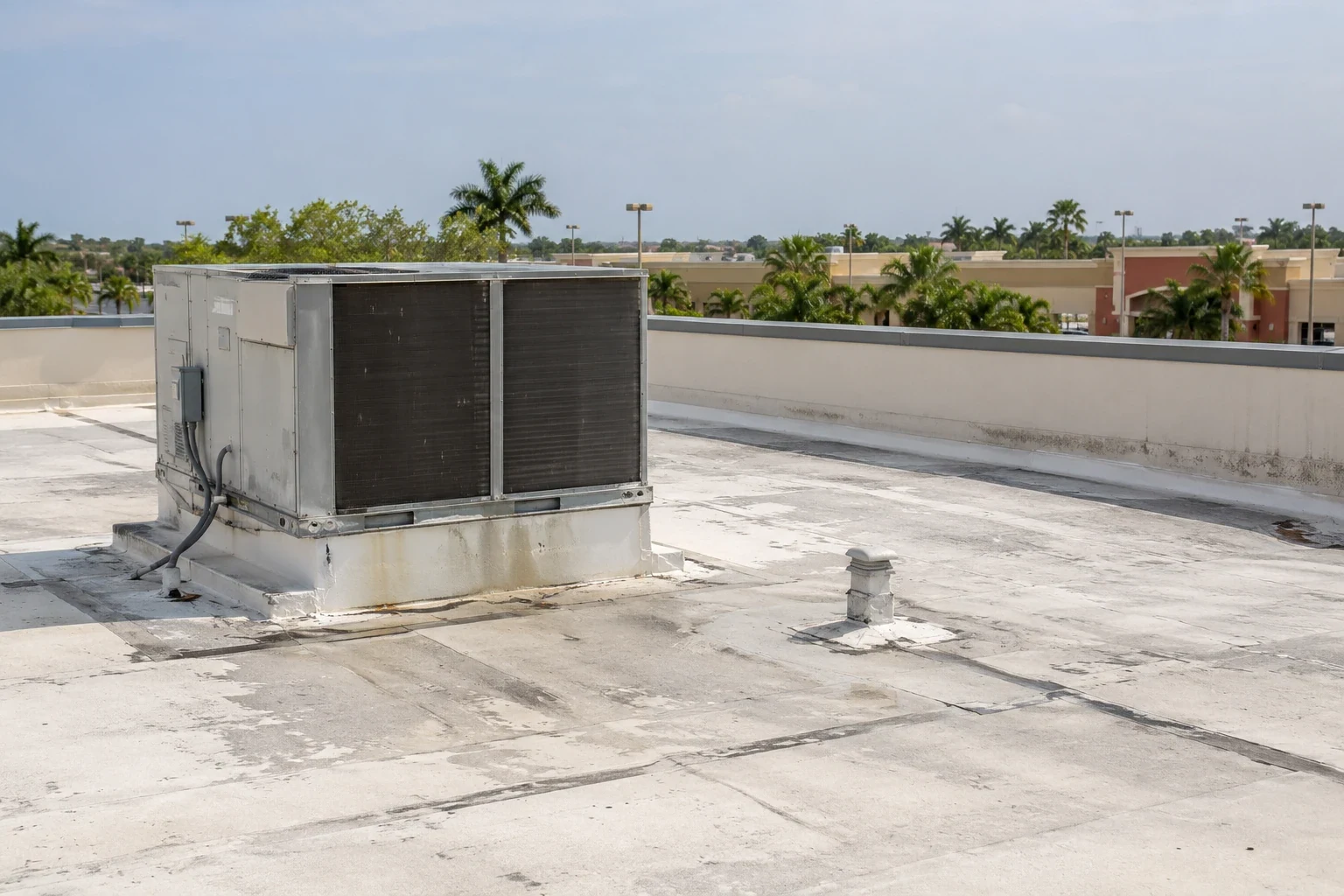
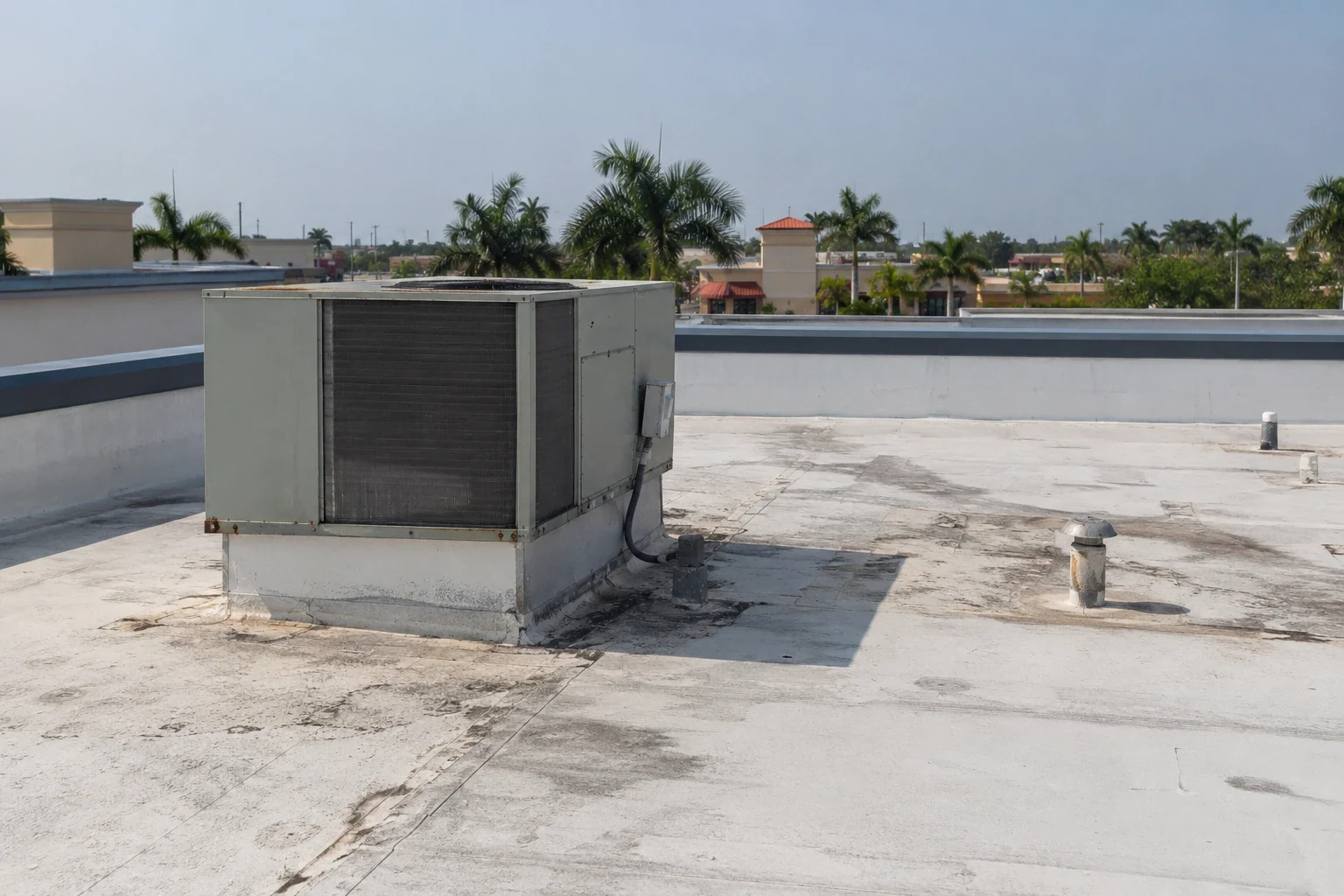
Repair material must fit the installed roof. We identify whether the dealership has TPO, PVC, EPDM, modified bitumen, built-up roofing, standing seam metal, or another assembly. At a single-ply seam, we look for bond or weld separation. At a curb, we check flashing height and transition. At perimeter edges, we inspect metal restraint and signs of movement. A new patch cannot correct wet insulation or an unstable substrate beneath it.
A localized opening in otherwise sound material may support a targeted correction. Repeated leaks, wet insulation, widespread seam issues, or failed attachment can justify testing and a broader proposal. Our commercial roof repair scope separates immediate protection from permanent work. A recover or coating option has to match the assembly and moisture findings; replacement planning should identify removal limits, vehicle protection, staging, and weather closure before a start date is set. We explain what the evidence supports and where another test is still needed.
Heat and storms set the work window
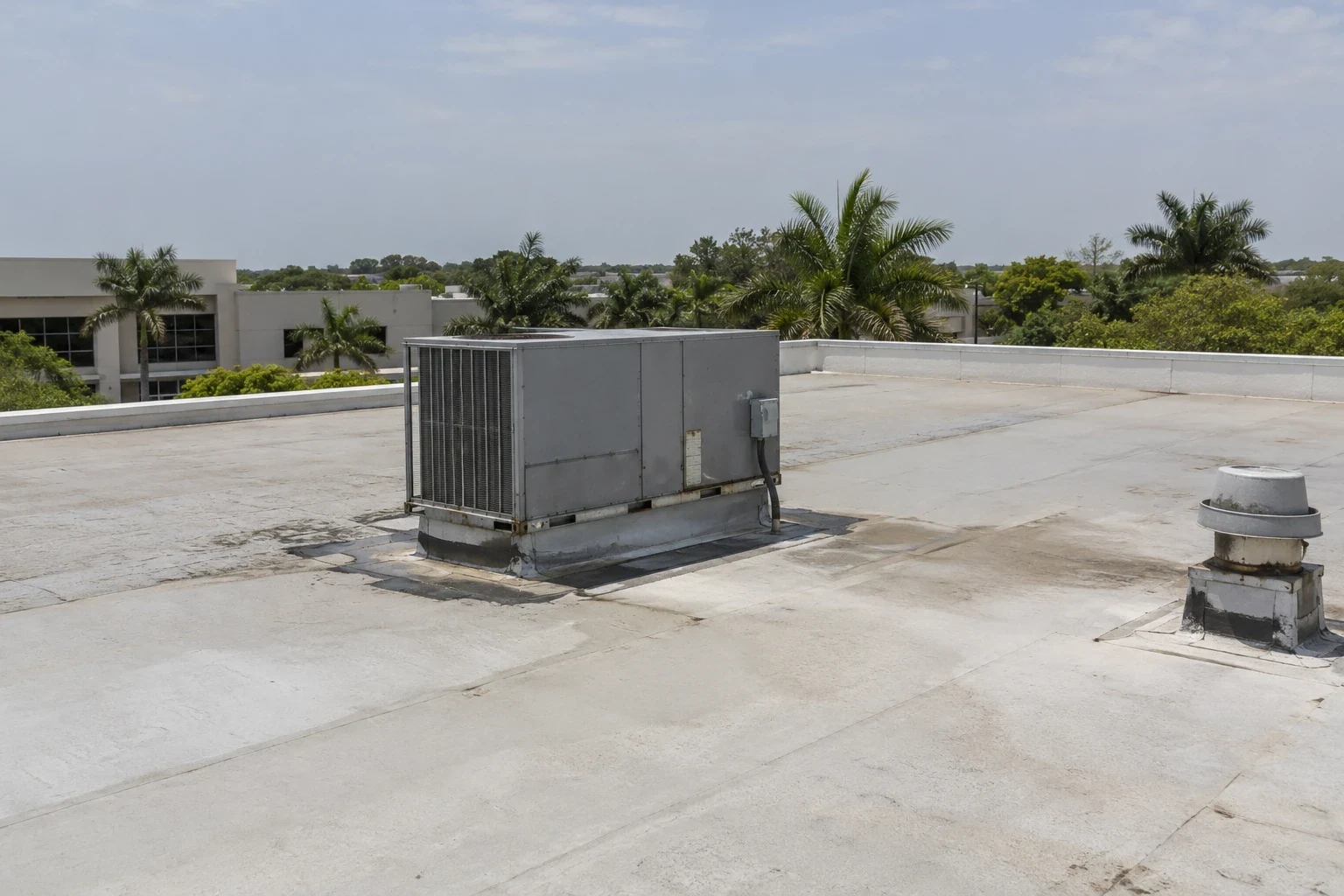
South Florida summer heat index often rises above 100 degrees in July and August. We account for the added exposure in crew access periods and the size of each open roof section. We set the daily roof zone, plan material staging, and keep service circulation separate from the lift and crew path. When an afternoon cell approaches, work stops at the agreed dry-in line rather than extending the opening.
South Florida is also exposed to tropical storms and hurricanes. Outer bands can bring wind and heavy rain well beyond the storm center, so a changing forecast can alter the schedule before a local warning is issued. The service manager receives the protection method, pause point, and conditions needed to resume. Emergency calls are accepted at any hour, including holidays, but access and safe weather still determine the immediate work. A hurricane damage roof review records observed conditions and identifies what needs a closer inspection, without treating the weather alert itself as proof of damage.
Customer and vehicle routes stay visible
Before materials arrive, we agree on customer entrances, delivery points, service-drive movement, and any area that must remain clear for emergency vehicles. We mark the roof zone and temporary ground control for staff. Noise or odor restrictions are also discussed when the selected system or work method calls for them.
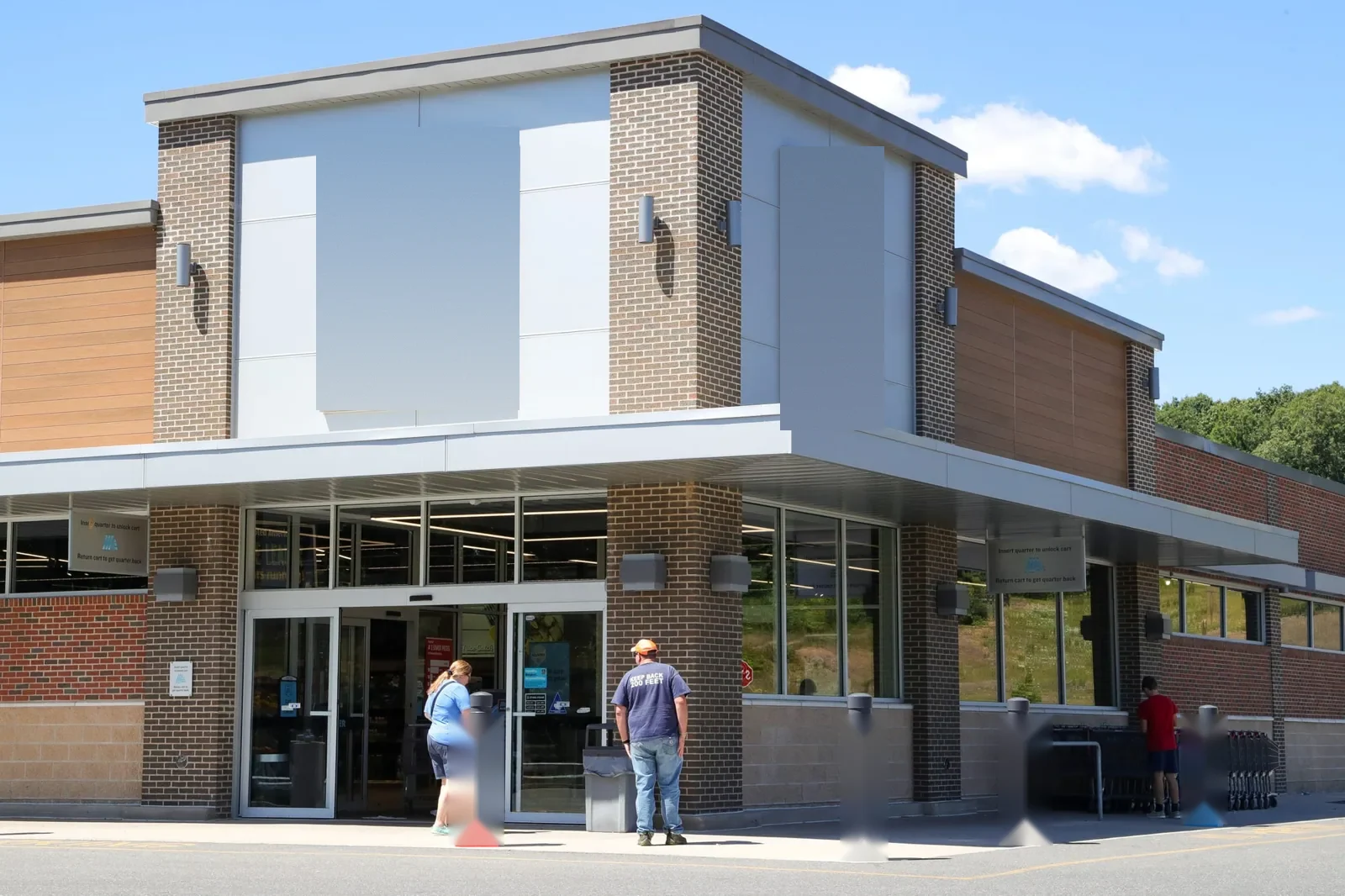
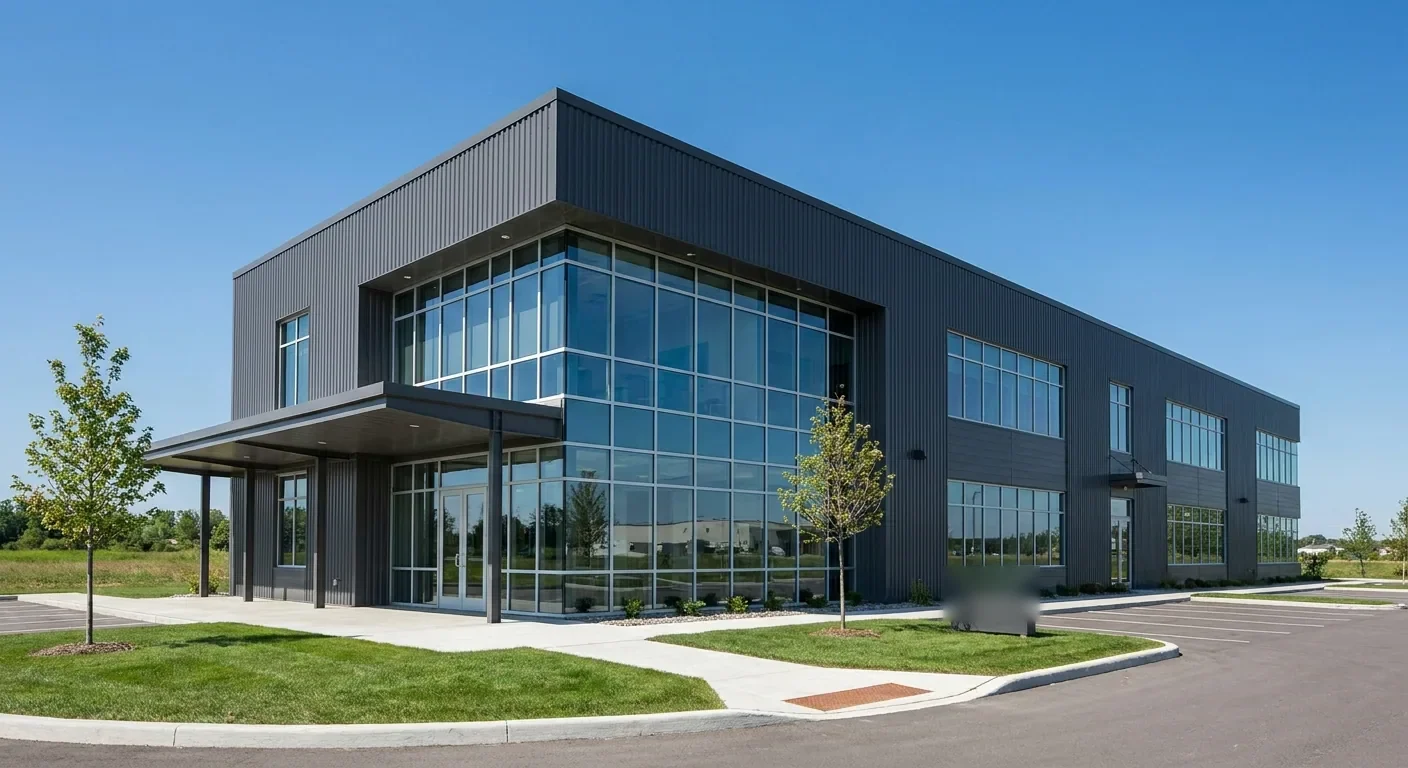
Griffin Road's connection between SR 7 and the airport area gives the Davie market an important east-west route, but the site driveway and lot layout dictate equipment access. The staging needs also resemble a manufacturing plant or a distribution center, though each operation has its own access rules. The sequence records the specific lane, entrance, and roof zone affected on the scheduled day.
The closeout returns the roof to service
The service manager gets the roof-zone record, photographs, completed work, and any area that still needs access. We separate temporary protection from the permanent repair and state which decision or test remains. The service team can match the record to the affected bay or showroom area.
For a dealership along the broader Davie SR 7 and US 441 corridor, the project still turns on its own equipment clearance, service hours, and vehicle routes. A roof condition report can support future maintenance planning, while the current work order identifies today's scope. The manager knows what is complete and what must happen before the next roof zone opens.
Related Roofing Work
- Occupied Commercial Building Reroofing
- Commercial Roof Inspection
- Commercial Roof Drains and Scuppers
- Commercial Roof Repair
- Commercial Roof Replacement
- Commercial Hurricane Damage Roof Repair
- Manufacturing Plant Roofing
- Distribution Center Roofing
Browse every page in Property Types We Roof, or request a roof assessment and we will walk the roof with you. Call 555-555-5555.
Questions Owners Ask
Can roof work continue while the service department is open?
Yes, when the roof zone, vehicle route, and work area below can be separated. We coordinate bay access and any temporary closure with the service manager. If a safe route cannot remain open, the work moves to an approved window.
Why can water appear away from a showroom ceiling stain?
Water can travel through the roof assembly before it reaches a ceiling or wall. We compare the reported spot with roof seams, curbs, drains, and penetrations. If the path stays concealed, a test opening is proposed with its location and closure method.
What roof details are checked around service equipment?
We inspect seams, equipment supports, curb flashing, penetrations, drains, and perimeter edges. The specific system determines the repair material. The report identifies inaccessible areas and any test needed before a permanent scope is approved.
What happens when a storm interrupts scheduled work?
Before weather pauses the job, we finish the closure at the marked boundary. The manager receives the remaining task list and the conditions needed to continue. Any affected service area remains controlled until the roof is safe.
Can a roof coating address recurring dealership leaks?
A coating may fit some sound, dry assemblies, but it cannot correct trapped moisture, failed attachment, or poor drainage. We inspect first and explain whether repair, coating, recover, or replacement fits the findings. Any unresolved condition stays visible in the scope.
Send the leak locations, service hours, equipment-clearance needs, and access rules. We will map the affected roof zone, define a dry-in point, and identify the next approval for your Davie-area property.