Aircraft Hangar Roofing in Davie, FL
Coordinate the roof around hangar operations
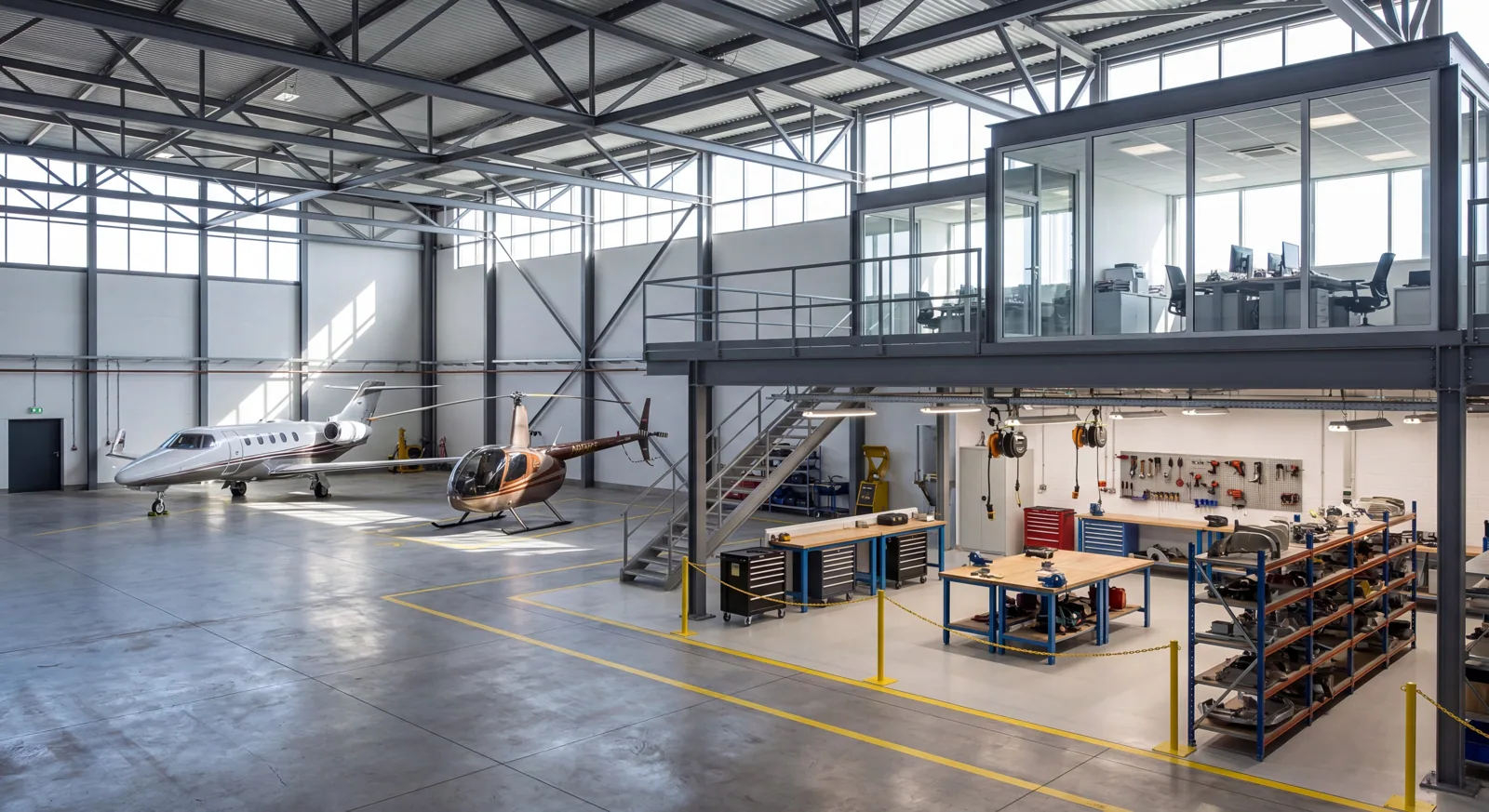
Hangar roof work has to account for a wide clear span, large door openings, and aircraft movement below. A leak near a door track or roof penetration can affect operations beyond the point where water appears. We begin with the reported condition and confirm the facility's access, equipment-clearance, and movement rules before inspecting the roof. The manager receives a roof-zone map, protection boundary, and stop point before material is opened.
Davie's SR 7 area contains industrial, commercial, technology, and workplace uses. The corridor connects toward I-595 and Florida's Turnpike, while Griffin Road links SR 7 with the airport area and points west. For hangar work, we confirm the local access route and movement restrictions with the facility contact. At the hangar, we inspect the installed assembly and coordinate its access rules with the facility contact.
Door movement sets a roof boundary
Hangar doors need clear movement and reliable track operation. Before work, we identify door travel, vehicle paths, aircraft clearance, and the ground area below the planned roof zone. The facility contact tells us when aircraft or service vehicles move and whether an escort or controlled entry is required. We do not stage equipment where it narrows a required path.
Large door openings also create a roof-to-wall transition that deserves careful inspection. We check perimeter flashing, edge metal, track supports, nearby penetrations, and visible signs of movement. A repair may require a temporary operational limit, which is stated before the visit is scheduled. An occupied-building roof sequence can separate work areas and preserve a defined route while the hangar remains in use, subject to the facility's approval.
Trace water beyond the drip
Water may run along a deck flute or framing member before appearing on the hangar floor. We compare the interior report with seams, drains, curbs, skylights, penetrations, door transitions, and previous repairs. If a test opening is needed, the proposal identifies its location, purpose, and closure method. We note any area blocked by aircraft, stored equipment, or a restricted access rule.
South Florida's wet season usually runs from mid-May to mid-October, and storms can interrupt roof access with little notice. Nearby Fort Lauderdale averages 60.95 inches of rain each year. For a hangar, we set the daily closure boundary around door movement and aircraft clearance before tracing the reported leak. A commercial roof inspection records what was seen, what could not be reached, and what decision follows.
Runoff matters across a broad roof
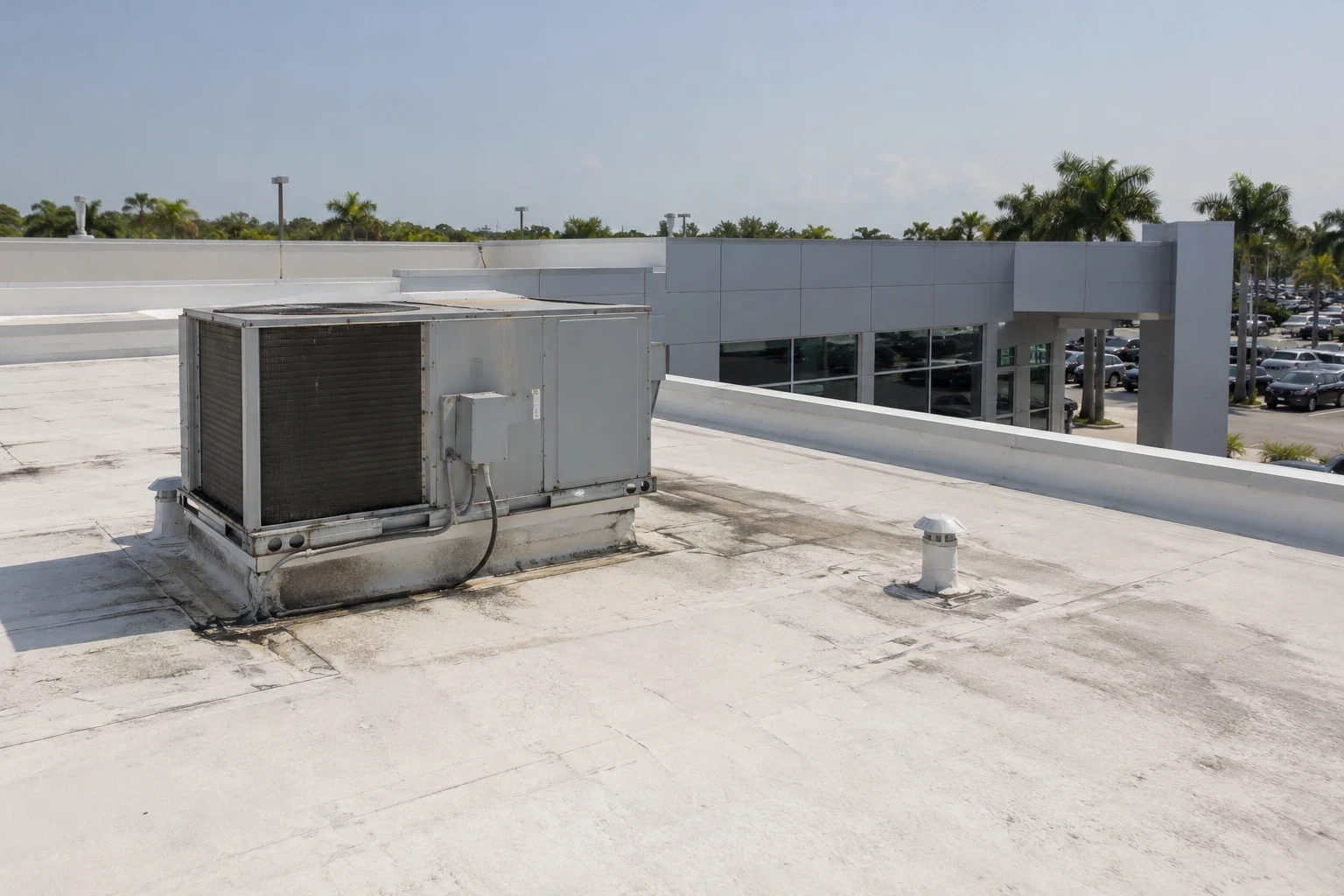
We inspect drain bowls, strainers, scuppers, overflow routes, leaders, gutters, and visible low areas. On a broad roof plane, one restricted outlet may affect a large drainage area, but the cause can also involve slope or a downstream connection. We identify the specific outlet and roof zone rather than treating all ponding as one problem. Where water is present, we document its extent and whether the roof was safe to traverse.
Hangar operations may depend on keeping floor space clear and protecting stored aircraft or equipment. The work plan states where temporary protection is needed below and what must remain out of the crew's path. A drain and scupper repair may be performed with membrane work if both conditions are confirmed. If outlet function cannot be verified, the scope calls for a separate test rather than assuming the drain is clear.
The assembly defines a sound repair
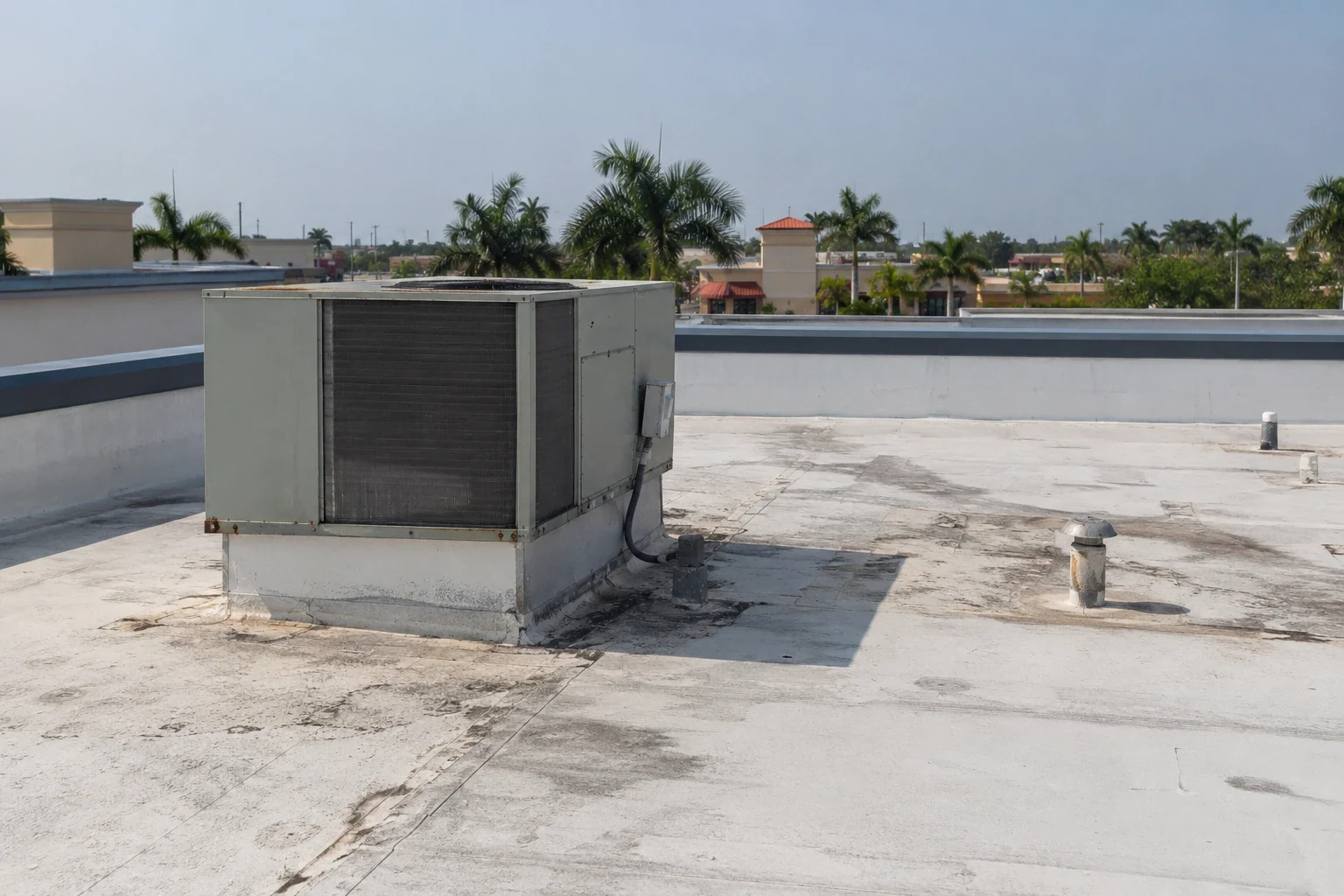
Hangars may have metal roof panels or low-slope membrane sections, sometimes with transitions between them. We identify the installed system and inspect seams, fasteners, edge restraint, flashing, curbs, and penetrations. A metal panel repair has different requirements from a TPO or modified bitumen membrane. The repair has to suit the substrate and tie into sound surrounding material; a coating cannot stabilize loose panels or dry trapped moisture.
A localized panel or flashing issue may support repair. Widespread corrosion, loose attachment, recurring leaks, or wet insulation can require a broader assessment. Our commercial roof repair scope separates immediate protection from permanent correction. If a metal retrofit or membrane replacement is considered, the proposal sets out removal limits, equipment protection, and how the roof will be kept dry between shifts. Any test or structural question stays visible for the facility contact before work expands.
Heat and wind change roof access
South Florida's July-August peak heat index often crosses the 100-degree mark. Heat affects safe roof access and the length of the work window. We set material staging, shade and water breaks, and the active work footprint around the hangar's operating requirements. If a storm cell approaches, the crew secures the current zone at the agreed dry-in line before changing tasks.
South Florida also faces tropical storms and hurricanes whose outer bands can bring wind and heavy rain across the region. Large roof surfaces and door edges make secure temporary closure important. The facility receives an update on what is complete, what remains protected temporarily, and which forecast conditions allow work to resume. Emergency concerns can be reported around the clock, including holidays, while safety and site access govern the immediate response. A storm-damage roof assessment records physical conditions and separates them from assumptions based on a weather alert.
Facility control stays with the site contact
Hangar access may involve escorts, sign-in, movement schedules, equipment restrictions, or separate approval for photography. We confirm requirements with the authorized facility contact before arrival. The contact defines which work areas can be reached, when aircraft movement occurs, and who can approve a temporary restriction. The authorized facility contact confirms entry permission, escort requirements, movement schedule, and any photography limits before the crew arrives.
Davie's SR 7 corridor connects toward I-595 and the Turnpike; Griffin Road links SR 7 with the airport area. The property contact confirms the service road, staging area, and aircraft movement schedule before the crew selects a work route. For a restricted-site roof project, facility authorization and access controls set the work sequence.
Closeout marks the next operating step
At closeout, the facility contact receives photographs, inspected roof zones, repairs completed, areas not accessed, and any open test or approval. We distinguish temporary dry-in from permanent work and state whether the hangar door or staging restriction can be released. If equipment or operations prevented an inspection, that area remains an open item until it is reached.
Davie Road is central to the town's downtown planning area, and the broader SR 7 corridor serves industrial and workplace properties. Those places offer regional context without substituting for the hangar's own facility plan. A warehouse roof assessment applies to a different operating layout. For work near the Davie SR 7 and US 441 corridor, the next decision names the roof zone, access authority, and safe window. A dealership roof project also plans around vehicle movement, though hangar clearance controls are distinct.
Related Roofing Work
- Occupied Commercial Building Reroofing
- Commercial Roof Inspection
- Commercial Roof Drains and Scuppers
- Commercial Roof Repair
- Commercial Storm Damage Roof Repair
- Military Installation Roofing Support
- Commercial Warehouse Roofing
- SR 7 / US 441 Corridor
Browse every page in Property Types We Roof, or request a roof assessment and we will walk the roof with you. Call 555-555-5555.
Questions Owners Ask
Can aircraft remain inside during hangar roof work?
That depends on the work zone, facility rules, and protection needed below. We identify where material removal or equipment staging could affect aircraft and coordinate any movement with the authorized contact. The authorized contact decides whether aircraft remain inside while the crew works overhead.
How do you protect a hangar when rain interrupts work?
The crew stops at the agreed dry-in line and secures the active roof section before leaving it. The facility contact receives a status on temporary protection and remaining work. Conditions and site access determine the next safe window.
What roof conditions are common around large hangar doors?
We inspect edge metal, flashing transitions, door-track supports, fasteners, and nearby membrane or panel seams. The actual condition varies by assembly and exposure. The report identifies observed movement or water entry and any test needed to confirm the scope.
Can a hangar roof be coated instead of replaced?
A coating is an option only when the existing surface and moisture condition support it. It cannot correct loose panels, failed attachment, or trapped water. We identify the roof type and condition before comparing repair, coating, retrofit, or replacement.
What does the facility need to arrange before inspection?
Provide the access contact, escort or sign-in rules, aircraft movement schedule, door restrictions, and any limits on photography. We confirm where the crew may stage and which roof zones can be inspected. Unreached areas are recorded for follow-up.
Share the leak location, aircraft and door schedules, access rules, and approved work window. We will map the roof zone, set the dry-in point, and identify the next approval for your Davie-area hangar.