Commercial Roofing for Retail and Restaurant Chains in Davie, FL
Schedule the roof around store operations
A leak over a sales floor or kitchen can change opening plans before a regional manager has time to visit. We begin with the location contact, the affected roof zone, and the operating hours that cannot be interrupted. Before material is removed, the store receives a work boundary and dry-in point. Each location gets its own schedule and closeout, even when the same roof issue appears across a chain.
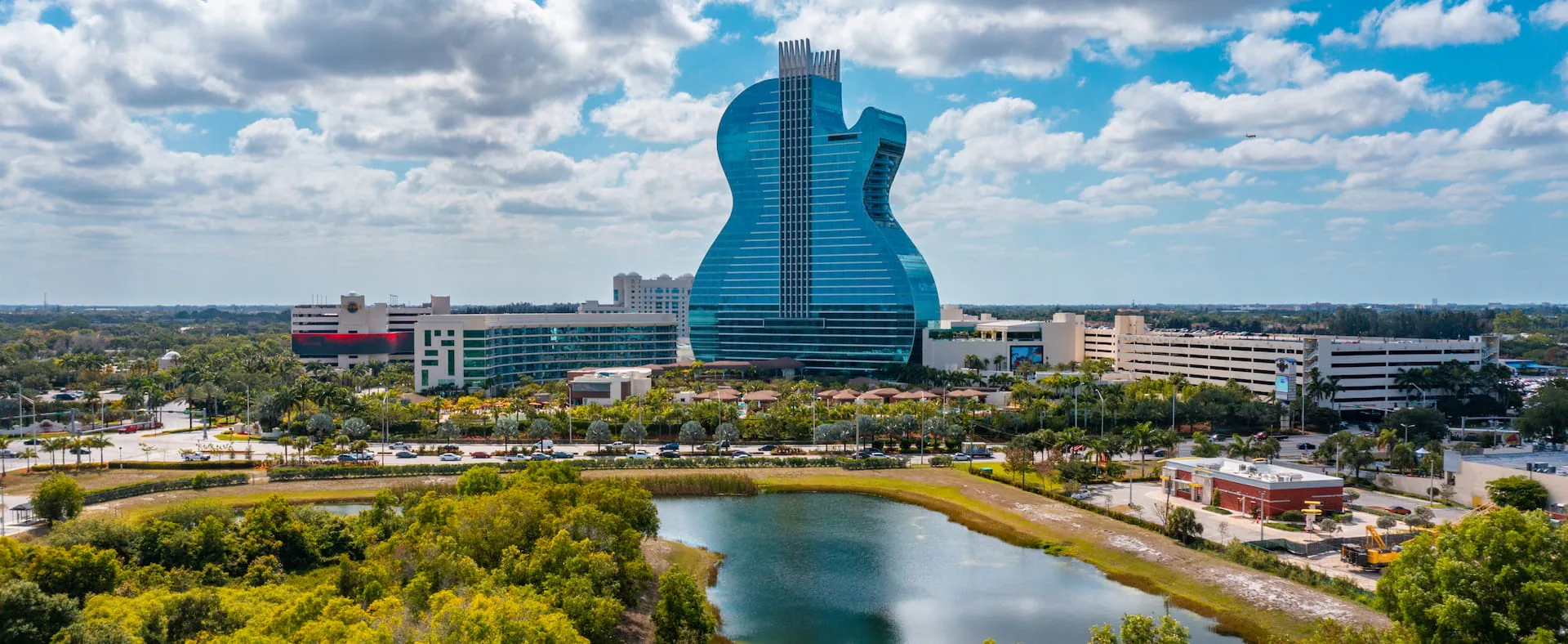
Most commercial development in Pembroke Pines is along Pines Boulevard, a corridor with retail centers and additional office, medical, and industrial properties. Oakland Park's economic development materials identify restaurants and bars among its growing commercial uses. These nearby districts show how varied retail and food-service settings are across the Davie region. They do not establish the operating hours or roof design of any one store. We confirm those details with the local contact before planning work.
Store hours shape the work slot
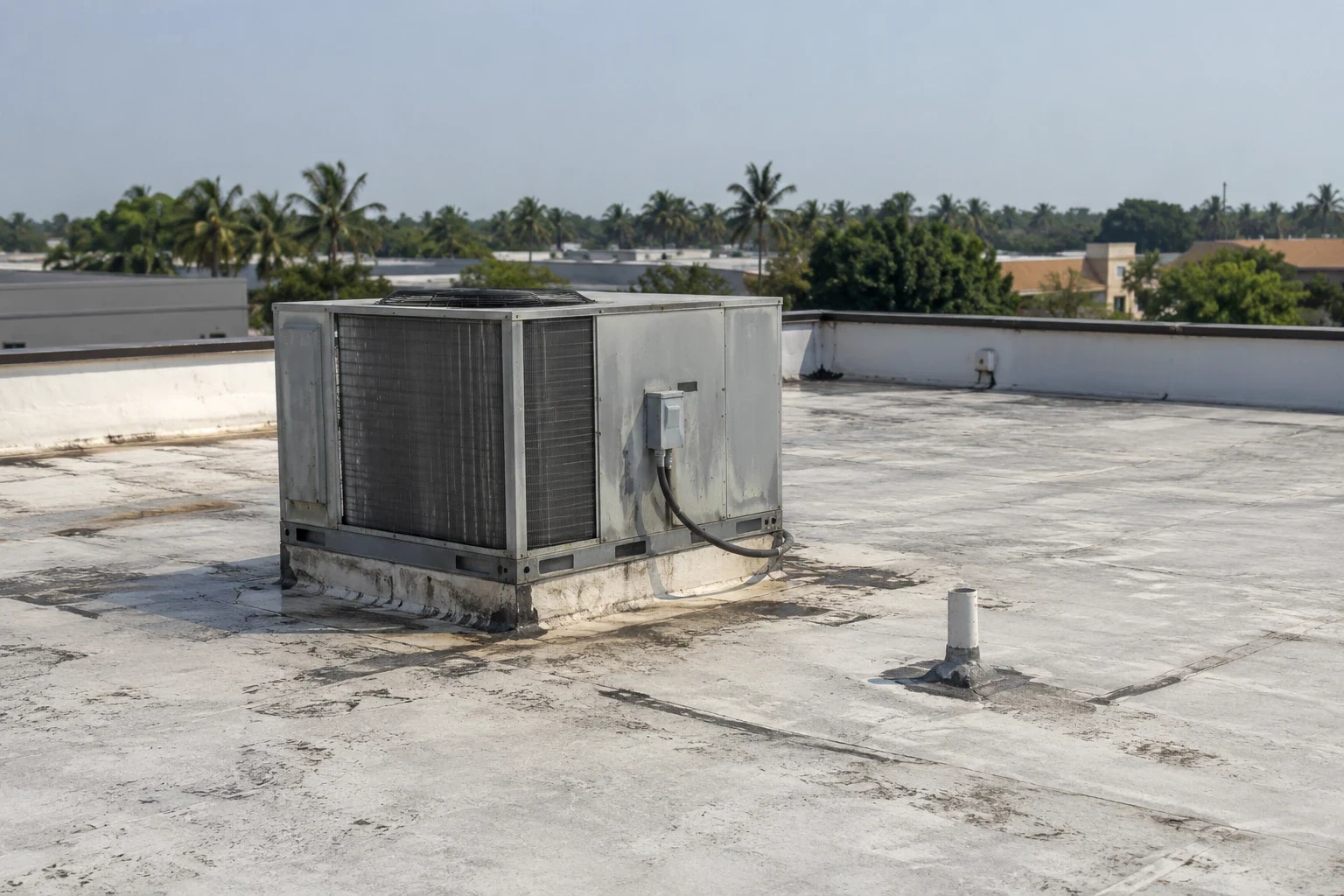
The location manager identifies opening, closing, deliveries, kitchen service, customer entrances, and any area where a temporary barrier would affect sales or dining. We map the route for a lift and material staging so it does not block a receiving door, accessible entrance, or emergency path. If equipment needs to be switched off, the site contact confirms the approval and timing before the crew arrives.
A chain may use similar store layouts, but its sites do not share the same roof access or tenant conditions. Each plan names the property, working footprint, and person who can approve a change. An occupied-building roof sequence can isolate a section and set a reopening point. The store can then schedule staff coverage around the actual work instead of a broad portfolio-wide notice.
A store complaint starts a roof trace
We compare the reported ceiling, kitchen, back room, or sales-floor area with roof seams, penetrations, drains, equipment curbs, and previous repairs. A water mark may sit away from the entry point. If the likely path remains hidden, the inspection identifies a test or moisture survey and explains how the opening will be closed. The manager receives any access or room restriction before testing begins.
A seasonal majority of South Florida's rain falls between May 15 and October 15, when recurring storms can press on store access and temporary cover. Fort Lauderdale's 1991-2020 rainfall normal, the nearest long-term record for Davie, is 60.95 inches. This regional rain pattern makes drain function and short work windows relevant to a store schedule, but it does not confirm that a location has roof damage. A commercial roof inspection records observed conditions by building and the limits on each visit.
Drainage protects food and sales areas
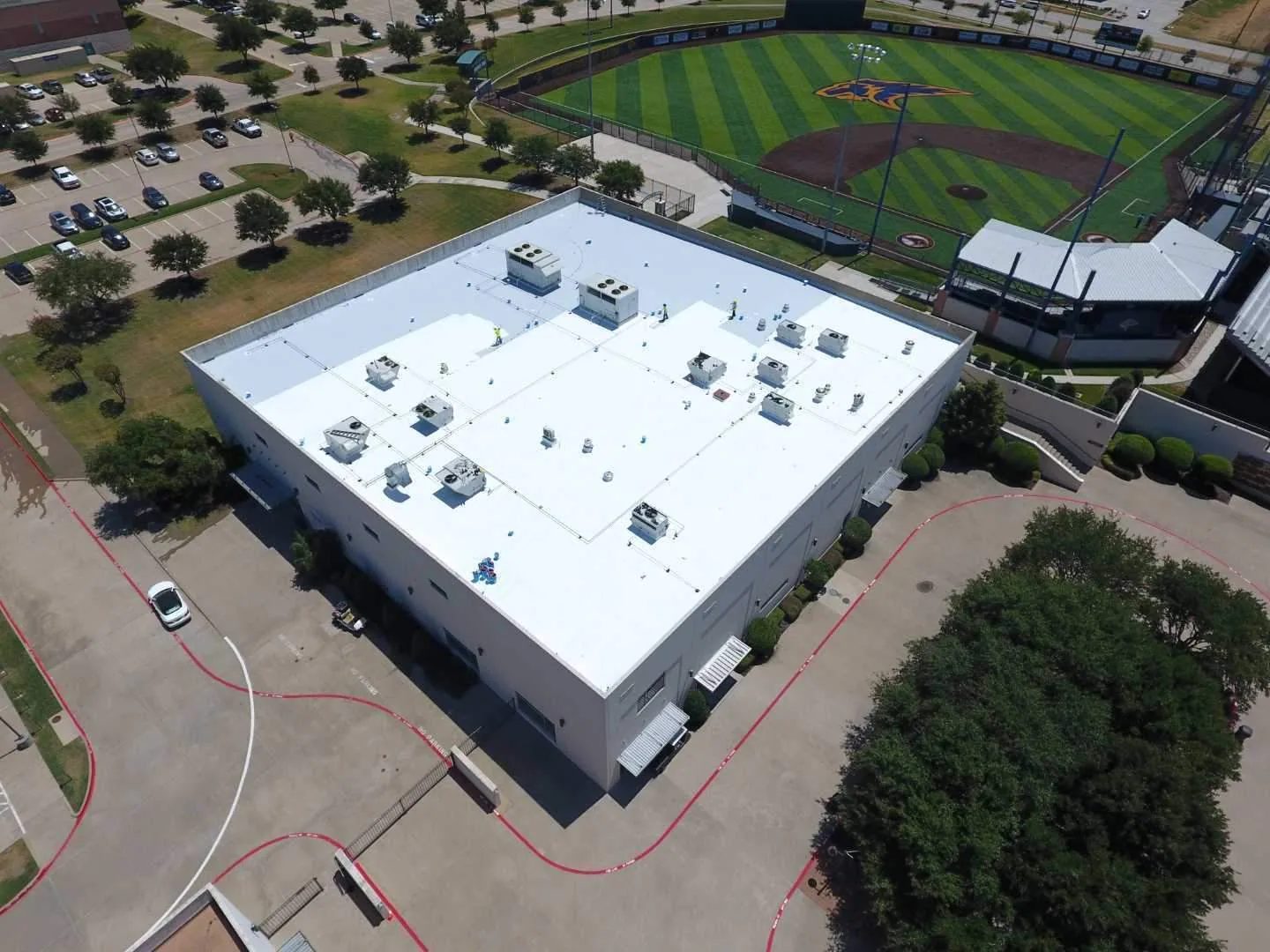
We inspect drain bowls, strainers, leaders, scuppers, overflows, and visible low spots. A restricted outlet can be cleared, but ponding may also involve slope or a downstream connection. We record which drain was accessible and whether any water path could reach a customer entrance, stock room, or food-preparation area. If access is limited, the uninspected section stays on the list.
A drain and scupper repair can be placed with seam work if inspection confirms both conditions. Otherwise, the store gets a distinct test or correction item. Kitchen exhaust and rooftop equipment add penetrations that need close inspection; an approved shutdown or service window comes from the local operations contact. We coordinate the roof work with that decision instead of assuming a restaurant can pause service at any time.
The roof assembly directs the work
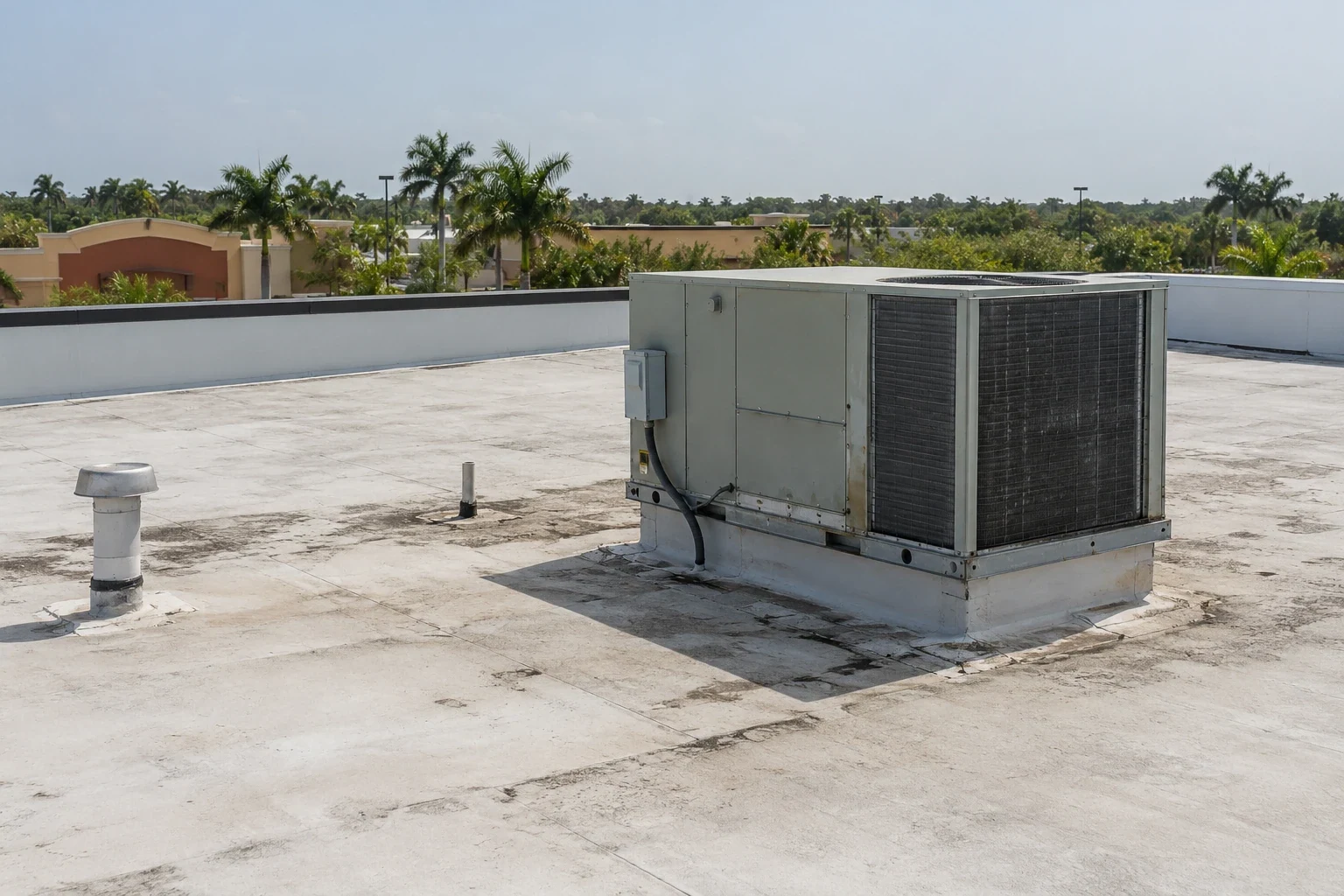
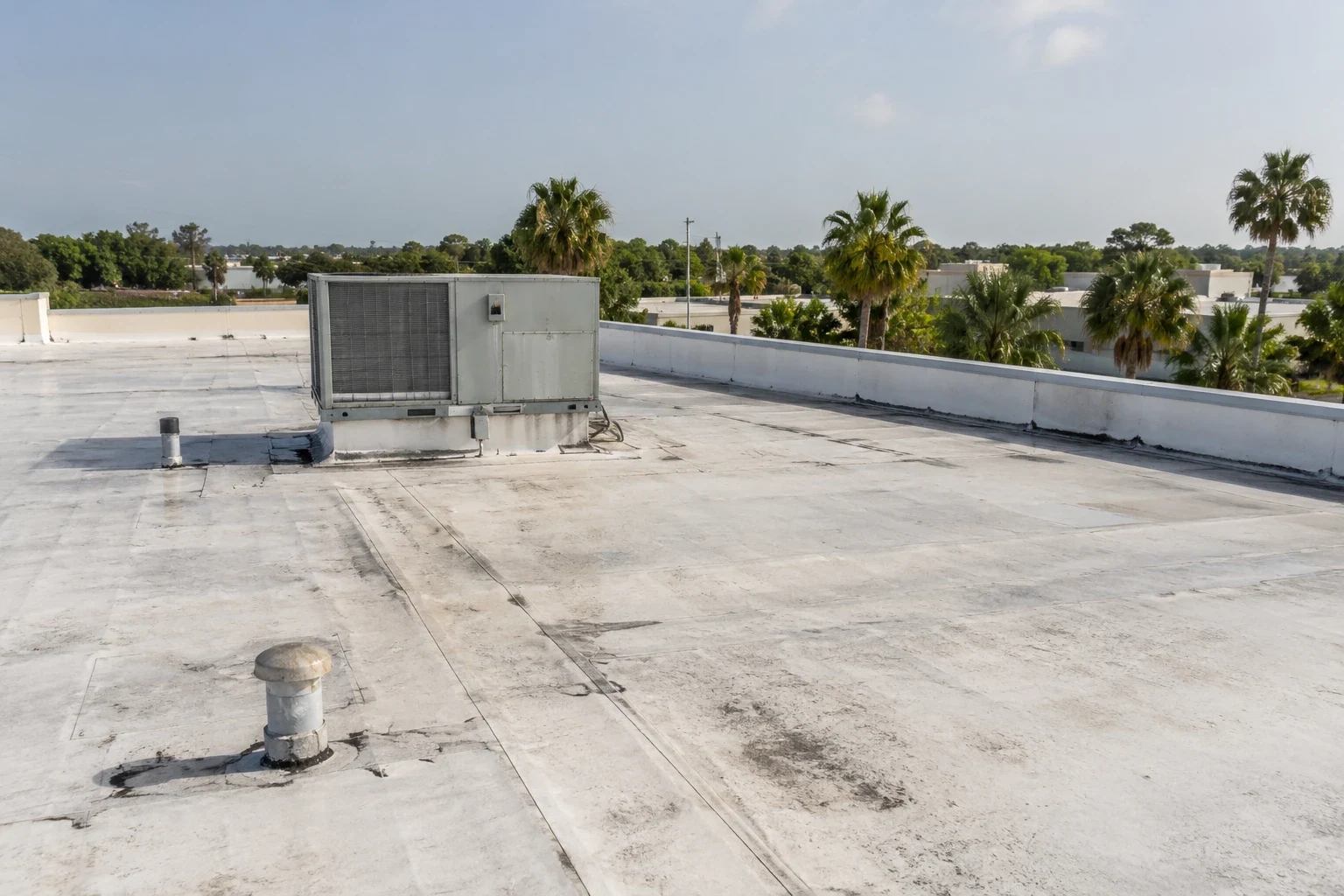
We identify whether the location has a single-ply membrane, modified bitumen, built-up roofing, metal, or another assembly. Seams, equipment curbs, flashing transitions, edge metal, and prior patches are checked against the reported water path. A compatible repair has to reach sound material. A surface coating cannot remove wet insulation or correct a failed outlet underneath.
A local flashing issue may support a targeted repair; several leak areas or moisture in multiple sections can call for testing and a broader plan. A commercial roof repair scope separates temporary protection from permanent work. If a larger replacement is needed, the replacement plan identifies store closure, customer routing, kitchen access, and weather protection before dates are set. The proposal reflects the location's condition rather than using one standard response for every chain site.
Rain and heat affect every store window
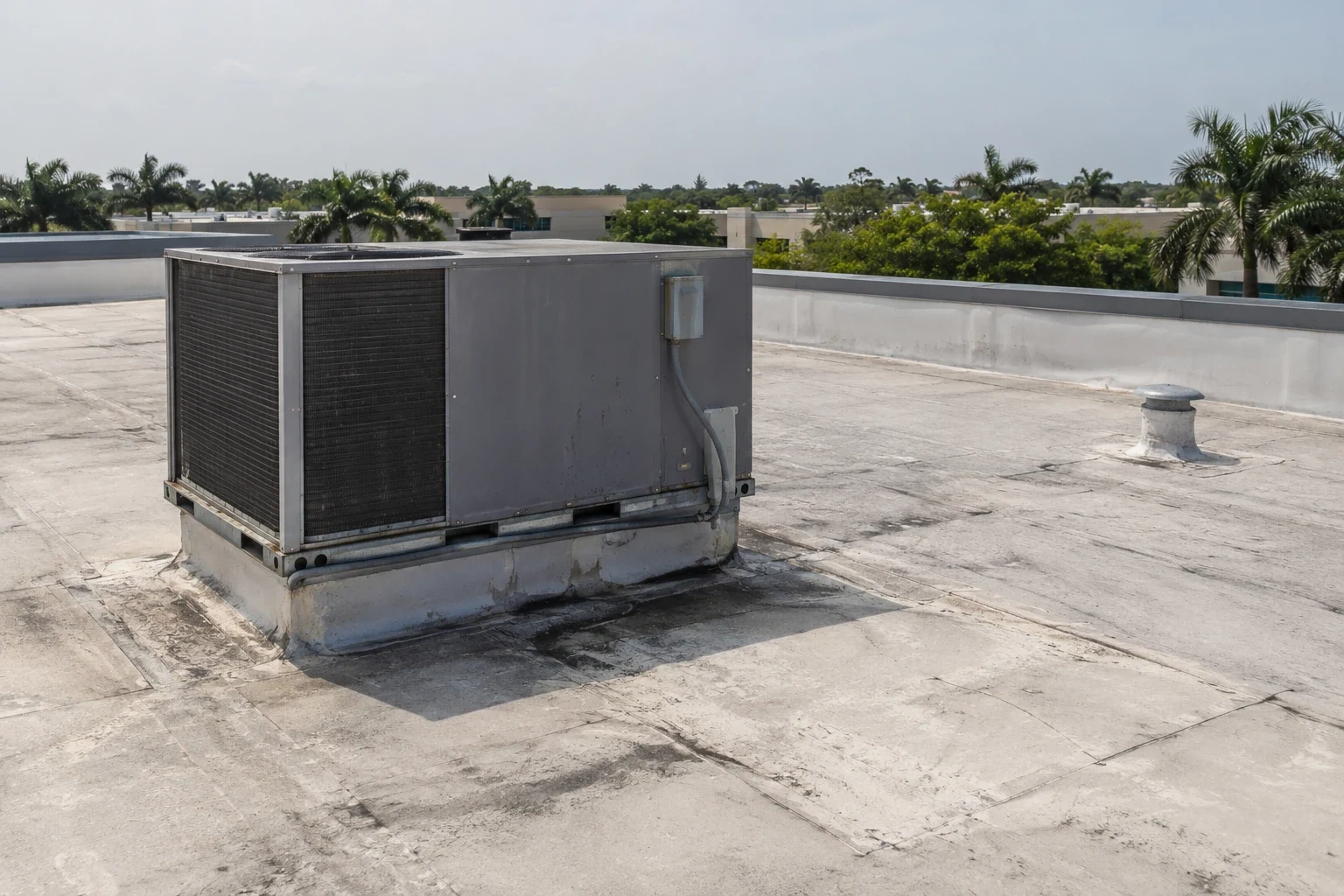
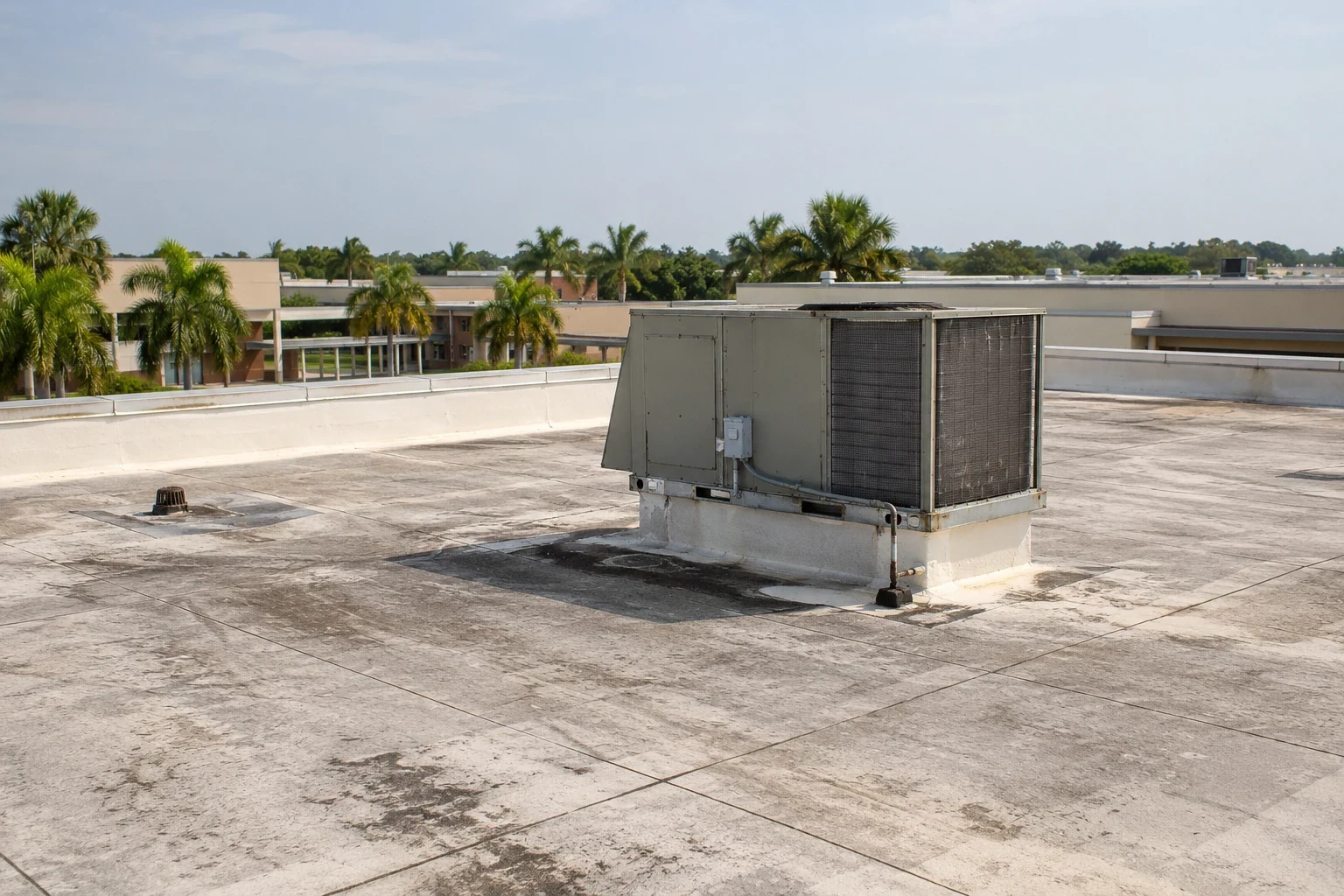
Davie's July and August heat index can reach or exceed 100 degrees. Heat affects safe roof access and the time a crew can work on an exposed area. We define the daily zone, material staging, and dry-in line before opening the roof. If an afternoon shower builds, the crew closes the active section before shifting to another store task.
Between mid-May and mid-October, South Florida receives roughly 60 to 70 percent of its annual rain. Store managers need the roof closure point coordinated with opening hours, deliveries, kitchen service, and customer access. Tropical weather may shift the work window, so the location contact gets a status tied to the specific store zone and its temporary protection. We update the location manager on the area protected, what remains temporary, and when conditions allow a return. Emergency concerns can be reported at any hour, holidays included; safe access and current weather still govern the immediate response. The store receives a practical status rather than an open-ended schedule change.
Chain reporting keeps each site distinct
After a visit, the location receives its inspected zones, photographs, conditions found, repairs completed, and any areas not reached. Temporary protection is listed separately from permanent work. If customer access or delivery hours changed the sequence, the closeout records that too. Regional staff can see which locations need action without assuming that an unvisited store shares another site's roof condition.
A hospitality group may coordinate guest schedules across multiple properties; retail and restaurant brands have store hours, deliveries, and kitchen constraints instead. A property management company can help coordinate leased sites and tenant notice. A multi-site roof program can align inspections around Pines Boulevard while keeping each building's map and next approval separate. The closeout states what is finished, what remains open, and which contact owns the next decision.
Related Roofing Work
- Occupied Commercial Building Reroofing
- Commercial Roof Inspection
- Commercial Roof Drains and Scuppers
- Commercial Roof Repair
- Commercial Roof Replacement
- Hospitality Groups
- Property Management Companies
- Multi-Site Commercial Roof Programs
Browse every page in Industries We Serve, or request a roof assessment and we will walk the roof with you. Call 555-555-5555.
Questions Owners Ask
Can roof repairs happen before or after store hours?
An access slot can be planned around the location schedule when the roof, crew, and weather conditions allow it. The manager identifies delivery and cleaning periods, and we state any restriction below the work zone. If an overnight or off-hour visit is unsafe, we coordinate another window.
What should a store manager report when a ceiling leaks?
Note the room, timing, rain conditions, and whether stock, equipment, or customer areas are affected. We use that report to choose the first roof zone and confirm access. If the leak path is concealed, the scope identifies a test before material is opened and assigns the approval needed to perform it.
Will restaurant service need to stop for roof work?
Not automatically. We identify affected roof details and coordinate any equipment shutdown or access restriction with the local manager. If work below the roof would affect food preparation or customer safety, the schedule includes an approved service window.
How do you coordinate repairs across many locations?
For chain-wide visits, we can group inspections by region and track each property's condition and next action separately. Store hours, roof access, and repair limits stay specific to each building. Regional reporting shows status without treating one location's inspection as coverage for another.
What if rain interrupts work after a store has closed?
Before leaving, the crew secures the active section at its dry-in point and updates the location contact about any temporary restriction. The status lists remaining work and the next safe window. Store access returns through the manager's approval once the roof area is protected.
Share the location list, leak reports, hours, kitchen or equipment limits, and customer-access rules. We will set a work zone, closure point, and next approval for each Davie-area store.