Commercial Roof Edge Metal, Coping and Gutters in Davie, FL
Inspect the roof perimeter
South Florida's afternoon cells can test a roof edge before a maintenance visit is finished. At the start, we identify the windward perimeter, visible movement, water entry reports, and safe access points. The first review follows the metal from roof membrane to fascia, coping, gutter, or downspout and notes each transition that can admit water or release under movement. A photo record ties the condition to a roof zone and distinguishes loose components from staining or surface wear.
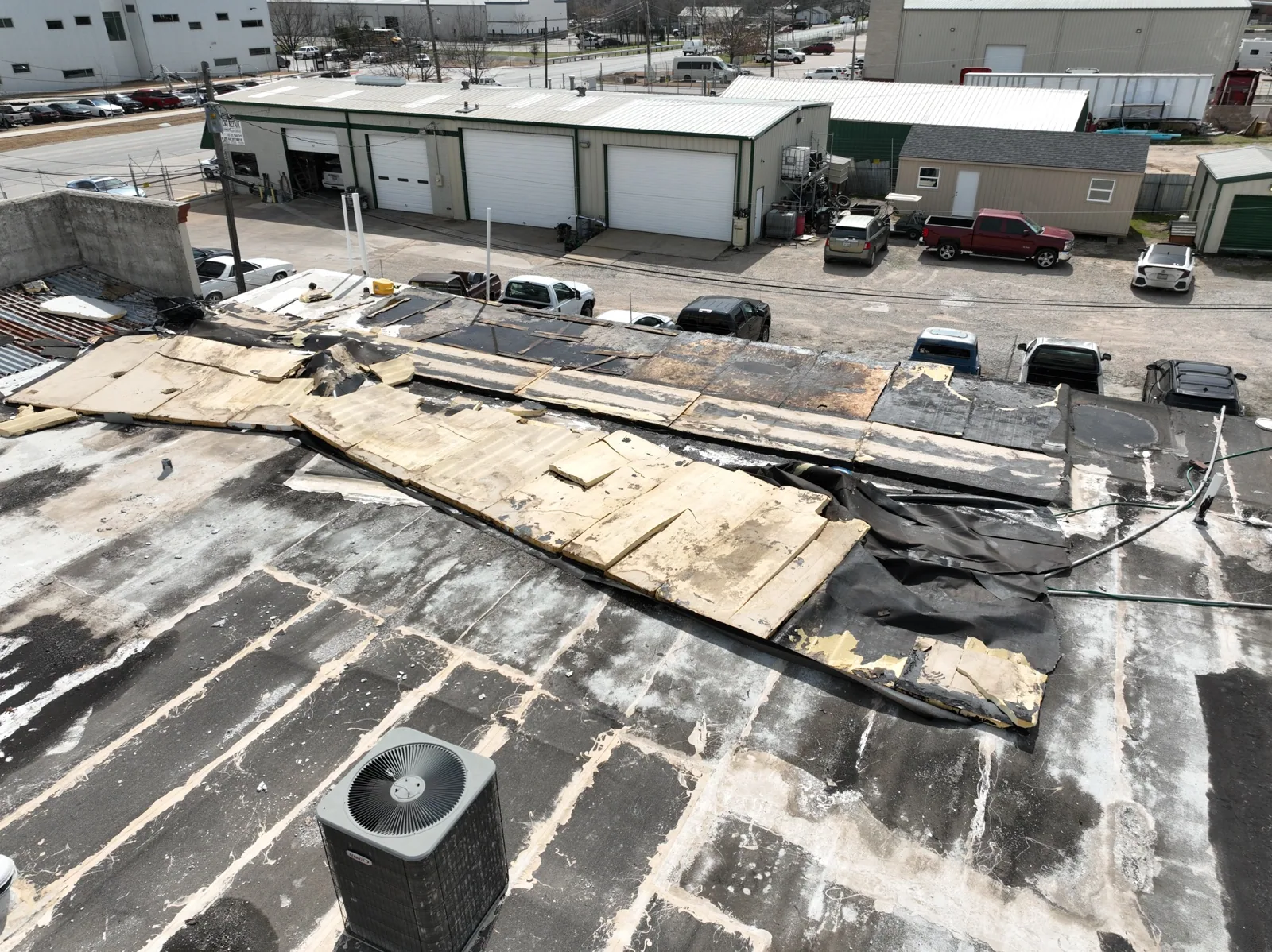
The National Weather Service lists damaging thunderstorm winds among South Florida's wet-season hazards, with severe weather most likely from mid-May through early July. Davie's wet season lasts roughly mid-May to mid-October. After a severe-weather warning, we inspect coping joints, fasteners, and deck connections where roof access is safe. We inspect the actual fastening, laps, cleats, sealant, and membrane termination before recommending repair.
The edge is a connected assembly
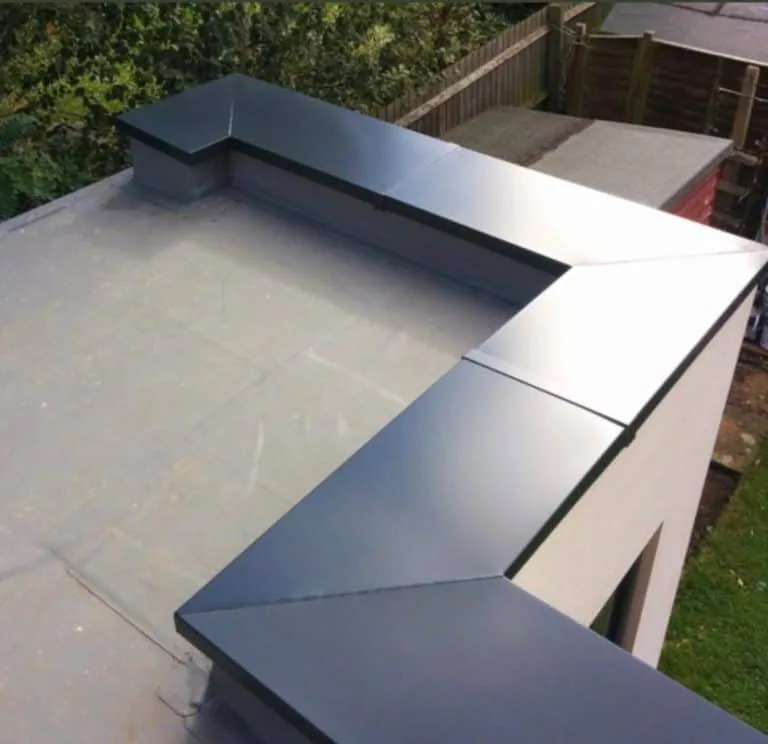
Edge metal, coping, fascia, membrane termination, and the wall below work together to control water and resist movement. A visible gap may be a symptom of loose cleats, failed fasteners, inadequate overlap, damaged substrate, or an incompatible repair. We note the detail and inspect adjacent roof material before choosing a correction. A bead of sealant over a moving or poorly secured joint may only conceal the issue.
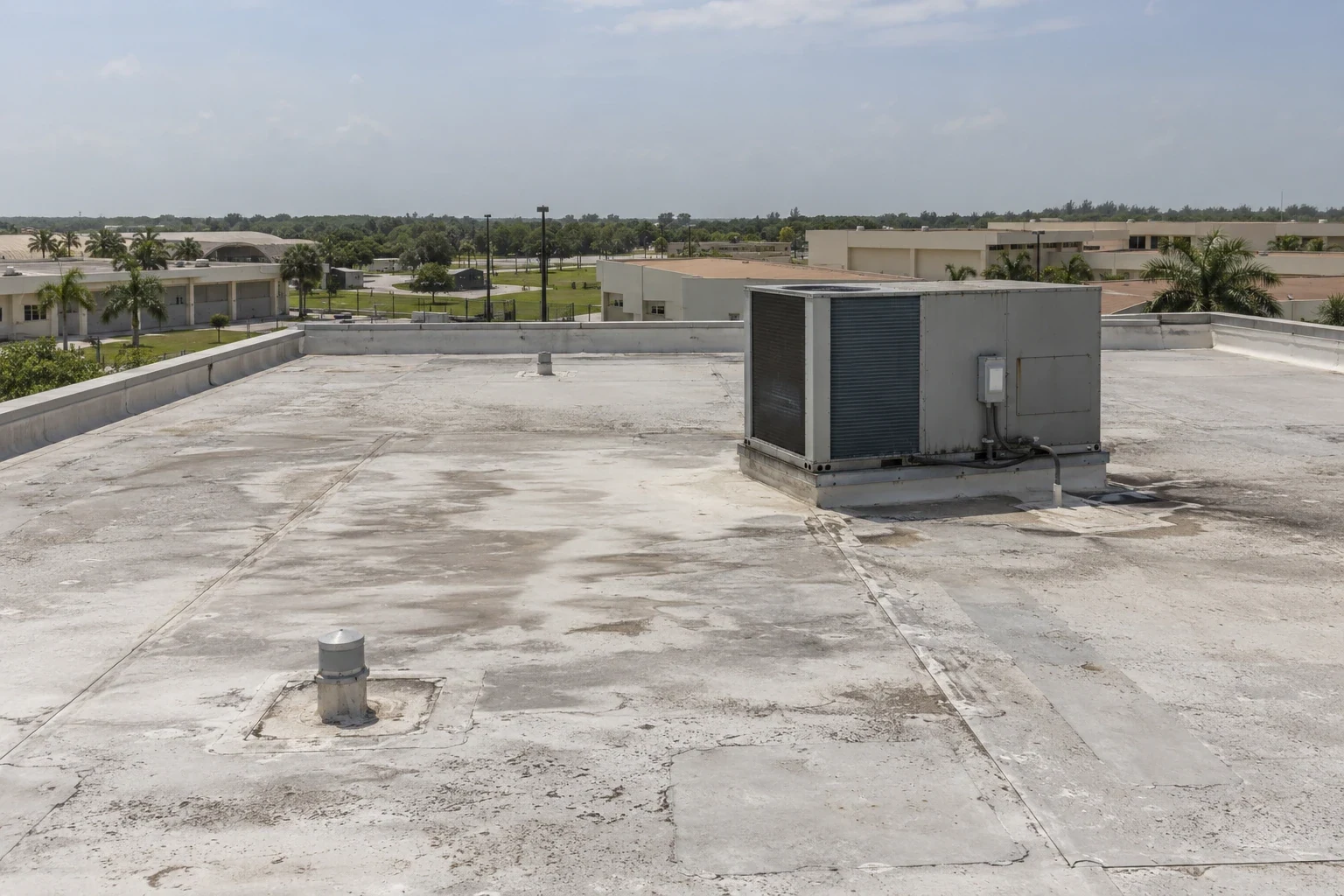
At a parapet, the review includes coping joints, corners, end conditions, splice plates, and attachment points where accessible. We look for open seams, loose sections, corrosion, and water paths that reach the wall or roof assembly. If a section shifts under light hand pressure, we record that observation without testing beyond safe limits. The repair scope identifies any metal removal, substrate check, membrane tie-in, and replacement detail needed to restore continuity.
Davie's SR 7 corridor includes industrial and workplace properties, automobile-related businesses, commercial services, technology firms, and nearby institutional campuses. Rooftop units, exhausts, and tenant activity can make the perimeter work zone sensitive. Before setting staging, we confirm equipment clearance, fall-protection requirements, and any no-go areas. The SR 7 / US 441 corridor provides a useful access reference; it does not determine an individual property's roof layout.
Gutters carry the edge detail outward
For a gutter system, we inspect visible hangers, seams, end caps, outlets, and connections to downspouts. Debris may slow flow, but recurring overflow can also reflect slope, capacity, outlet position, or a blocked leader. We record the specific location and water marks rather than assuming a single cause. If ground-level access is outside the scope, the report names the downspout section that still needs review.
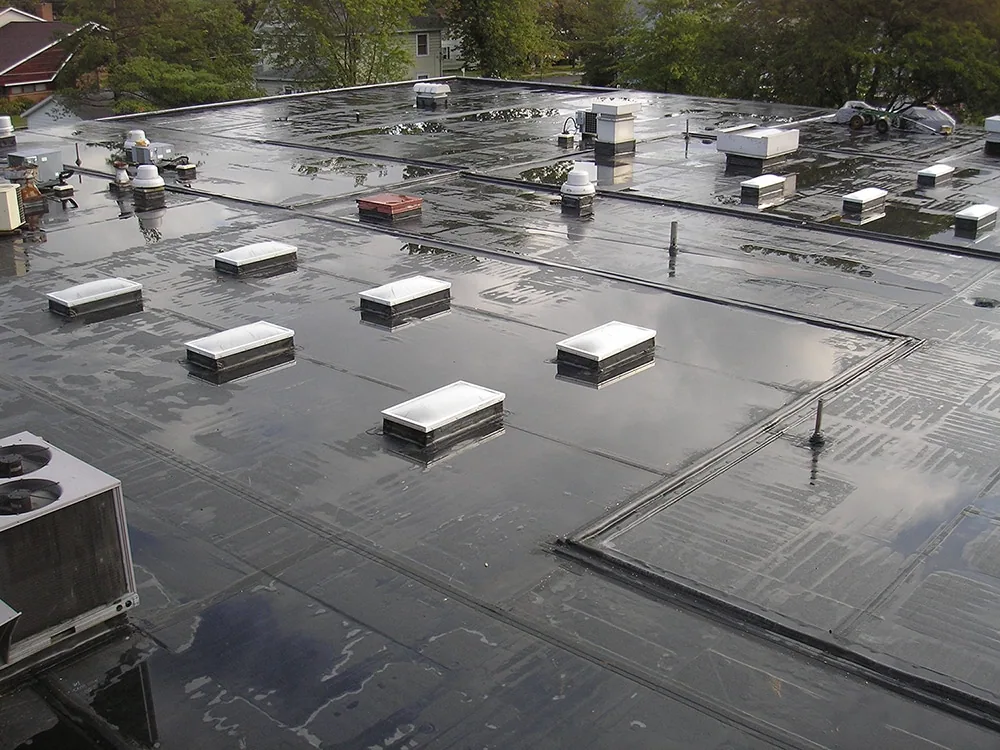
Scuppers and gutters must discharge without sending water back toward the building or onto a busy entrance. We check where runoff lands when that area is accessible and note any drainage path needing separate attention. On a large roof, multiple outlets can serve different zones, so the work record tracks each one. A drain and scupper assessment can address related roof-level flow issues under a defined scope.
The six-lane Griffin Road connection reaches from SR 7 toward the airport and west of the Turnpike; that route matters when a long coping section or lift has to arrive in sequence. For facilities near the Griffin Road corridor, delivery and lift scheduling may need to match receiving or gate windows. Those logistics matter when long metal lengths, debris containers, or access equipment must reach the roof. We confirm those details with the site contact before committing to a work sequence.

Fabrication follows measured conditions
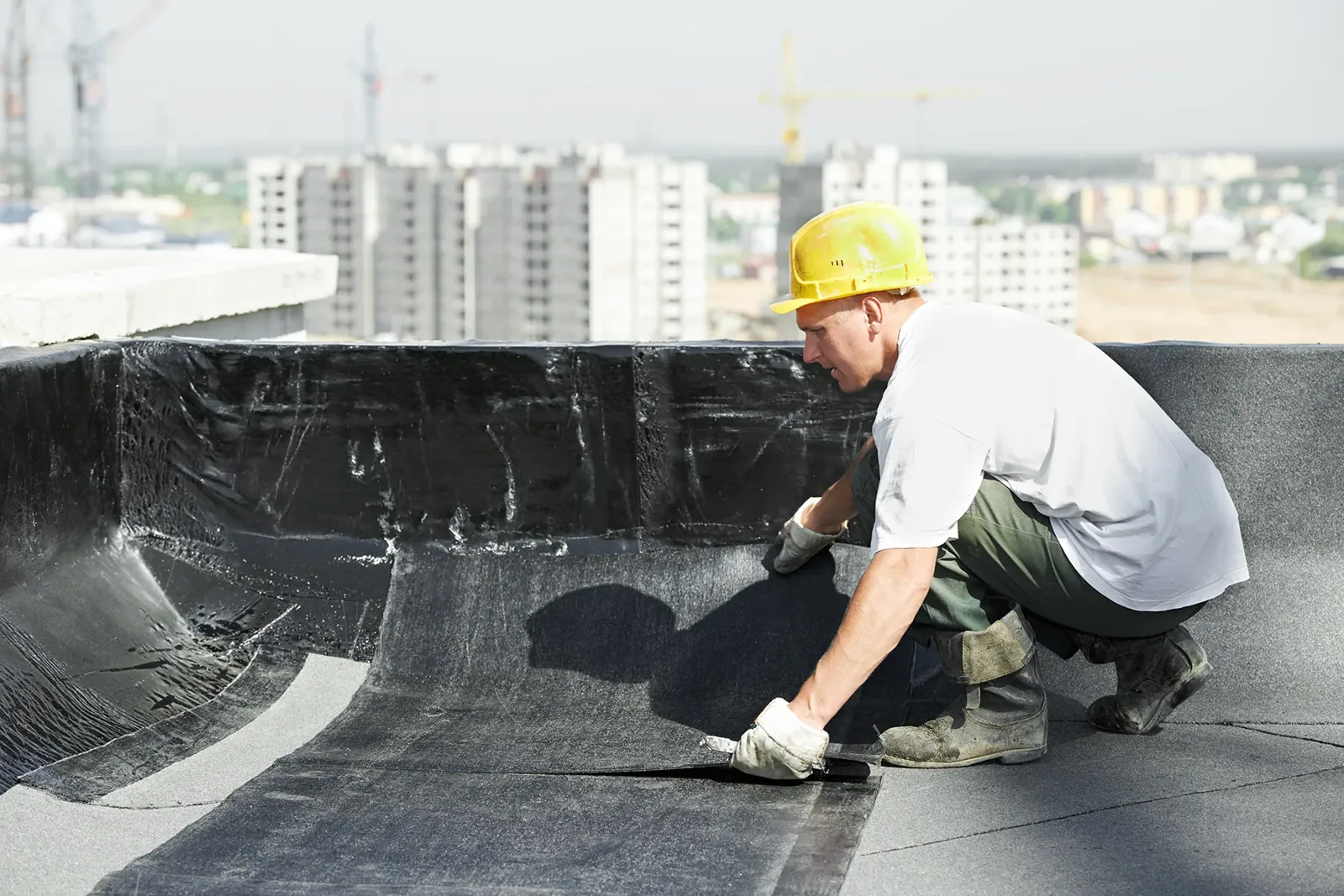
Repair begins with measurements and a detail that matches the existing roof assembly. The proposal identifies metal profile, finish, overlap, fastening approach, corners, and the connection to the membrane or wall. Where hidden wood, concrete, or metal substrate may be deteriorated, we state the inspection limit and the added approval needed if removal reveals a problem. The crew protects the open edge and does not extend removal beyond the approved boundary without direction.
Replacement metal must fit the actual field condition. A standard shape may not match an older coping or irregular parapet, so measurements and samples can be important before fabrication. We confirm the material, finish, and intended water-shedding direction with the owner. Where existing metal is sound and compatible, a localized repair may be preferable to replacing a longer run. The scope explains why the work stops at a specific joint or corner.
Davie's warm and humid conditions affect surface preparation, sealant use, and crew time. During the wet season, an afternoon shower can close the work window. We sequence removal and installation so exposed areas can be secured at the agreed stop point. If the rain gap closes early, the manager receives an update and the roof is left protected before the crew leaves.
Occupied operations shape access
Edge work can require lifts, perimeter protection, or temporary access restrictions below the roof. We coordinate the footprint with the building manager and identify entrances, loading paths, and pedestrian areas that should remain clear. Tenant notice or a shutdown note may be needed if the work affects exhausts, rooftop service routes, or occupied space. We confirm the responsible site contact and access slot before mobilizing.
Davie's adopted downtown district follows Davie Road, a commercial and mixed-use spine where pedestrian and delivery timing can shape perimeter staging. Nearby operations may make public-facing entrances and deliveries relevant to work timing. The Davie Road corridor is local context for dispatch; the property manager's instructions govern staging and building access. If work needs to move to another day, we update the plan rather than assume the same crew route remains practical.
Where a storm has displaced edge metal, a storm damage review can document the full affected zone. For recurring perimeter maintenance, a maintenance visit can track fasteners, joints, and runoff details. Those records help the owner distinguish a new event from an older open item.
The perimeter record stays specific
After work, the manager receives a summary of each edge or gutter section repaired, components replaced, photographs, and any areas that remain outside scope. We identify untested downspouts or concealed conditions separately. If a joint still needs monitoring or another approval, the closeout states the next action and the person who can authorize it.
Florida's eighth-edition building code took effect statewide on December 31, 2023. The project scope determines which edge-detail provisions need review, and the closeout records completed work and any design or code decision that remains.
Before leaving, we confirm the work area is clear, temporary protection is stable, and the site contact has the photos and open-item list. The closeout names each repaired edge within its inspected limits and lists any adjacent transition that needs its own review. That practical distinction keeps the next maintenance or inspection visit focused.
Related Roofing Work
- SR 7 / US 441 Corridor
- Commercial Roof Drains and Scuppers
- Griffin Road Corridor
- Davie Road Corridor
- Commercial Storm Damage Roof Repair
- Preventive Commercial Roof Maintenance
Browse every page in Commercial Roofing Services, or request a roof assessment and we will walk the roof with you. Call 555-555-5555.
Questions Owners Ask
What causes commercial roof coping to loosen?
Movement can result from attachment problems, failed joints, substrate conditions, or an earlier repair that does not match the assembly. We inspect accessible joints and fasteners, record movement, and define the removal limit before proposing a correction.
Can a gutter overflow even when it is clean?
Yes. Slope, outlet position, downstream blockage, or the amount of water reaching the gutter can matter. We record visible conditions and identify any downspout section that could not be accessed or tested.
Do you replace all edge metal after storm damage?
Not automatically. The repair scope follows the observed extent and the condition of adjacent attachment points, substrate, and membrane tie-in. A localized repair may work where remaining material is sound and compatible.
How do you plan edge work during Davie's rainy season?
We identify what can be opened and secured within the available dry interval. If a shower shortens the window, the crew stops at the agreed line, protects the edge, and tells the manager what work remains.
Can edge repairs be done while tenants remain in the building?
Often, with an agreed access plan. We review lifts, pedestrian routes, entrances, loading areas, and any equipment or shutdown constraints with the property contact before mobilizing.
Share the affected edge, coping, gutter, or downspout area and the site's access limits. We will document the detail and define the repair boundary.